ADVERTISEMENT

ADVERTISEMENT



Bloodline Strain
A failed Florida ban reopens the global debate on cousin marriage, health risks, and changing social norms.
-
1759953093.png) Staff Reporter
Staff Reporter - Sun, 22, Mar 2026
- 04:29 EDT
- 15
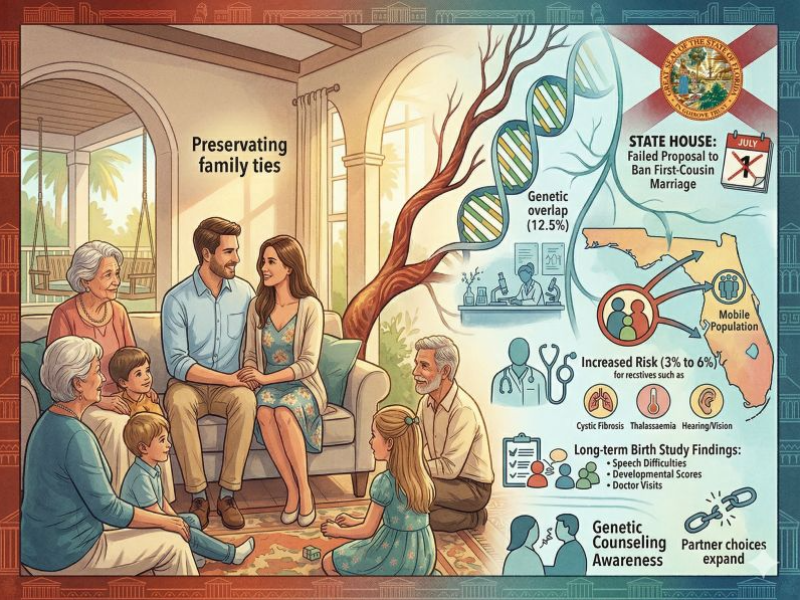 Representative image / Courtesy: AI-generated
Florida recently saw an attempt to ban first-cousin marriage fail at the last minute, when a larger health bill collapsed in the state House. The proposal, added by Representative Dean Black, would have made such marriages illegal from July. It passed without debate and drew little attention until disagreements over other provisions killed the entire bill on the final day.
Florida law already bans marriage between close relatives like parents, children, siblings, aunts, and uncles, but first cousins remain legally permitted. The failed bill has renewed concern about the health and genetic risks linked to consanguineous unions worldwide.
ALSO READ: Workplace doubt
First cousin marriage involves partners who share a grandparent. It is practiced in parts of the Middle East, North Africa, and South Asia, often to preserve family ties, property, and social trust. In South India, cross-cousin marriage remains culturally accepted in some communities, though it is declining in cities.
From a medical perspective, the concern centers on genetics. First cousins share about 12.5 percent of their genes. If both carry the same recessive mutation, their child has a higher chance of inheriting a disorder. The risk rises from roughly three percent in the general population to about six percent for their children. Conditions like cystic fibrosis, thalassemia, and certain hearing or vision problems appear more often.
Studies also suggest broader developmental impacts. Research from a long-term birth study in the United Kingdom found higher rates of speech difficulties, lower early development scores, and more doctor visits among children of first cousins. These patterns persisted even after accounting for poverty and other factors.
Supporters of cousin marriage cite familiarity and stability, but public health experts emphasize awareness, genetic counseling, and informed choice. Increasing access to technology and education is also driving greater awareness. As debates like Florida’s continue, the issue sits at the intersection of culture, law, and science, with growing scrutiny worldwide. Policymakers are likely to revisit regulations as populations grow more mobile and partner choices expand, reducing earlier constraints that once encouraged such unions historically.
Discover more at New India Abroad.
Related




.jpg)





ADVERTISEMENT

ADVERTISEMENT
E Paper
Video

Comments
Start the conversation
Become a member of New India Abroad to start commenting.
Sign Up Now
Already have an account? Login