ADVERTISEMENT

ADVERTISEMENT


Bipartisan support key to strengthening U.S.-India relations, say American lawmakers
Ami Bera also highlighted India’s potential role in global diplomacy, including in resolving the Russia-Ukraine conflict.
-
 Shinjini Ghosh
 - Tue, 13, Jan 2026
- 02:18 EST
- 11
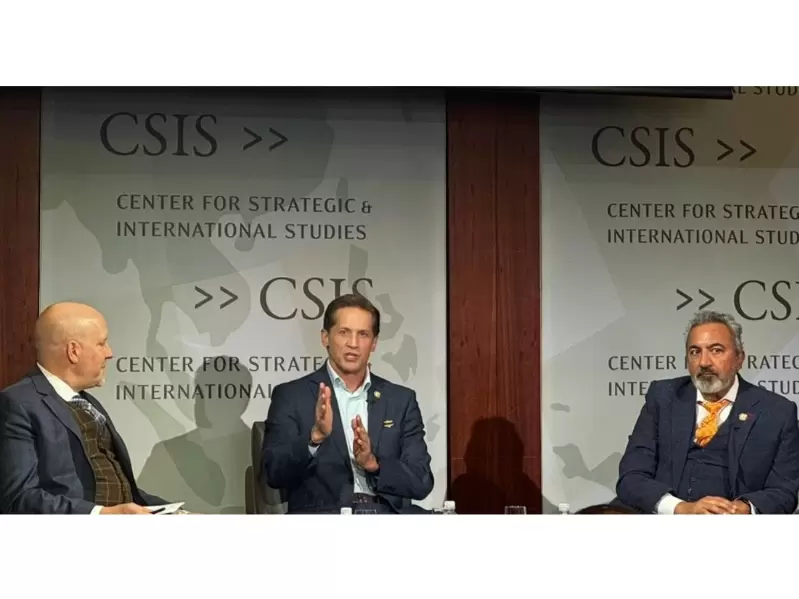 American lawmakers Rich McCormick and Ami Bera in a discussion with Richard M. Rossow. / Shinjini Ghosh
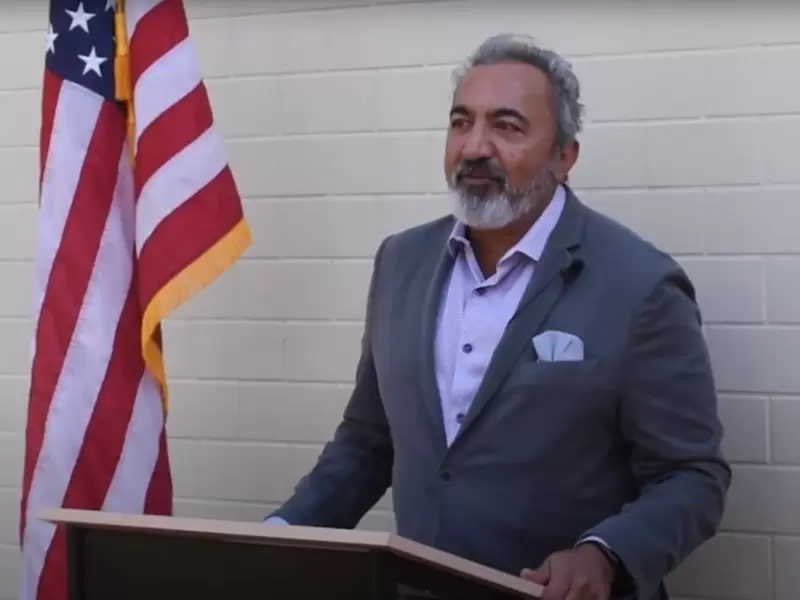
American lawmakers Rich McCormick and Ami Bera on Jan. 12 underscored the importance of bipartisan cooperation in strengthening U.S.-India relations, citing shared democratic values and growing strategic alignment.
Speaking at an event hosted by the Center for Strategic and International Studies (CSIS), the two lawmakers discussed a wide range of issues, including technology, defense cooperation, artificial intelligence, immigration and the role of the Indian diaspora. The discussion was moderated by Richard M. Rossow, chair on India and emerging Asia economics at CSIS.
ALSO READ: US Congressmen play down trade frictions
“You have the oldest democracy and the largest democracy, if they unite … we can literally usher in a new generation of peace that can last a hundred years,” McCormick said, adding that failure to do so would be “catastrophic for us.”
McCormick, a Republican from Georgia and co-chair of the Congressional Caucus on India and Indian Americans, stressed the need for the United States to maintain open access to its products as cooperation with India deepens, particularly in emerging technologies.
“The Indian market, if you think about it, will either rely on us or China,” he said. “If we start limiting access to our products, that’s going to be bad for us as a country. We need to make sure their market stays open, stays fair, that we are not having reciprocal tariffs that force the price points up, making our product unaffordable.”
Bera, a Democrat from California and the longest-serving Indian American member of Congress, highlighted India’s potential role in global diplomacy, including in resolving the Russia-Ukraine conflict.
“This is India’s moment to test its global diplomatic chops,” Bera said, suggesting that such engagement could also help build a relationship with President Donald Trump.
Bera also called for rethinking U.S. immigration policy, particularly in high-demand sectors such as artificial intelligence, describing the current H-1B system as broken.
“Can we create corridors around problems we want to solve?” he asked. “AI could be one of those where workers are moving back and forth. I think that is one area we can work on in a bipartisan way, rethinking specific needs and creating new visa categories.”
McCormick agreed, saying immigration and workforce policies must evolve with changing economic realities. “We need to adapt and adjust every year,” he said.
Referring to Prime Minister Narendra Modi’s recent engagement with China, McCormick said he initially viewed it with concern.
“I was worried that we were seeing a shift in world politics that would be really worrisome,” he said, adding that a pragmatic approach was sometimes necessary to keep partners “away from bad actors.”
Discover more at NewIndiaAbroad
Related




ADVERTISEMENT
ADVERTISEMENT
E Paper
Video

Comments
Start the conversation
Become a member of New India Abroad to start commenting.
Sign Up Now
Already have an account? Login