ADVERTISEMENT
ADVERTISEMENT


Bangladesh ups ante, calls for "propitious environment" for Tarique Rahman's visit to Delhi
This makes it clear that the Bangladesh PM was not in a mood to visit India till the time the extradition request of Hasina is expedited
-
 Shikha Salaria
 - Tue, 18, Aug 2026
- 07:28 EDT
- 35
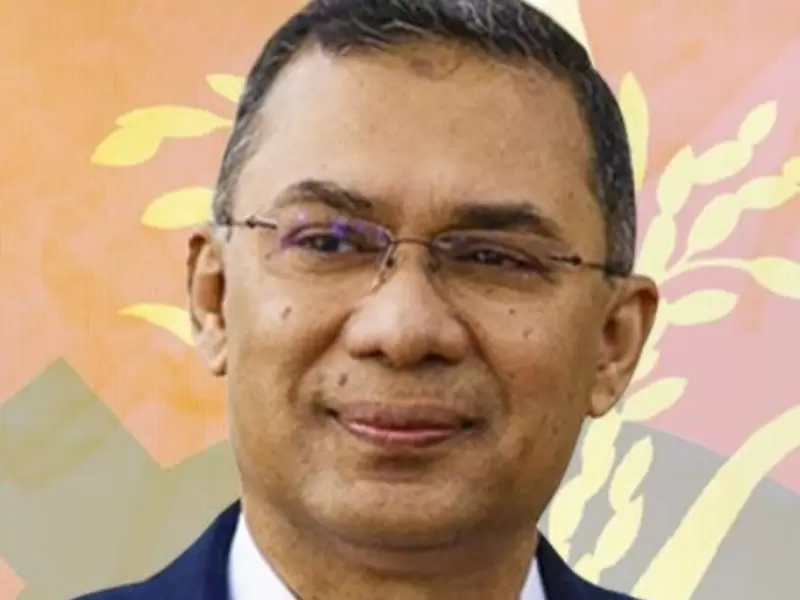 Tarique Rahman / X/@bdbnp78
A day after New India Abroad reported that Bangladesh had kept a precondition and sought a "high-profile bargain" in lieu of the visit by the country's Prime Minister Tarique Rahman to India, the country has officially acknowledged that while both the countries have been in touch with each other to explore the possibility of a visit by Rahman, the process had been "vitiated" by an open press interaction held by former Bangladeshi PM Sheikh Hasina in New Delhi on Aug. 5.
Upping the ante, Bangladesh has stated that a "propitious environment" needs to be created for a visit by Rahman to India.
While this makes it clear that the Bangladesh PM was not in a mood to visit India till the time the extradition request of Hasina is expedited, it also casts a shadow on Rahman's participation in the BRICS Summit scheduled to be held in New Delhi on September 12-13.
Sources say that since Hasina has herself declared that she wants to return to Bangladesh, her extradition to Bangladesh by India was not a possibility.
Hasina had repeated during her press conference held on Aug. 5 at the Foreign Correspondents Club of South Asia that she would return to her country by December although the time was not certain.
Her aides have told New India Abroad that Hasina would want to celebrate Bangladesh's Victory Day or 'Bijoy Dibos' that marks the official surrender of the Pakistan Armed Forces to the joint forces of Bangladesh and India in 1971, with her people. The occasion is celebrated with fervour in Bangladesh on December 16.
The latest statement by the Bangladesh foreign ministry spokesperson AKM Shahidul Karim made in Dhaka also lays bare the foreign policy of the Tarique Rahman regime and what the future might hold for India-Bangladesh ties.
"The officials of Bangladesh and India have been in touch with each other for the past several weeks on a possibility of a bilateral visit by PM Tarique Rahman to India. However, this process was vitiated by an open press interaction in New Delhi on 5 August by Sheikh Hasina who has been convicted by the International Crimes Tribunal for committing crimes against humanity. We have made our position clear on this matter. We are of the view that a propitious environment needs to be created for this visit. To this end, we have requested the Indian authorities to expeditiously act upon our request to extradite Sheikh Hasina and other fugitive criminals and to hand over Bangladesh the accused killers of Shaheed Sharif Osman Hadi in compliance with our bilateral extradition treaty. We are awaiting their response. We reiterate that we continue to pursue our Bangladesh first policy, promote friendly, bilateral relations with other countries including our neighbours on the basis of sovereign equality, national dignity , non interference in each other's internal matters and mutual benefit," Karim said.
Double standards?
"With this statement, Bangladesh has upped the ante against India. This won't be taken lightly by New Delhi," a Bangladesh watcher told New India Abroad.
The watcher noted that Indian PM Narendra Modi was the first global leader to have invited Rahman to visit New Delhi in February 2026 soon after the latter was chosen as the Bangladeshi PM in an election in which the Awami League was banned and added that Rahman had been dilly-dallying on accepting Modi's invitation.
Strategic affairs expert Brahma Chellaney termed it as "Tarique Rahman's double standards" and added that the Bangladeshi PM was dragging his feet on accepting Indian PM Narendra Modi's invitation "as if making a trip to New Delhi would amount to doing India a favour."
"Surrounded by India on three sides, Bangladesh’s geography makes it highly dependent on its larger neighbour for critical imports, including essential food items, refined petroleum and electricity. Stable relations with India are thus crucial to Bangladesh’s economic security and well-being. Yet for six months, its new prime minister, Tarique Rahman, has dragged his feet on accepting Modi’s invitation for a state visit to New Delhi, as if making the trip would amount to doing India a favour. Worse, Rahman has imposed conditions on such a visit, telling India’s envoy in Dhaka last Monday that India must first create a “conducive environment” for advancing bilateral relations, while his advisers have also insisted that the relationship be conducted on equal terms. The irony is that Rahman has no qualms about pursuing a conspicuously unequal relationship with China, visiting Beijing in June to pay obeisance and signing largely one-sided agreements," Chellaney remarked.
Sources in government of India have however said that while Bangladesh continues to be largely dependent on India for the supply of diesel and fuel for its population, the latest conditions imposed by Dhaka on New Delhi -making Hasina's extradition a precondition for a visit by Rahman to New Delhi- only complicated the India-Bangladesh ties further.
A source called it a high degree of "transactionalism" at a time when Dhaka continues to seek more supplies of diesel from New Delhi and also said that the public announcement about the requirement of a "propitious environment" as a prerequisite to Rahman's visit to India, teh BNP regime in Dhaka does not augur well for India-Bangladesh ties.
Discover more at New India Abroad.
Leave A Comment
Related




ADVERTISEMENT

ADVERTISEMENT
E Paper
Video

Comments
Start the conversation
Become a member of New India Abroad to start commenting.
Sign Up Now
Already have an account? Login