ADVERTISEMENT
ADVERTISEMENT



Donald Trump versus the Federal Reserve - what you need to know
The action marks a dramatic escalation in President Donald Trump's pressure campaign against the top policymaking body for the U.S. economy, which Trump thinks is not lowering interest rates fast enough.
-
 Reuters
 - Tue, 13, Jan 2026
- 16:45 EST
- 98
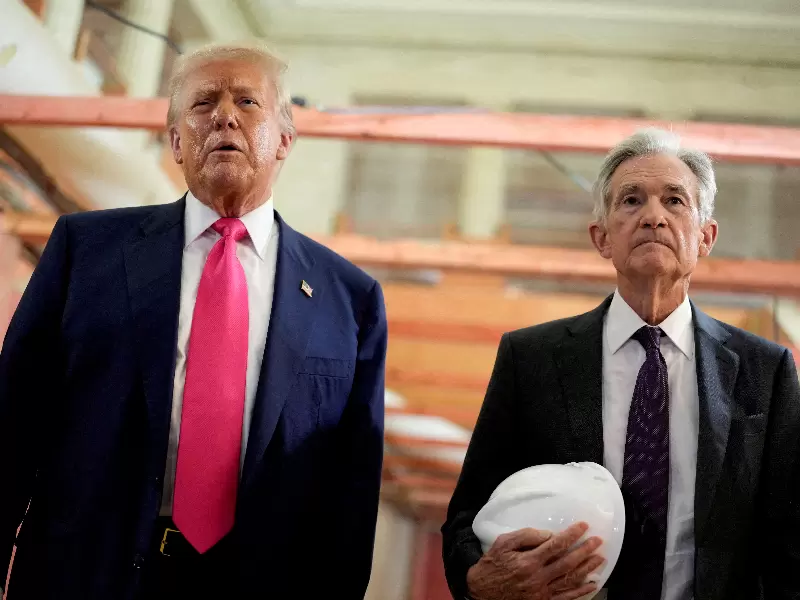 FILE PHOTO: FILE PHOTO: U.S. President Donald Trump and Federal Reserve Chair Jerome Powell speak during a tour of the Federal Reserve Board building, which is currently undergoing renovations, in Washington, D.C., U.S., July 24, 2025. / REUTERS/Kent Nishimura/File Photo/File Photo
Jerome Powell, head of the U.S. Federal Reserve, said on Jan. 12 the Justice Department has opened a criminal investigation against him for allegedly misleading Congress about a building renovation project at the central bank’s headquarters.
The action marks a dramatic escalation in President Donald Trump's pressure campaign against the top policymaking body for the U.S. economy, which Trump thinks is not lowering interest rates fast enough.
Also Read: Trump’s Detroit trip puts manufacturing back in focus amid US factory job slump
The White House says Trump did not order the investigation, but Trump, who has threatened to fire Powell, has called on him to resign, and has said he should face legal consequences for the renovation's cost overruns.
Outside observers say Trump's actions could erode the independence of the world’s most important central bank and reduce confidence in the U.S. economy.
WHY DOES THIS MATTER?
Since returning to office a year ago, Trump has sought to bend the U.S. government to his will by firing tens of thousands of civil servants, eliminating internal watchdog positions, and dismissing Democratic appointees from agencies like the Federal Trade Commission that were set up to be run in an independent fashion.
The Fed is just one of his targets, but perhaps the most significant.
The Federal Reserve is tasked with keeping inflation in check, unemployment low and the financial system operating smoothly. It does this by setting the baseline for the cost of credit. While the Fed only controls the federal funds rate – the interest rate that banks charge each other for overnight loans - that serves as a foundation for the cost of other types of lending like home mortgages and credit cards.
If the Fed sets the interest rate too high, that can discourage borrowing, which can then weigh on consumption and investment and slow the economy. If the Fed sets interest rates too low, the economy can overheat, leading to higher inflation. The Fed sharply hiked the federal funds rate in 2022 and 2023 to combat inflation following the COVID-19 pandemic and has been gradually lowering it since 2024. It cut rates three times at the end of last year.
WHAT'S MEANT BY FED INDEPENDENCE?
Congress designed the Fed to be insulated from political pressure. The seven members of its Board of Governors serve 14-year terms, which ensures that no president can nominate a majority. Moreover, board members make interest-rate decisions with five of the 12 regional bank presidents casting votes as well on an annual rotation, which decentralizes power from Washington. The Fed also controls its own budget and does not rely on Congress for funding.
Trump has repeatedly called on the Fed to slash interest rates to as low as 1 percent - a level rarely seen outside of a crisis - and he has criticized Powell when the central bank has not followed his wishes.
Trump also tried to fire another Fed governor, Lisa Cook, for allegedly filing misleading mortgage documents. Cook has denied wrongdoing and sued to keep her job. The Supreme Court is due to hear her case on January 21, and its decision is expected to have major implications for the central bank’s independence.
IS THIS NORMAL?
No. While past presidents have on occasion pressured the Fed to lower interest rates, none has ever publicly threatened to fire Fed officials or targeted them with criminal charges.
The Justice Department also is playing an unusual role here. The agency has filed criminal charges or announced investigations into several of Trump’s political rivals over the past year, including former FBI Director James Comey, New York Attorney General Letitia James and Democratic Senator Adam Schiff. That’s a sharp departure from previous administrations, as prior attorneys general have operated with a degree of independence from the White House in order to maintain public confidence in law enforcement.
WHAT IS THE RENOVATION PROJECT?
A planned renovation of two historic buildings in the Fed's Washington headquarters has run over its initial budget of $1.9 billion to about $2.5 billion. That has been attributed to higher-than-expected labor and materials costs, design changes, and unforeseen issues like asbestos and lead contamination.
Trump has accused Powell of mismanagement and suggested potential fraud, though he has not provided evidence. The White House has also criticized the project as ostentatious, with claims of lavish features like VIP elevators and premium marble. Powell has said that is not accurate and has defended the need to remove hazardous materials.
WHAT IS POWELL BEING INVESTIGATED FOR?
Powell said in a video statement that he has been served with subpoenas by the Justice Department for his testimony to the Senate Banking Committee last July about the renovation. That could indicate the Justice Department is preparing to indict him for lying to Congress – a charge the department also brought against Comey. That case was thrown out of court.
Powell has denied wrongdoing, and the Justice Department has not yet commented on the investigation.
Several Republican members of the Senate Banking Committee have said they are not troubled by the renovation project, or Powell’s testimony about it.
Also Read: "Americans must stand with Powell": Rep. Khanna slams DoJ probe
COULD THIS BACKFIRE ON TRUMP?
Potentially. Powell’s term as Fed chair will end in May, but he could opt to remain on the board until 2028, delaying Trump's opportunity to further reshape the board with more sympathetic figures.
Trump’s move is also upsetting some Republicans in Congress, who until now have largely been deferential to the president.
Senator Thom Tillis of North Carolina said he will not support any of Trump’s future Fed nominees, and Senator Lisa Murkowski of Alaska has called for an investigation of the Justice Department. Tillis’ opposition is significant as he sits on the Banking Committee that oversees the Fed, and Republicans hold just a slender 13-11 majority.
His opposition could deadlock the committee and prevent any nominees from advancing to a confirmation vote in the full Senate. That could prevent Trump from installing a permanent ally after temporary appointee Stephen Miran's term expires on Jan. 31. The Senate's top Republican, John Thune, acknowledged Jan. 12 that the Powell investigation could make it harder to confirm Fed nominees.
Of course, Trump’s pressure campaign could also succeed. Powell and Cook could be forced off the Fed board one way or another. The Supreme Court could rule that Trump has the right to fire Cook, and Powell could get criminally charged and found guilty. That would open up two spots for Trump to fill.
The Fed next meets to set interest rates on Jan. 27-28, with little expectation of another rate cut. Indeed, several of this year's crop of voting regional bank presidents are opposed to any further rate cuts and so far seem unbowed by Trump's pressure.
WHAT DO INVESTORS THINK SO FAR?
Outside observers argue that a politicized Fed would have less freedom to steer the economy as it sees fit, raising the risk of higher inflation and undermining the dollar's status as the world's reserve currency. That could cause investors to demand higher interest rates for U.S. government debt and raise borrowing costs, analysts say.
Analysts warn that the Powell investigation is a clear sign that the Fed's independence is at risk, but investors do not seem alarmed ... yet. After a lower start on Monday, major U.S. stock indices closed modestly higher.
Discover more at New India Abroad.
Leave A Comment
Related









ADVERTISEMENT

ADVERTISEMENT
E Paper
Video

Comments
Start the conversation
Become a member of New India Abroad to start commenting.
Sign Up Now
Already have an account? Login