ADVERTISEMENT
ADVERTISEMENT



Democrats critique new Iran peace deal
The criticism comes as the White House begins a 60-day negotiation process with Tehran following months of military conflict.
-
 Malvika Choudhary
 - Fri, 19, Jun 2026
- 15:24 EDT
- 167
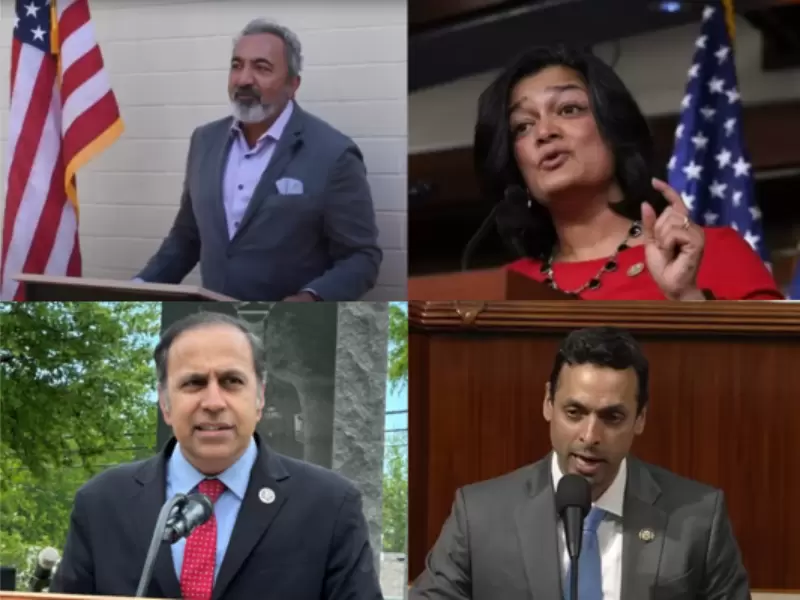 (Top L-R) Ami Bera, Pramila Jayapal/ (Bottom L-R) Ami Bera, Suhas Subramanyam / File Photo
Democratic lawmakers criticized the Trump administration's U.S.-Iran memorandum of understanding, arguing the preliminary agreement falls short of previous diplomatic efforts and lacks congressional oversight.
Representative Pramila Jayapal said the agreement appears to replicate provisions that already existed under the 2015 Joint Comprehensive Plan of Action (JCPOA), the Obama-era nuclear deal that Trump withdrew from during his first term.
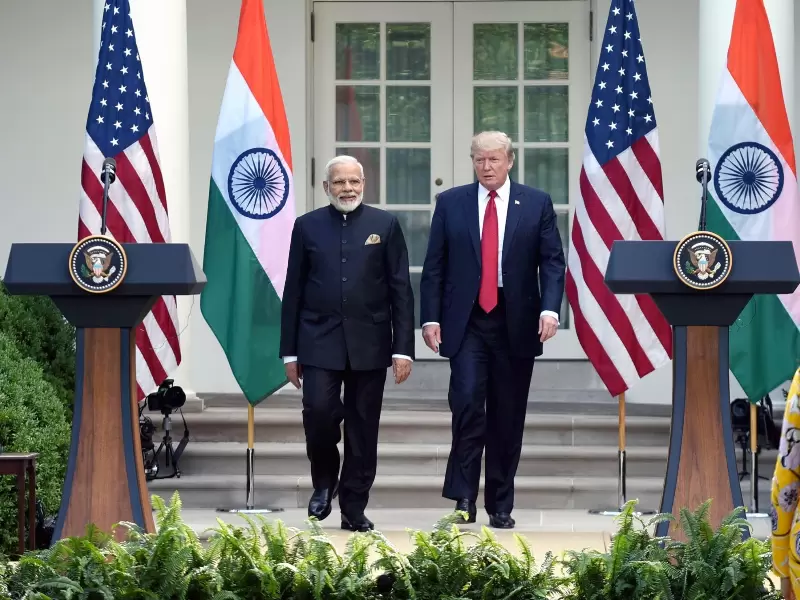
Also Read: Trump hails Iran deal, says PM Modi welcomed it
An update on Trump’s so-called “deal” with Iran: pic.twitter.com/IPGT2Q6tiK
— Rep. Pramila Jayapal (@RepJayapal) June 17, 2026
“Congress has not been briefed,” Jayapal said in a video statement, arguing lawmakers are relying on the same publicly available information as ordinary citizens.
“Apparently Iran is saying they're not going to develop nuclear weapons. Guess what? That was part of the deal with the JCPOA that Donald Trump pulled us out of,” she added.
“There is no big deal here. We are literally going back to a position that is worse than when we started.”
Representative Suhas Subramanyam described the agreement as “a bad deal,” arguing that previous diplomatic efforts provided stronger guarantees regarding Iran’s nuclear program through international inspections.
Trump’s ceasefire agreement is a bad deal. pic.twitter.com/nUDrw2AlXx
— Rep. Suhas Subramanyam (VA-10) (@RepSuhas) June 18, 2026
“In 2015, we actually had a better deal on the table,” Subramanyam said, referring to the JCPOA. “This would actually involve nuclear inspectors going in and making sure Iran basically got rid of its nuclear program.”
He argued that the new framework leaves uncertainty around nuclear inspections while giving Iran greater leverage over maritime traffic through the Strait of Hormuz.
“Now we have a deal where the nuclear inspectors and the nuclear program, it's kind of up in the air, and Iran now has the ability to close the Strait of Hormuz, which they didn't have at the beginning of this war,” he said.
Subramanyam also highlighted the economic and human costs of the conflict, saying billions of dollars were spent on military operations while American service members lost their lives.
“One step forward, 10 steps back, and this administration has completely failed,” he said.
Representative Ami Bera welcomed the halt in hostilities but warned that the coming weeks would be critical to determining whether the agreement leads to a lasting peace.
President Trump took our nation into an illegal and ill-advised war that cost the lives of 13 American servicemembers, diminished America's diplomatic leverage, disrupted global commerce, and increased costs for Sacramento County families from the gas pump to the grocery store.…
— Ami Bera, M.D. (@RepBera) June 19, 2026
“President Trump took our nation into an illegal and ill-advised war that cost the lives of 13 American servicemembers, diminished America's diplomatic leverage, disrupted global commerce, and increased costs for Sacramento County families from the gas pump to the grocery store,” Bera said in a statement.
While supporting the reopening of the Strait of Hormuz, Bera urged Congress to remain actively involved in future negotiations and called on the administration to work closely with allies in Europe and Asia.
“Congress must be involved every step of the way, and the Administration must work closely with our allies in Europe and Asia to secure a strong final agreement that protects our national security interests and lays the groundwork for long-term peace and stability in the Middle East,” he said.
Representative Raja Krishnamoorthi also questioned whether the memorandum constitutes a lasting settlement.
President Trump’s Iran deal sounds more like a ceasefire than a lasting agreement.
— Congressman Raja Krishnamoorthi (@CongressmanRaja) June 18, 2026
Congress still hasn’t been briefed, and Americans are still paying the price for this illegal, unconstitutional war. pic.twitter.com/Vj6SBI1Oxw
“President Trump’s Iran deal sounds more like a ceasefire than a lasting agreement,” Krishnamoorthi said.
He added that Congress had yet to receive a full briefing on the accord and argued that Americans were continuing to bear the costs of what he described as an “illegal, unconstitutional war.”
The criticism comes after the White House on June 17 transmitted to Congress the text of the Islamabad Memorandum of Understanding, a 14-point interim agreement between the United States and Iran.
The framework formalizes the ceasefire between the two countries, reopens the Strait of Hormuz, calls for the lifting of the U.S. naval blockade of Iranian ports, and launches a 60-day negotiation process aimed at reaching a final agreement.
The memorandum also outlines potential sanctions relief and future discussions on Iran's nuclear program and regional security issues.
Under the framework, Iran agreed to ensure safe passage through the Strait of Hormuz and waive transit fees during the negotiation period while both sides work toward a broader settlement.
Following its signing trump took to his social media to post, "Ships of the World, start your engines. Let the oil flow!"
The administration has described the agreement as a breakthrough that could end more than three months of conflict and stabilize global energy markets.
Discover more at New India Abroad.
Leave A Comment
Related







ADVERTISEMENT

ADVERTISEMENT
E Paper
Video

Comments
Start the conversation
Become a member of New India Abroad to start commenting.
Sign Up Now
Already have an account? Login