ADVERTISEMENT
ADVERTISEMENT



Cellular Intelligence names Arjun Raj as chief scientific officer
Raj will lead the company’s scientific strategy, integrating biology, machine learning and translational science to advance its cell signaling platform.
-
 Bhavana P
 - Thu, 13, Aug 2026
- 18:27 EDT
- 19
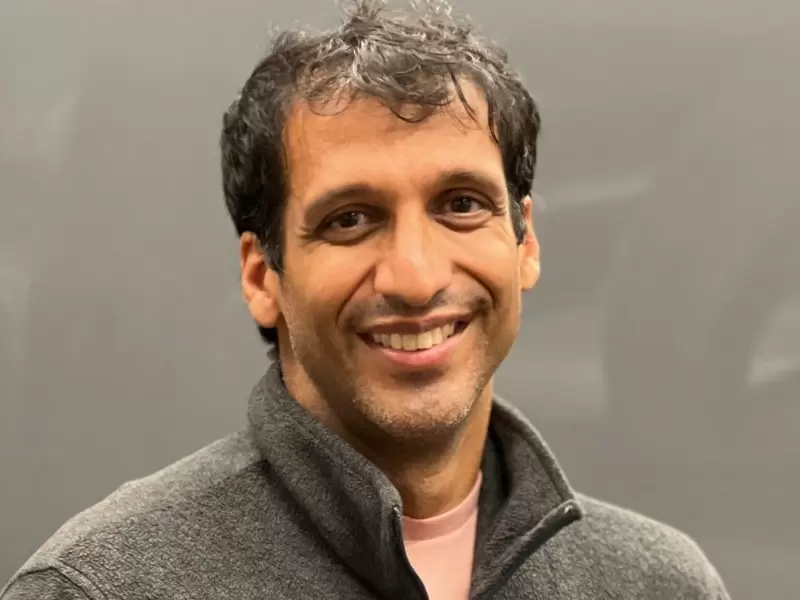 Arjun Raj / LinkedIn
Boston-based AI company Cellular Intelligence on Aug. 12 announced the appointment of Indian-origin scientist Arjun Raj as its chief scientific officer and scientific co-founder.
In his new role, Raj will lead the company's overall scientific strategy and oversee the integration of experimental and computational biology, machine learning and translational science to advance its closed-loop cell signaling platform.
Commenting on his elevated role, Raj said, "I have spent my career trying to understand how individual cells make decisions, and what has always limited the field is the data. Cellular Intelligence is building high-fidelity, time-resolved perturbation data generated expressly for learning. For the first time, I can see a path from observing cellular decisions to predicting and eventually controlling them."
Also read: Indian American entrepreneur on why he chose to build in india
Raj joined Cellular Intelligence full time in 2025 as head of computational biology while on leave from the University of Pennsylvania. During his first year, he helped architect the company's data engine and scientific program. He has since extended his leave from the university and taken on an expanded mandate.
Raj is the Richard K. Lubin Professor of Bioengineering and a professor of genetics at the University of Pennsylvania. A mathematician turned experimental systems biologist, he co-developed a method for visualizing and counting individual RNA molecules inside single cells.
His research has also contributed to the study of stochastic gene expression, cell identity, rare non-genetic states associated with cancer therapy resistance and cellular memory.
His laboratory, the Raj Lab, focuses on understanding the biology of individual cells, driven by the observation that genetically identical cells can behave in markedly different ways. The lab studies this cellular variability and its implications across biological contexts, using experimental tools such as fluorescence microscopy to visualize individual RNA molecules, high-throughput sequencing and molecular biology to quantitatively measure cellular behavior and understand these differences at the molecular level.
Raj earned his bachelor's degree in physics and mathematics from the University of California, Berkeley, and his doctorate in mathematics from New York University's Courant Institute. He completed postdoctoral training at the Massachusetts Institute of Technology before joining Penn's faculty in 2010.
Discover more at New India Abroad.
Leave A Comment
Related











ADVERTISEMENT

ADVERTISEMENT
E Paper
Video

Comments
Start the conversation
Become a member of New India Abroad to start commenting.
Sign Up Now
Already have an account? Login