ADVERTISEMENT
ADVERTISEMENT



America’s greatest competitive advantage—and the risk of losing it in 2026
Across every major technology shift of the past half century, immigrants founded or co-founded a disproportionate share of the most valuable companies.
-
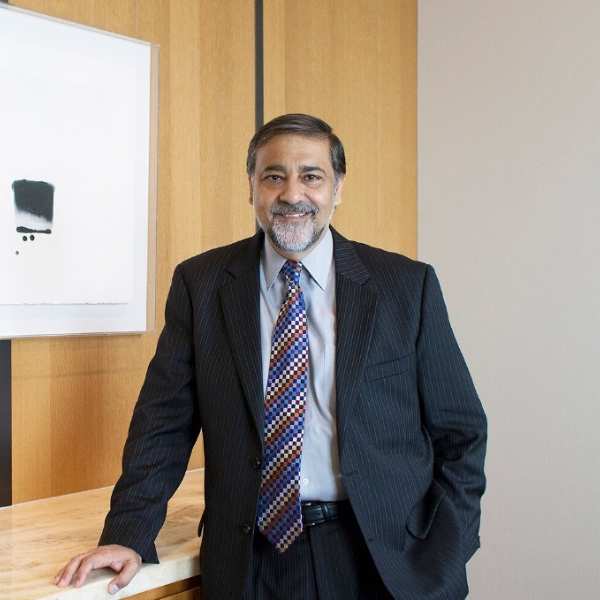 Vivek Wadhwa
 - Tue, 20, Jan 2026
- 16:15 EST
- 166
 Representative Image / Generated using AI
Immigrants did not simply participate in the Valley’s growth; they rebuilt the ecosystem repeatedly, from semiconductors to software to the internet, from mobile computing to cloud platforms, social networks, and now artificial intelligence. Each wave of innovation brought a new generation of immigrant founders and engineers who pushed boundaries, created companies, and reset standards.
Across every major technology shift of the past half century, immigrants founded or co-founded a disproportionate share of the most valuable companies. They created millions of jobs for Americans, generated trillions in economic value, paid billions in taxes, and trained successive generations of engineers and founders. This pattern has been documented repeatedly over decades and remains remarkably consistent.
Also Read: Global citizens: Bridging the US-India corridor
Indians have been central to this story.
Despite representing a tiny share of the U.S. population, Indian immigrants contribute roughly six percent of federal income tax revenue. They are among the most educated demographic groups in the country and are overrepresented among founders, senior engineers, researchers, and executives in frontier industries such as software, biotechnology, semiconductors, and artificial intelligence. Their companies employ Americans at scale, often far beyond the technology sector itself.
Yet today, Indians find themselves at the center of a familiar backlash.
This hostility is neither unique nor accidental. When economies slow or technologies shift, fear looks for visible targets. Skilled immigrants are easy to single out because their success is public and measurable. They compete hard, advance quickly, and accumulate expertise—and wealth.
What distinguishes the current moment is policy.
The H-1B system has evolved into a mechanism that restrains rather than integrates talent. It ties individuals to employers for years, discourages mobility, prevents entrepreneurship, and forces families into prolonged uncertainty. Even highly accomplished professionals remain unable to plan their lives with confidence.
This structure distorts incentives. It benefits firms that prefer control over competition and stability over dynamism, while suppressing the very behaviors—risk-taking, company formation, labor mobility—that historically drove American growth. The system extracts value from talent while denying it agency.
I confronted this reality firsthand while building my company Vionix Biosciences in Silicon Valley.
We were developing a deep-tech diagnostic platform that required capabilities well beyond standard software engineering. We needed physicists who understood plasma dynamics, spectroscopists fluent in optical emission analysis, biomedical scientists who could work across fluids and tissues, and engineers comfortable integrating hardware, algorithms, and AI into a single system. We also needed people who could iterate experimentally, not just code.
In Silicon Valley, this talent was either unavailable, prohibitively expensive, or fragmented across institutions unwilling to collaborate. Immigration constraints made it impossible to assemble a global team locally, even when exceptional scientists were eager to contribute.
So I made the decision to move our R&D to India, which offered an abundance of deep scientific talent—graduates from IITs, IISc, AIIMS, and national labs—trained in physics, chemistry, materials science, biomedical engineering, signal processing, and applied AI. These teams were comfortable crossing disciplinary boundaries, working hands-on with hardware, and solving first-principles problems rather than optimizing incremental features.
The results spoke for themselves. In less time and at a fraction of Silicon Valley’s cost, our teams achieved breakthroughs that I do not believe would have been possible in the U.S.
Problems that Silicon Valley would have tried to solve by throwing money and layers of management at were solved through ingenuity, collaboration, and scientific rigor.
This experience was a warning for the US. What my company was forced to do is not an exception; it foretells the future.
As long as the United States continues to constrain skilled immigration and treat global talent as a political liability rather than a strategic asset, innovation will keep moving abroad. Companies will follow talent, research will follow opportunity, and breakthroughs will emerge where scientists can work freely, collaborate openly, and build without the risk that a visa decision will erase years of effort.
India is ready for this moment. It is no longer supplying labor; it is building platforms, shaping science, and defining new models of innovation that combine depth, speed, and cost efficiency.
Other countries are moving just as deliberately.
The United States will surely wake up, as it has in previous generations, when competitiveness is unmistakably at stake. But this time will be different. Talent now has credible alternatives, and innovation no longer depends on a single geographic center. When the U.S. does correct course, it will not be reclaiming a lead but trying to recover one already lost.
Sadly, that is the real cost of today’s anti-immigrant crusades.
The writer is CEO of Vionix Biosciences.
(The views and opinions expressed in this article are those of the author and do not necessarily reflect the official policy or position of New India Abroad.)
Leave A Comment
Related







ADVERTISEMENT

ADVERTISEMENT
E Paper
Video

Comments
Start the conversation
Become a member of New India Abroad to start commenting.
Sign Up Now
Already have an account? Login