ADVERTISEMENT
ADVERTISEMENT



Serious concerns about Aisha Wahab as a Candidate running to represent the East Bay in CA 14 Congressional District
Aisha Wahab Changed Her Mind on standing for the CA Senate. Then on Which Year to Run for Congress. Now She Wants CA-14 to Trust Her Judgment.
-
 Gaurang D
 - Fri, 22, May 2026
- 12:15 EDT
- 592
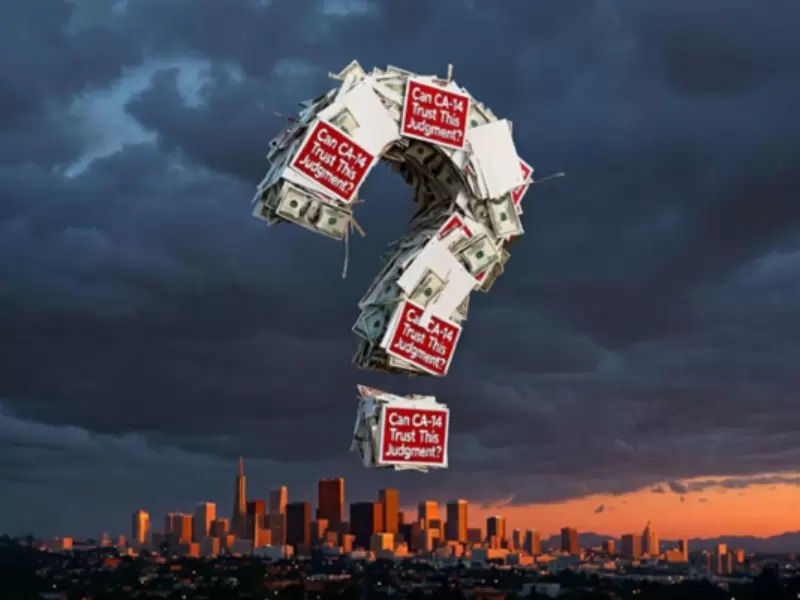 Representative Image / Generated using AI
Aisha Wahab wants East Bay voters to send her to Congress. The candidate who wins this race will be in a critical position of power, which can impact on the wellbeing of the East Bay residents.
She has her yard signs, her brand, and her grassroots pitch. What she also has is a documented pattern of flip flopping about her own political career at moments that leave the people who trusted her bearing the consequences.
In 2025, donors contributed $365,787 to her California State Senate reelection campaign. Then she dropped that race and decided to run for Congress instead. That money cannot follow her to a federal account under California law -- it sits in a Senate committee for an election that is not happening. Then, when she finally filed federal paperwork for Congress on January 5, 2026, she designated her committee for the 2028 election cycle, not 2026 -- a filing choice that signals she had not even committed to running in the current race.
She eventually entered the 2026 race. But voters in Fremont, Hayward, Livermore, and Dublin should understand the scenario. Before a single primary vote is cast, this candidate has already changed course four times since 2019. The public filings are there for anyone to read. Here is what they say.
FIVE QUESTIONS
Before You Vote, Consider…
The filings are public. The math is not complicated. But the picture they paint raises questions that Wahab has not been asked -- and that every CA-14 voter deserves answered before June 2.
-
Donors gave $365,787 to a Senate race she abandoned. What whappens to that money, and were those donors told before she switched races?
-
Her January 5, 2026, FEC filing designated her congressional committee for 2028, not 2026. If she could not decide which year she was running in, what has changed?
-
If this congressional campaign is people-powered, why did one in four Q1 dollars come from PACs -- and why is $531,871 sitting in a Senate account for an election she dropped?
-
Why had the congressional campaign spent exactly $0 on East Bay voter contact by March 31, 2026, while both discretionary vendors were based in Sacramento?
-
She labels herself as a grassroots candidate, so why didn’t she get any money from the grassroots? Why is her campaign supported by special interest groups (casinos, oil industry, housing, insurance, pharmaceuticals). They are her big contributors to her Senate campaign.
These are not allegations. They are the questions that evolve from reading public records.
A PATTERN OF FLIP FLOPPING
Four Pivots Since 2019 -- and the People Left to take the Consequences.
Let us go through the timeline because it matters.
In 2019, Wahab filed federal paperwork to run for the old CD-15 congressional seat when Eric Swalwell briefly explored a presidential run. The San Francisco Chronicle documented what happened next: Swalwell came back, and Wahab withdrew. She did not serve a single day in Congress. 'This is not the end in my fight for a progressive future for all Americans,' she said at the time. It was, however, the end of that congressional bid.
Fast forward to 2025. Wahab is now a sitting state senator with a seat up for reelection in 2026. She ran an active Senate reelection committee. Donors -- real estate PACs, pharma companies, insurance interests, casino groups, and others -- contributed $365,787 to that Senate campaign. By December 31, 2025, the committee had $531,871 in cash on hand, built from current-cycle fundraising plus prior balances. Every one of those donors wrote their check under the assumption that Wahab was defending her Senate seat.
Then she flip-flopped again. She dropped the Senate race and filed for Congress.
Donors contributed $365,787 for a Senate race that is no longer happening. California law does not allow state campaign funds to be transferred to a federal account. That money stays behind -- and were those donors asked if this was acceptable?
Here is where it gets more specific. On January 5, 2026, Wahab filed her federal Statement of Candidacy for CA-14 -- FEC Form 2, Filing number 1930812. The form has one field that matters most for this discussion: the year of election the candidate is designating their committee for. Every other candidate filing for CA-14 at this time wrote 2026. Wahab wrote 2028.
That is not a clerical error. The year designation on FEC Form 2 tells the FEC which election cycle the campaign committee is authorized to fundraise and compete in. Filing for 2028 while the 2026 primary was already underway is a documented signal that, as of January 5, she had not committed to the current race. She was preserving 2028 as her primary option and treating 2026 as a possibility she had not yet decided on.
She eventually entered the 2026 race. But the January 5 filing is a public document that speaks for itself. When all the other candidates designated 2026, she designated 2028. This speaks to her lack of commitment to CA-14 voters in January, and she now asks for their votes in June.
The question voters in Fremont, Hayward, Livermore, and Dublin should ask is a straightforward one. This is the decision-making record of a candidate that wants to represent 750,000 constituents in Washington. If she could not make up her mind about which year to file for, or which office to run for, or whether to keep the Senate seat she already had -- how does CA-14 know this time is different?
CAN SHE ACTUALLY WIN -- AND DOES SHE WANT TO?
The Sacramento Operation Wearing a CA-14 Label
Running a congressional campaign from Sacramento is not just a financial choice. It is a signal about where your focus is. Wahab's Q1 2026 spending tells that story without any editorializing needed: $15,266 to the Alameda County registrar (mandatory filing fees), $4,335 to ActBlue for processing (unavoidable), and $0 -- not one dollar -- on canvassing, digital ads, mailers, or any form of East Bay voter contact.
Both of her discretionary Q1 vendors were Sacramento-based. The campaign's own registered address is in Sacramento. Six of her PAC donors share that same Sacramento address. The vendor she owes $8,000 to is registered there too.
This is not a campaign being run in CA-14. It is a Sacramento political operation in the garb of a CA-14 label.
The Q1 fundraising picture reinforces this concern. A $35,000 personal loan injected in the final week of the quarter -- interest-free, unsecured, not a dollar repaid as of the filing date -- is the kind of move a campaign makes when the quarter did not go as planned.
Her own party's housing advocates have been openly questioning her committee leadership after she nearly killed SB 79, a transit-oriented housing bill, before her own committee overruled her 6 to 2. When your colleagues in Sacramento do not trust your judgment on housing, and your congressional campaign has yet to spend a dollar talking to the East Bay voters you want to represent, the case for a promotion to Washington becomes genuinely hard to make.
THE NUMBERS: DETAILED FINDINGS FROM PUBLIC FILINGS
Exhibit One
Where the Congressional Money Actually Comes From?
One in four Q1 dollars came from PACs -- not from Fremont residents clicking donate, but from political action committees. For a campaign marketing itself as grassroots and people-powered, that is a number worth sitting with.
|
Metric |
Figure |
Context |
|
PAC contributions (non-memo) |
$49,149 |
24.2% of total itemized receipts |
|
Individual contributions (non-memo) |
$153,515 |
192 transactions -- Schedule A Line 11AI |
|
PAC transactions |
Eighteen total |
Schedule A Line 11C |
Source: Full PAC donor list: FEC Schedule A Line 11C
Exhibit Two
The Sacramento Address Club
Six of the 18 PAC donors to her congressional campaign share the same address as her campaign headquarters -- 1700 Tribute Road, Suite 201, Sacramento. If the campaign is fighting the political establishment, it is doing so from the establishment's own suite.
|
Metric |
Figure |
Context |
|
Angelique Ashby for Senate 2026 |
$1,000 -- 03/05/2026 |
1700 Tribute Road, Suite 201, Sacramento |
|
Eloise Reyes for Senate 2024 |
$500 -- 03/23/2026 |
1700 Tribute Road, Suite 201, Sacramento |
|
Liz Ortega-Toro for Assembly 2026 |
$1,000 -- 03/04/2026 |
1700 Tribute Road, Suite 201, Sacramento |
|
National Union of Healthcare Workers |
$5,000 -- 03/23/2026 |
1700 Tribute Road, Suite 201, Sacramento |
|
Sabrina Cervantes for Secretary of State |
$1,000 -- 03/13/2026 |
1700 Tribute Road, Suite 201, Sacramento |
|
Stephanie Nguyen for Assembly 2026 |
$1,000 -- 02/23/2026 |
1700 Tribute Road, Suite 201, Sacramento |
|
Total from shared-address donors |
$9,500 |
All at campaign's own registered address |
Source: Itemized PAC receipts: FEC Schedule A Line 11C
Exhibit Three
The Vendor That Lives at the Campaign's Own Address
The campaign owes $7,973.45 to Deane and Company; a reporting firm registered at the same 1700 Tribute Road suite as the campaign and six of its PAC donors. The same firm collected $15,551 from Wahab's Senate committee. One vendor, two campaigns, one address.
|
Metric |
Figure |
Context |
|
Deane and Company -- Entry 1 |
$2,939.95 |
Reporting Services -- 1700 Tribute Rd, Suite 201 |
|
Deane and Company -- Entry 2 |
$2,512.70 |
Reporting Services -- 1700 Tribute Rd, Suite 201 |
|
Deane and Company -- Entry 3 |
$2,520.80 |
Reporting Services -- 1700 Tribute Rd, Suite 201 |
|
In and Out Printing Service |
$6,454.31 |
Yard Signs -- San Leandro CA |
|
Total Debts Q1 2026 |
$14,427.76 |
FEC Schedule D Line 10 |
Source: Congressional debts: FEC Schedule D Line 10
Exhibit Four
How the Congressional Campaign Spent Money in CA-14
Of $21,243 spent in Q1, 92.3% went to mandatory fees or payment processing. Both discretionary vendors were Sacramento-based. The campaign spent $0 on contact with East Bay voters.
|
Metric |
Figure |
Context |
|
Alameda County Register of Voters |
$15,266.00 -- 02/24/2026 |
Mandatory filing fees -- 71.9% of all spending |
|
ActBlue Technical Services |
$4,335.91 (11 entries) |
Merchant processing -- not voter outreach |
|
McKinley Pillows and Associates LLC |
$975.00 -- 03/17/2026 |
Fundraising consulting -- Sacramento CA |
|
Rhianon See-Barnato |
$686.74 -- 03/11/2026 |
In-kind event -- Sacramento CA |
|
East Bay canvassing / digital / field |
$0 |
No East Bay voter contact spending recorded |
$0 spent on East Bay voter contact as of March 31, 2026.
Source: Full disbursements: FEC Schedule B Line 17
Exhibit Five
The Senate Account -- Raised for a Race She Dropped
Donors contributed $365,787 to Wahab's State Senate 2026 reelection committee in the 2026 cycle, believing she was defending her Senate seat. She then abandoned that race. The committee holds $531,871 in cash on hand -- money raised for an election that is not happening. California law does not permit transferring state funds to a federal account. Those Senate donors' money stays behind.
|
Metric |
Figure |
Context |
|
State Senate 2026 -- Total raised (2026 cycle) |
$365,787 |
From donors expecting a Senate race -- TransparencyUSA |
|
State Senate 2026 -- Total spent (2026 cycle) |
$85,352 |
Through 12/31/2025 |
|
State Senate 2026 -- Cash on hand |
$531,871 |
Total in account as of 12/31/2025 |
|
Congressional Q1 total receipts |
$202,664 |
PAC plus individual -- FEC Q1 2026 |
|
Congressional self-loan |
$35,000 |
Personal funds injected 03/25/2026 |
Source: State Senate 2026 committee: TransparencyUSA
Source: 2019 CD-15 filing: FEC candidate record
Exhibit Six
The Donors Who Funded the Senate Race She Abandoned
These are the industries whose money now sits in a Senate committee for a race that is not happening. They are also the industries a self-described anti-corporate progressive might be expected to challenge in Washington. These are state contributions -- directly relevant context for any voter evaluating her record and her brand.
|
Industry |
Donor |
Amount |
Date |
|
Housing |
California Real Estate PAC (CREPAC) |
$10,800 |
11/14/2025 |
|
|
California Building Industry Association PAC |
$7,000 |
Multiple 2025 |
|
|
California Manufactured Housing Institute PAC |
$5,000 |
Two entries 2025 |
|
|
Airbnb Inc |
$2,000 |
05/30/2025 |
|
|
Californians for Fair Housing (CA Rental Housing) |
$2,000 |
05/22/2025 |
|
|
Mortgage Bankers Association |
$1,500 |
08/20/2025 |
|
Pharma / Health |
PhRMA PAC (largest pharma lobby) |
$4,500 |
04/07/2025 |
|
|
Pfizer Inc |
$1,500 |
05/07/2025 |
|
|
DaVita Healthcare Partners Inc |
$2,000 |
03/14/2025 |
|
|
Centene Management / Health Net Inc |
$1,500 |
11/21/2025 |
|
|
CA Association of Health Facilities PAC |
$2,000 |
03/14/2025 |
|
Insurance |
Personal Insurance Federation CA PAC |
$5,500 |
12/24/2025 |
|
|
American Property Casualty Insurance CA PAC |
$3,500 |
05/15/2025 |
|
|
Liberty Mutual / Zenith / Zurich / CSAA / CNA |
$7,500 |
Various 2025 |
|
Big Tech |
Amazon Services LLC |
$2,000 |
05/30/2025 |
|
|
Google Client Services LLC |
$1,500 |
06/09/2025 |
|
|
Meta Platforms Inc |
$1,500 |
09/25/2025 |
|
|
AT&T Inc / Comcast Financial Agency Corp. |
$6,000 |
Two entries each 2025 |
|
Energy / Oil |
Occidental Petroleum Corp. |
$2,500 |
07/18/2025 |
|
|
Sempra Energy / San Diego Gas and Electric |
$2,000 |
03/21/2025 |
|
|
Calpine Corp / Mn8 Energy LLC |
$3,000 |
Various 2025 |
|
Gaming / Casino |
Hawaiian Gardens Casino |
$5,900 |
09/12/2025 |
|
|
United Auburn Indian Community |
$5,900 |
09/05/2025 |
|
|
Viejas Band of Kumeyaay Indians |
$5,900 |
09/05/2025 |
|
|
Barona Band of Mission Indians |
$4,000 |
12/24/2025 |
|
|
Shingle Springs Band of Miwok Indians |
$3,900 |
01/31/2025 |
|
|
Artichoke Joe's / Blackstone Gaming / CA Cardroom |
$7,500 |
Various 2025 |
|
|
CA Commerce Club / Garden City / Players Edge |
$8,110 |
Various 2025 |
The housing industry donors above had direct legislative interests before Wahab's Senate Housing Committee in the same period she nearly killed SB 79. The gaming and casino cluster -- one of the largest single-industry groups in her entire donor file -- raises questions no outlet has yet explored. Whether any of this connects to her legislative record is for journalists and voters to examine. The donations are a matter of public record.
Source: Full state donor history: TransparencyUSA
WHAT THIS DATA DOES AND DOES NOT TELL US
The Picture Is Clear
Campaign finance filings do not prove wrongdoing. Donors give for assorted reasons. Nobody should read this as an allegation.
What the records do show is a candidate whose pattern of decisions raises a consistent concern. She raised money from Senate donors and then dropped the Senate race. She filed for Congress designating 2028, then switched to 2026. She ran for this same seat in 2019 and walked away. Her congressional campaign has spent nothing talking to East Bay voters while operating entirely from Sacramento infrastructure.
Taken together with the concerns regarding influence of her campaign by real estate PACs, pharma, insurance, big tech, oil, and casinos for a race that is not happening -- this is a portrait of a political operation that serves its own strategic interests. Yet, it asks voters to trust it anyway.
IMPORTANT: Four documented pivots since 2019. Senate donors who gave $365,787 to a race she abandoned. A January 2026 FEC filing that designated 2028 -- not 2026. And a congressional campaign that spent $0 talking to East Bay voters. This is the record Aisha Wahab is asking CA-14 voters to ignore. Two questions CA 14 voters must consider before casting their vote on June 2 are: 1) Why didn’t Wahab get any money from the grassroots? 2) Do we want a candidate who is supported by special interests?
|
|
The people of CA-14 are not being asked to fund her indecision. They are being asked to reward it with a seat in Congress. That is a concern worth reflecting upon before June 2. |
All sources in this article are from public FEC filings and California state campaign finance records. All links are live. Readers are encouraged to check every source directly.
The writer is a Fremont, CA resident.
(The views and opinions expressed in this article are those of the author and do not necessarily reflect the official policy or position of New India Abroad.)
Discover more at New India Abroad.
Leave A Comment
Related


.jpg)

ADVERTISEMENT

ADVERTISEMENT
E Paper
Video

Comments
Start the conversation
Become a member of New India Abroad to start commenting.
Sign Up Now
Already have an account? Login