ADVERTISEMENT

ADVERTISEMENT

Practicing medicine while fighting the system that shapes it

Every physician learns how to diagnose illness. Fewer are taught how to confront the systems that create it.

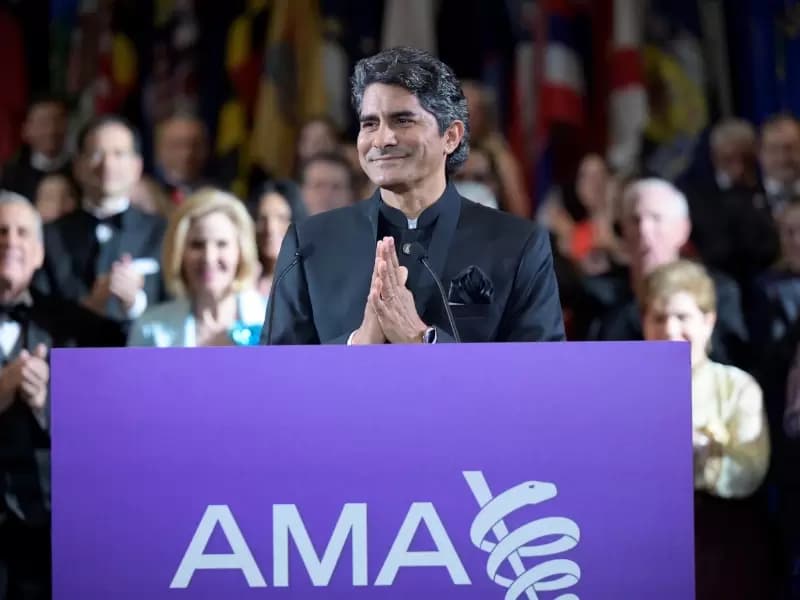
Bobby Mukkamala / Handout

Flint embraced my family and me despite its own struggles with a history of racism that is not unique or unheard of. It has been a microcosm of the health issues within the country (lack of access, dangerous exposure to lead, poverty, etc). Thus, I returned to Flint after medical school at the University of Michigan and residency at Loyola University in Chicago.

I began in a typical medical practice with my wife, Nita, an OBGYN, and soon observed the flaws in the healthcare system and the struggles it posed for my patients and me. After an initial thought about getting my law degree and suing insurance companies, I instead joined our county and state medical societies. Organized medicine on a larger scale than our individual practices is how we fight for a better healthcare system.

Also Read: Trump administration advises more protein, less sugar in new dietary guidelines

I realized that the tension between what physicians can do for one patient and what the system fails to do for many became impossible for me to ignore. As physicians, our practice of medicine with individual patients informs our advocacy for improving it for all.

Some of these improvements are needed at a very local level, our own counties, in fact. Many are state-level, and, obviously, massive systemic national improvements are required. It is impossible to have a practical impact as the most significant physician body in the country without our individual physicians and physician groups being our pulse. One drives the other.

Every time I have a conversation with those in charge of healthcare policy, while I talk about statistics of thousands and millions in our country, I always bring it to the cellular level. I tell the story of my own patients who struggle to navigate a complex system filled with barriers, such as cost and insurance policies like prior authorization.

Unfortunately, with the most expensive healthcare system in the world, philanthropy is needed more than ever. I myself benefit from it. The drug I take to keep my unresectable residual brain tumor at bay is a medicine that costs more than $200,000 per year. If this innovation gets supported by philanthropy, it can be most helpful, rather than for those with elite access.

Despite spending $4.5 trillion on healthcare, our country suffers from a stagnant life expectancy, sometimes from new threats like Covid-19 and the million people that died from it here, to fundamental problems like maternal mortality rates that statistically make us a very low-ranking developed country when we spend the most.

The AMA has been a leader in improving medical education from medical school through residency and throughout our careers through lifelong learning. I always make sure to talk about access and equity in the care that those in our country receive.

When physicians have to fight for better patient care their whole lives, from dealing with phone call after phone call with insurance companies on issues like prescribing medication that is not our first choice for our patient to begging for permission to get testing or do procedures on them to save their lives, we burn out.

We suffer from moral injury. My parents, both physicians, practiced until they could no longer do so physically. Now, almost all of my physician colleagues have quit practicing medicine because they cannot MENTALLY practice anymore.

These challenges to us often remind me of the stories I read growing up. The stories of Karna and Abhimanyu motivate me every time I remember them. In the face of adversity, whether that is life with a brain tumor, or a career of healthcare in America, I will always fight to improve the health of country, and that is why I am proud to be the president of the American Medical Association and spread this motivation to as many in the next generation as possible.

A board-certified in otolaryngology, Bobby Mukkamala serves as president of the American Medical Association for 2025-2026

(The views and opinions expressed in this article are those of the author and do not necessarily reflect the official policy or position of New India Abroad.)
 
Discover more stories on New India Abroad.

Comments

Related