ADVERTISEMENT
ADVERTISEMENT



Cutting Through the Paradigm: How Sushruta’s Legacy Outpaces the West
Ancient India's surgical traditions continue to shape modern medical practice.
-
 Dr. Vinay Nalwa
 - Sat, 11, Jul 2026
- 05:54 EDT
- 31
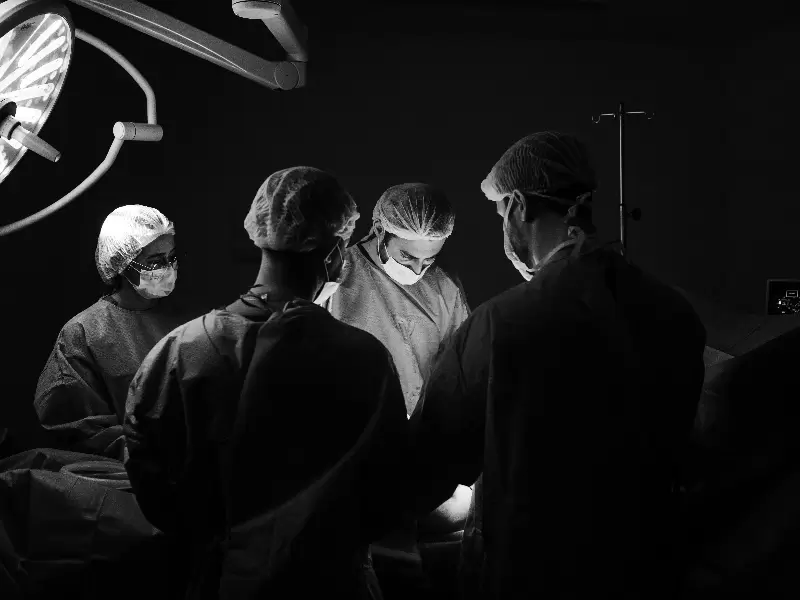 Representative Photo / Unsplash
The permanent enshrinement of Maharishi Sushruta’s bronze bust at the Royal College of Surgeons of Edinburgh is a landmark event. By honouring an ancient Indian sage, the world's oldest surgical corporation is doing more than making a polite gesture toward diversity. This historic moment represents a profound institutional acknowledgment of the non-Western roots of modern medicine, compelling us to fundamentally rethink the origins of modern surgery.
Also read: Rethinking growth in the age of iPhones and AI
The physical presence of the monument highlights this historical shift. The remarkable contrast between the meditative visage of a Vedic sage, his hair coiled in a traditional jata and a rudraksha mala draped over his shoulder, and the wood-panelled walls of one of the West's oldest surgical institutions commands immediate attention. Yet, it is the inscription on the golden plaque beneath the bust that delivers the core historical insight. It reminds the modern observer that Sushruta's extensive Sanskrit treatise not only catalogued over 300 surgical procedures but also laid down one of the world's very first medical Codes of Ethical Practice, predating Hippocrates by centuries.
For generations, a heavily Eurocentric historical narrative has dominated modern medicine, tracing an unbroken line from Greco-Roman antiquity straight to the European Enlightenment. In this chronological paradigm, the empirical discoveries of ancient non-Western civilizations have often been minimized. Early Western scholars frequently viewed Vedic texts through lenses clouded by profound colonial prejudices; Sir John Woodroffe, for instance, recalled a European Sanskritist who absurdly claimed that uttering Om before a mantra was simply a literal "clearing of the throat."
Yet, the deepest tragedy of this colonial conditioning is how thoroughly it has occupied our own minds. For generations, we have allowed our youth to grow up disconnected from the rigorous scientific achievements of our ancestors. Conditioned to believe that science, mathematics, and empirical medicine were the exclusive domains of Western secularism, we mistakenly assumed that ancient Bharat was preoccupied solely with abstract, otherworldly metaphysics.
The actual historical timeline substantially challenges this narrative. Descending from the lineage of Sage Vishwamitra and trained under King Divodas (Dhanvantari) of Kashi, Sushruta is generally placed by scholars between the late second and early first millennium BCE, although precise dating remains debated. Regardless of the precise chronology, he practiced centuries before Western figures like Galen or Celsius. Sushruta's education was deeply rooted in the tradition of Ayurveda (called the science of life), a historic Indian system of medicine that deals with balancing body, mind, and spirit.
Looking back from the modern era, it is remarkable to consider that a surgeon in antiquity was successfully executing intricate operations, ranging from delicate skin grafts and facial reconstructions to repairing severed earlobes and cleft lips, using specialized equipment he conceptualized and created. This legacy highlights not just an advanced understanding of human biology, but an equally sophisticated mastery of metallurgical engineering. To build his toolkit, Sushruta observed the natural world with clinical precision, adapting the structural mechanics of animal jaws, paws, and avian beaks into functional surgical implements.
Written in Sanskrit in the form of Shlokas, verses and incantations, gilded by the flowery language and metaphors characteristic to Sushruta, the Samhita was not an easy text to decipher. While the Sushruta Samhita is dense enough to merit its own dedicated analysis in a future study, this foundational text showcases a staggering breadth of specialization, meticulously mapping fields as diverse as embryology, urology, orthopedics, and ophthalmology alongside mainstream anatomy and physiology. Rather than focusing merely on manual skill, the text functions as a comprehensive manufacturing and maintenance manual, prescribing the exact dimensions, specific metals, and chemical alkalis required to create and sterilize specialized syringes and catheters.
Sushruta’s holistic methodology also extended deeply into perioperative care. Recognizing the intense psychological and physiological toll of surgical trauma, he insisted that patients be well-nourished before an operation to prevent fainting. More remarkably, by administering precise amounts of wine and burning cannabis vapours to dull physical agony and extend the safe window for operations, Sushruta anticipated important principles later associated with surgical anaesthesia.
Beyond pure mechanical brilliance, his teaching emphasized an uncompromising code of clinical ethics and communication. Sushruta taught that a patient's vulnerability is a sacred surrender, instructing his disciples to treat those under their care with the protective compassion a parent shows a child. He instituted strict qualifications expected of surgeons, demanding that practitioners be honest, articulate, well-groomed, and calm. He left behind stern warnings that operating out of financial greed, clinical ignorance, or rushed judgment would inevitably lead to failure.
Ultimately, the master recognized that a true healer cannot survive on theory alone, nor on unguided practice. As he famously noted in the Samhita, "a physician, well-versed in the principles of science of medicine but incompetent in his art because of want of practice, as well as the physician, experienced in his art but short on the knowledge of Ayurveda, is like a one-winged bird that is incapable of soaring high in the sky."
The later journey of Sushruta's ideas is itself revealing. His work was translated into Arabic as Kitab Shah Shun al Hindi during the Abbasid period before elements of Indian surgery entered Europe. In 1794, British surgeons documented an Indian forehead-flap rhinoplasty technique that Joseph Carpue later adapted in England. While the surgical method entered Western medicine, its philosophical foundations within Ayurveda largely disappeared from the narrative.
The Rhinoplasties called the ‘Indian Nose’ gained huge interest in Europe and the United States and popularized the technique that after refinement became an established procedure worldwide. The translation and dissemination of Sushruta’s teaching is evident and led prominent medical historians such as Erwin Ackernecht to recognise that the plastic surgery practiced in Europe was a descendant of the classical Indian surgery
The bronze bust in Edinburgh therefore commemorates far more than an individual surgeon. It quietly restores to global medical history a civilisational tradition whose contributions long predated the modern West. For India, the tribute is not an invitation to nostalgia, but a reminder that confidence in the future begins with an honest understanding of the past.
(The writer is an author and columnist)
(The views and opinions expressed in this article are those of the author and do not necessarily reflect the official policy or position of New India Abroad.)
Discover more at New India Abroad.
Leave A Comment
Related






ADVERTISEMENT

ADVERTISEMENT
E Paper
Video

Comments
Start the conversation
Become a member of New India Abroad to start commenting.
Sign Up Now
Already have an account? Login