ADVERTISEMENT
ADVERTISEMENT



U.S. museum to repatriate 'illegally removed' Indian antiquities
Three sculptures, including a Shiva Nataraja bronze, will be returned following provenance research.
-
 Rwittika Chakraborty
 - Fri, 27, Mar 2026
- 04:00 EDT
- 112
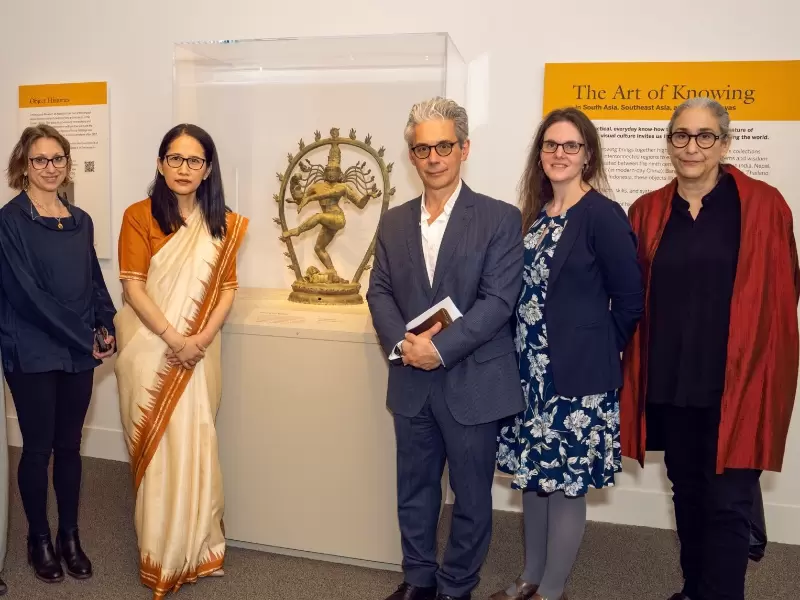 Three antique sculptures will be returning to India from the Smithsonian's National Museum of Asian Art (NMAA) in the United States. / X/@IndianEmbassyUS
Three antiquities will be returned to India from the Smithsonian's National Museum of Asian Art (NMAA) in the U.S. to repatriate illegally removed Indian antiquitiesional Museum of Asian Art after research found they were illegally removed from the country.
The artifacts include a ninth-century Shiva Nataraja bronze, a 12th-century sculpture of Shiva and Uma, and a 16th-century depiction of Saint Sundarar with Paravi.
An agreement was signed by Deputy Chief of Mission at the Embassy of India in Washington, D.C., Namgya Khampa, and National Museum of Asian Art Director Chase Robinson.
Announcing the development on X, the Embassy of India in Washington said provenance research confirmed the antiquities had been illegally removed from India.
The Shiva Nataraja bronze will remain on loan for public display, allowing visitors continued access to the work.
Three invaluable antiquities are returning home to India from the Smithsonian's National Museum of Asian Art: a 9th-century Shiva Nataraja bronze, a 12th-century sculpture of Shiva and Uma, and a 16th-century depiction of Saint Sundarar with Paravi.
— India in USA (@IndianEmbassyUS) March 26, 2026
An agreement to this effect… pic.twitter.com/G7bdEg4gPV
The Shiva and Uma sculpture, also known as Somaskanda, and the Saint Sundarar with Paravi piece were part of the collection donated by Arthur M. Sackler to the museum in 1987.
Sackler, a collector and psychiatrist, donated more than 1,000 Asian artworks to the Smithsonian.
Earlier this year, the museum said research conducted with the Photo Archives of the French Institute of Pondicherry traced the origins of the sculptures.
ALSO READ: U.S. returns 297 antiquities to India during Prime Minister Modi’s visit
The Saint Sundarar with Paravi sculpture was photographed in 1956 at a Shiva temple in Veerasolapuram village in Tamil Nadu. The Shiva and Uma sculpture was photographed in 1959 at the Vishvanatha Temple in Alathur village.
The Shiva Nataraja bronze is believed to originate from the Sri Bhava Aushadesvara Temple in Thanjavur district, where it was photographed in 1957. The museum later acquired the piece from the Doris Wiener Gallery in New York in 2002.
Earlier this month, the High Commission of India in London marked the return of several artifacts to India, including a 16th-century bronze idol of Saint Thirumangai Alvar from the Ashmolean Museum in Oxford, England.
Discover more at New India Abroad.
Leave A Comment
Related



ADVERTISEMENT

ADVERTISEMENT
E Paper
Video

Comments
Start the conversation
Become a member of New India Abroad to start commenting.
Sign Up Now
Already have an account? Login