ADVERTISEMENT
ADVERTISEMENT



U.S. judge upends Kennedy's overhaul of childhood vaccine policies
The ruling dealt a significant setback for the reduced childhood vaccination schedule championed by Kennedy, a longtime anti-vaccine activist appointed last year by President Donald Trump to lead HHS.
-
 Reuters
 - Mon, 16, Mar 2026
- 18:04 EDT
- 73
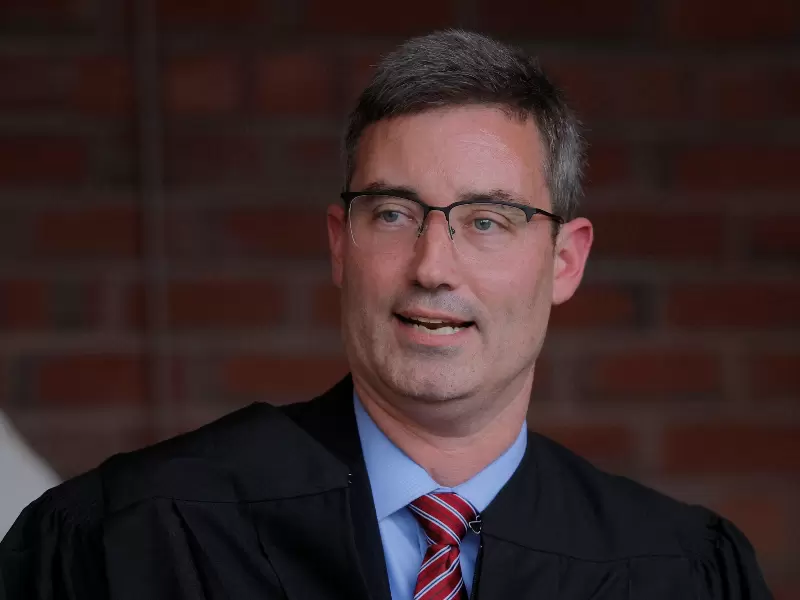 New U.S. District Judge Brian Murphy, who blocked the Trump administration for weeks from finalizing the deportation of eight men to South Sudan, speaks during his Investiture Ceremony at the federal courthouse in Boston, Massachusetts, U.S., September 17, 2025. / REUTERS/Brian Snyder
A federal judge on March 16 blocked key parts of Health Secretary Robert F. Kennedy Jr.'s effort to reshape U.S. vaccine policy, including a move to reduce the number of shots routinely recommended for children, and revamp a federal advisory committee on inoculations.
U.S. District Judge Brian Murphy in Boston sided with the American Academy of Pediatrics and other medical groups, which said health regulators had acted unlawfully to carry out Kennedy's agenda of upending immunization policies and warned the changes will reduce vaccination rates and harm public health.
Murphy's ruling forced the Advisory Committee on Immunization Practices to postpone a meeting set to begin on Wednesday, after he concluded it was not lawfully constituted and blocked Kennedy's 13 appointees to it. An official at the Department of Health and Human Services led by Kennedy confirmed the postponement.
The ruling dealt a significant setback for the reduced childhood vaccination schedule championed by Kennedy, a longtime anti-vaccine activist appointed last year by President Donald Trump to lead HHS.
Murphy said that for decades, the U.S. had been focused on the eradication and reduction of diseases using vaccines, which were developed through "a method scientific in nature and codified into law through procedural requirements."
Under Kennedy, Murphy said, the government "has disregarded those methods and thereby undermined the integrity of its actions."
The judge, who was appointed by Democratic President Joe Biden, blocked Kennedy's 13 ACIP appointees from continuing to serve in their positions and upended votes they had previously taken to reshape vaccine policies.
"This is a great victory not only for vaccines and public health in the United States, but for science," said Richard Hughes, a lawyer for the plaintiffs, on a call with reporters.
The White House did not immediately respond to a request for comment.
RULING INVALIDATES COMMITTEE VOTES
The plaintiffs had argued that the U.S. Centers for Disease Control and Prevention acted unlawfully on January 5, when it cut the number of routinely recommended childhood vaccinations to 11 and downgraded the immunization recommendations for six diseases, including rotavirus, influenza and hepatitis A.
They also challenged Kennedy's decision last year to remove and replace all 17 independent experts who previously served on ACIP, which makes recommendations that shape U.S. vaccine practices and insurance coverage.
The plaintiffs had argued that the committee had become dominated by people aligned with Kennedy's anti-vaccine views and was constituted in violation of the Federal Advisory Committee Act's mandates that it be fairly balanced and free of inappropriate influence.
Murphy said because it was unlawfully constituted, earlier votes by the panel to downgrade recommendations for hepatitis B vaccines for newborns and COVID-19 shots broadly were also invalid.
"ACIP had fallen into such disrepair that everyone had started to ignore it. But its proclamations still had legal heft," said Dr. Noel Brewer, a vaccine expert at the University of North Carolina who was removed from the panel when Kennedy reconstituted it. "This court ruling puts public health back on the right path."
Lawyers with the U.S. Department of Justice argued that while HHS welcomed debate about vaccine policy, Kennedy and officials under him had broad authority to change it to address what they said was a decline in public trust in vaccines following the COVID-19 pandemic.
VACCINE MAKERS WARY
Vaccine makers have grown increasingly wary of U.S. vaccine policy, including the makers of mRNA COVID-19 vaccines Pfizer, BioNTech, and Moderna. Companies that make other shots on the U.S. childhood vaccine schedule include Merck, Sanofi and GSK.
Shares of Moderna closed 1.4 percent higher on Monday, while others including Pfizer, Merck and U.S.-listed shares of British drugmaker GSK closed marginally higher.
As Kennedy's policies have taken hold, pediatricians have faced parents increasingly skeptical about vaccines and medical treatments, while nearly a dozen states have begun considering legal changes that would relax vaccine requirements for school enrollment.
The judge has earned the scorn of Trump and his allies for repeatedly blocking administration initiatives, including core parts of the Republican president's hardline immigration agenda.
Discover more stories on NewIndiaAbroad
Leave A Comment
Related







ADVERTISEMENT

ADVERTISEMENT
E Paper
Video

Comments
Start the conversation
Become a member of New India Abroad to start commenting.
Sign Up Now
Already have an account? Login