ADVERTISEMENT
ADVERTISEMENT


“Train your staff better,” Indian CEO to U.S. Ambassador after visa rejection
The Forbes honoree flagged the consular process after New Delhi's refusal.
-
1759163132.png) Anushka Pathak
Anushka Pathak - Tue, 10, Feb 2026
- 16:36 EST
- 430
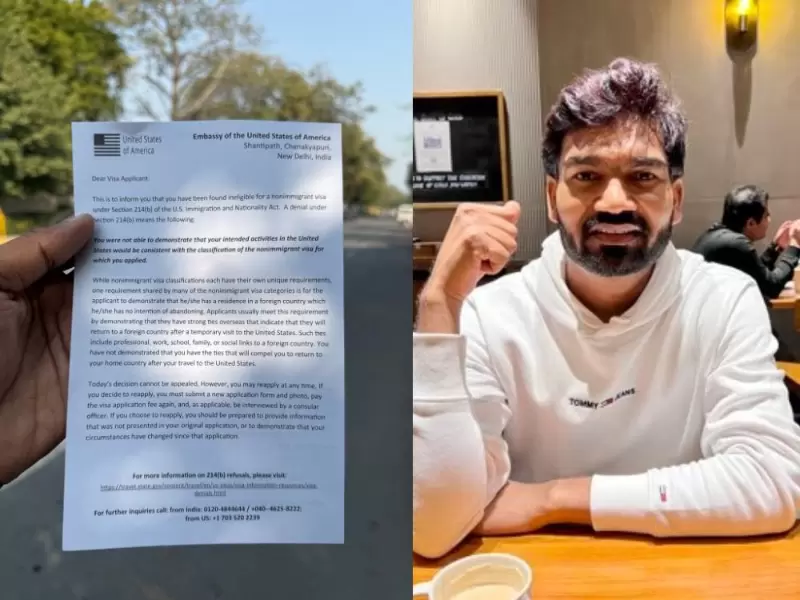 Letter received by Indian entrepreneur Jasveer Singh sent by the U.S consulate / Courtesy: X/@jasveer10
An Indian entrepreneur’s U.S. visa rejection has triggered online debate about the efficiency of the U.S. consular process in New Delhi.
Jasveer Singh, co-founder and CEO of Knot Dating, had his B-1 visa denied for insufficiently demonstrating his ties to India and intent to return after a temporary stay in the United States.
ALSO READ: Microsoft techie returns to India with remote job: 'I left to live'
US visa denied under 214(b). Reason - weak ties to India
— Jasveer Singh (@jasveer10) February 10, 2026
Irony I run a company in India, employ people in India, pay taxes in India and have built everything here over the last 13 years. Apparently that is not enough proof that I’ll return to India.
I’m more committed to… pic.twitter.com/iJfwJSgwHp
A Forbes 30 Under 30 Asia honoree, Singh shared an image of his denial letter, which stated that the visa was rejected under Section 214(b) of the Immigration and Nationality Act, which relates to an applicant’s inability to establish eligibility for a nonimmigrant visa, including demonstrating sufficient ties to their home country and intent to return after a temporary stay in the United States.
It added that applicants must establish strong ties to their home country to show intent to return after a temporary visit, including professional, work, educational, family, or social links.
Singh questioned the decision in his post, writing, “US visa denied under 214(b). Reason - weak ties to India. Irony I run a company in India, employ people in India, pay taxes in India and have built everything here over the last 13 years. Apparently that is not enough proof that I’ll return to India.”
He further said, “I’m more committed to India than your process is to logic. Mr @USAmbIndia and team, if this is your bar, either your definition of intent is broken or your evaluation process needs serious review. Train your New Delhi consulate teams better.”
He also claimed that online activity is considered during assessments, adding, “PS: They check social media too now. A friend said next time just delete your tweets on the US and NRIs before the interview and your visa gets approved.”
The denial letter noted that the decision cannot be appealed, but applicants may reapply at any time with a new form, photograph, fee, and, where required, another interview. It advised reapplicants to be prepared to demonstrate changes in circumstances since the earlier application.
Singh’s post drew heavy engagement and responses that ranged from criticism citing earlier social media posts about the United States to support for strict visa scrutiny, along with users sharing similar experiences with U.S. visa applications.
Discover more at New India Abroad.
Leave A Comment
Related




ADVERTISEMENT

ADVERTISEMENT
E Paper
Video

Comments
Start the conversation
Become a member of New India Abroad to start commenting.
Sign Up Now
Already have an account? Login