ADVERTISEMENT
ADVERTISEMENT



India, U.S. join Indo-Pacific partners in anti-submarine drill
Five nations took part in a 20-day exercise in Guam to boost maritime coordination.
-
 IANS
IANS - Fri, 03, Apr 2026
- 23:30 EDT
- 121
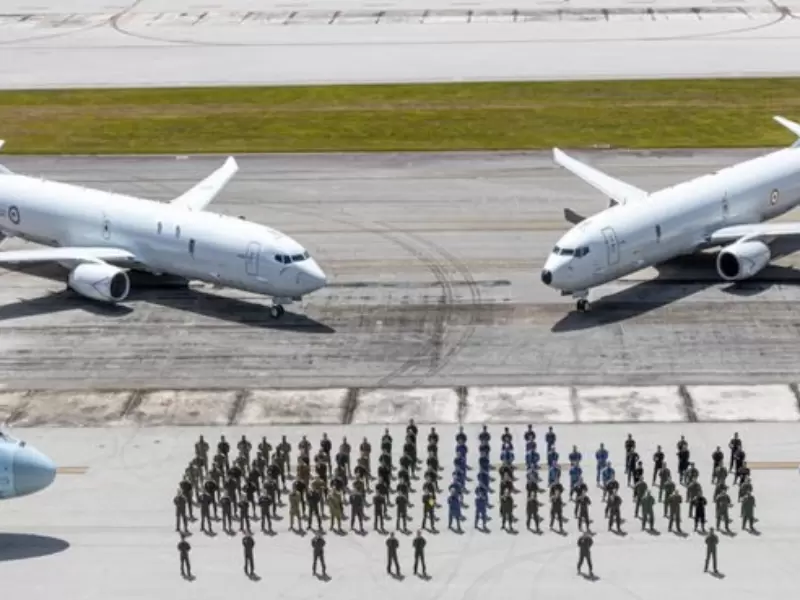 Exercise Sea Dragon 2026 concluded at Andersen Air Force Base on March 28 / X/@USPacificFleet
The United States and India joined Japan, Australia, and New Zealand in a 20-day anti-submarine warfare exercise in Guam, boosting coordination among Indo-Pacific partners, officials said.
Exercise Sea Dragon 2026 concluded at Andersen Air Force Base on March 28 after 20 days of intensive training focused on tracking and neutralizing undersea threats in a complex operational environment, a media release said.
Hosted by Commander, Task Force 72, the exercise featured U.S. Navy P-8A Poseidon aircraft alongside aircraft from the Indian Navy, Japan Maritime Self-Defense Force, Royal Australian Air Force, and Royal New Zealand Air Force.
ALSO READ: U.S. bill targets Indo-Pacific arms delays
Officials said the drills were designed to enhance interoperability and strengthen shared maritime domain awareness among the five participating nations. The exercise built on previous editions to improve the ability to conduct coordinated anti-submarine warfare operations in a dynamic and contested environment.
“What we do in Sea Dragon builds more than skill — it establishes team across nations. The shared experience empowers us to fight together more effectively,” said Navy Lt. Paolo Aguilar, assigned to Patrol and Reconnaissance Squadron 4.
The training program included structured tracking drills using a mobile anti-submarine warfare training target known as the MK-30. Participants also carried out a live anti-submarine warfare exercise in which crews hunted for an active Navy submarine operating in the area.
This year’s operations were conducted in the vicinity of Saipan, the capital of the Northern Mariana Islands, where forces employed recoverable exercise torpedoes, demonstrating an expansion of operational capabilities among the participating nations.
The exercise retained a competitive component, with each nation’s performance assessed and graded in realistic scenarios. Japan’s Patrol and Reconnaissance Squadron 3 won the Dragon Belt award, which had been held last year by the Royal Australian Air Force.
Exercises like Sea Dragon highlight the strength of U.S. partnerships and alliances, officials said, emphasizing the role of such drills in maintaining regional stability.
“They show that together we’re stronger, more capable, and ready to deter any aggressor in the Indo-Pacific,” said Navy Lt. Caitlin Tucker, a pilot with Patrol and Reconnaissance Squadron 45.
Sea Dragon, held annually since 2019, has emerged as a key platform for enhancing coordination among maritime forces operating in the Indo-Pacific. The participation of India alongside U.S. allies reflects a steady deepening of defense cooperation in the region.
In recent years, India has expanded its engagement in multilateral naval exercises as part of broader efforts to strengthen maritime security partnerships and safeguard critical sea lanes. The Indo-Pacific remains central to global trade flows and strategic competition, with increasing focus on undersea capabilities and surveillance.
Discover more stories on New India Abroad
Leave A Comment
Related









.jpg)


ADVERTISEMENT

ADVERTISEMENT
E Paper
Video

Comments
Start the conversation
Become a member of New India Abroad to start commenting.
Sign Up Now
Already have an account? Login