ADVERTISEMENT
ADVERTISEMENT



Amb. Kwatra unveils Swami Vivekananda statue at Chicago consulate
Swami Vivekananda, travelled from Calcutta to Chicago to deliver a speech at the 1893 World's Parliament of Religions in Chicago.
-
 Avatans Kumar
 - Mon, 15, Jun 2026
- 18:48 EDT
- 614
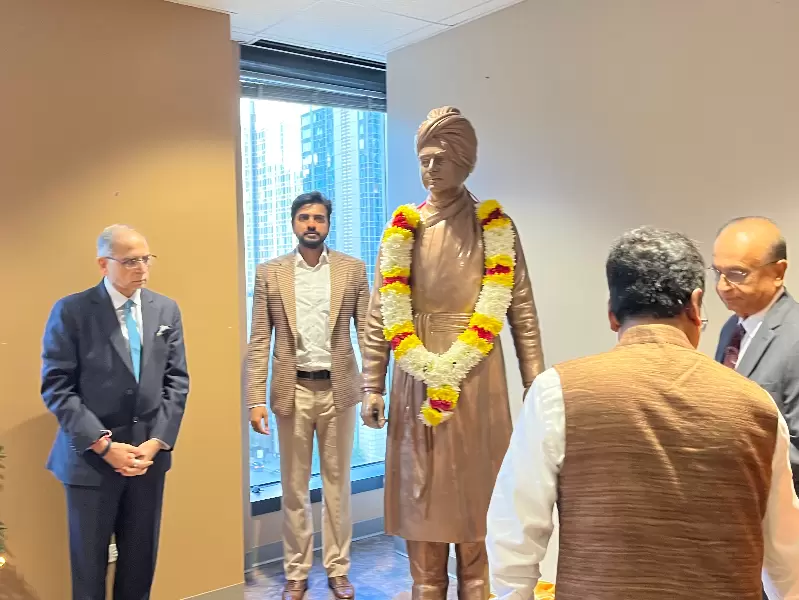 Ambassador Kwatra Unveils Swami Vivekananda's Statue in Chicago / Chicago Bureau
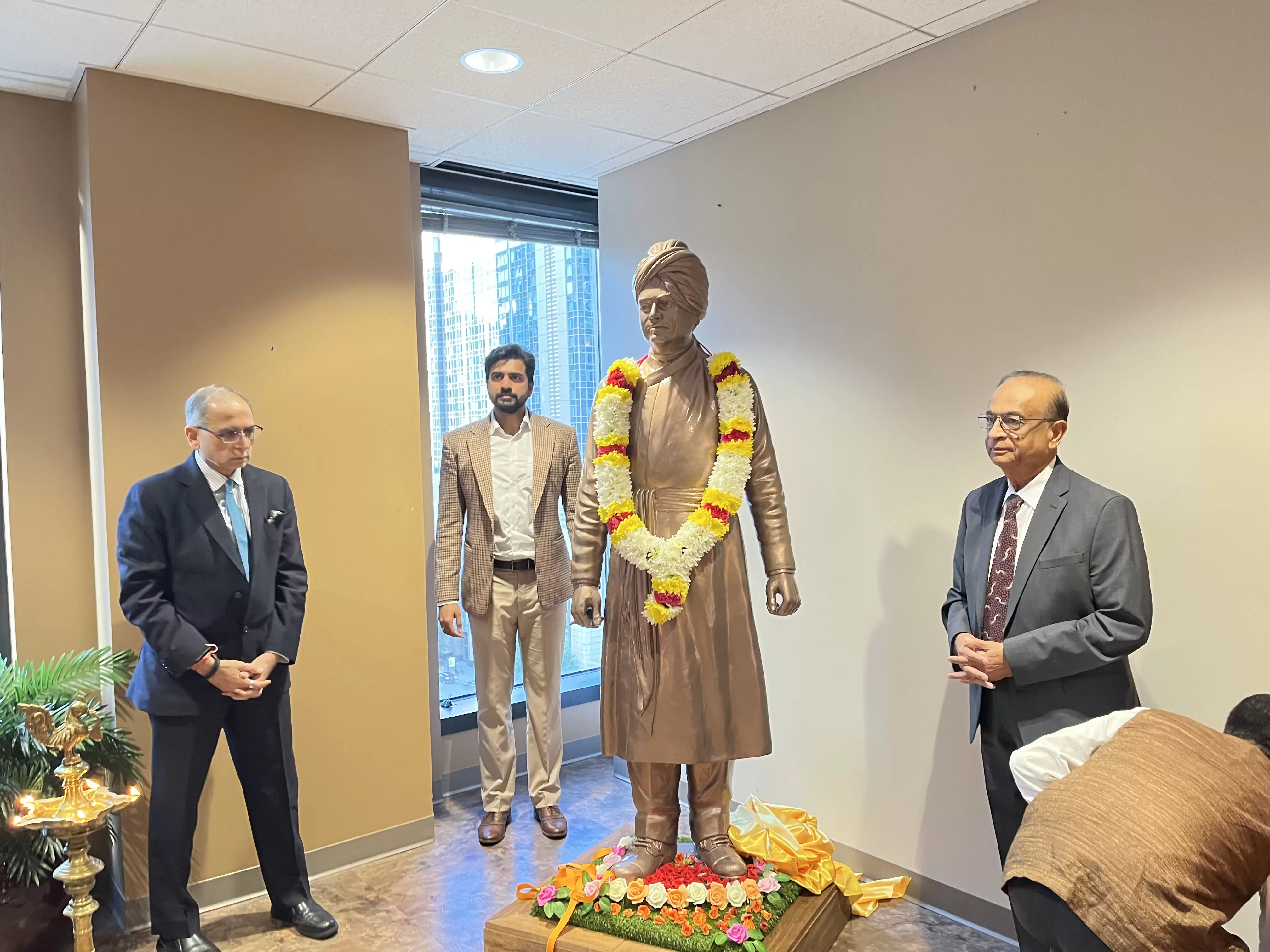
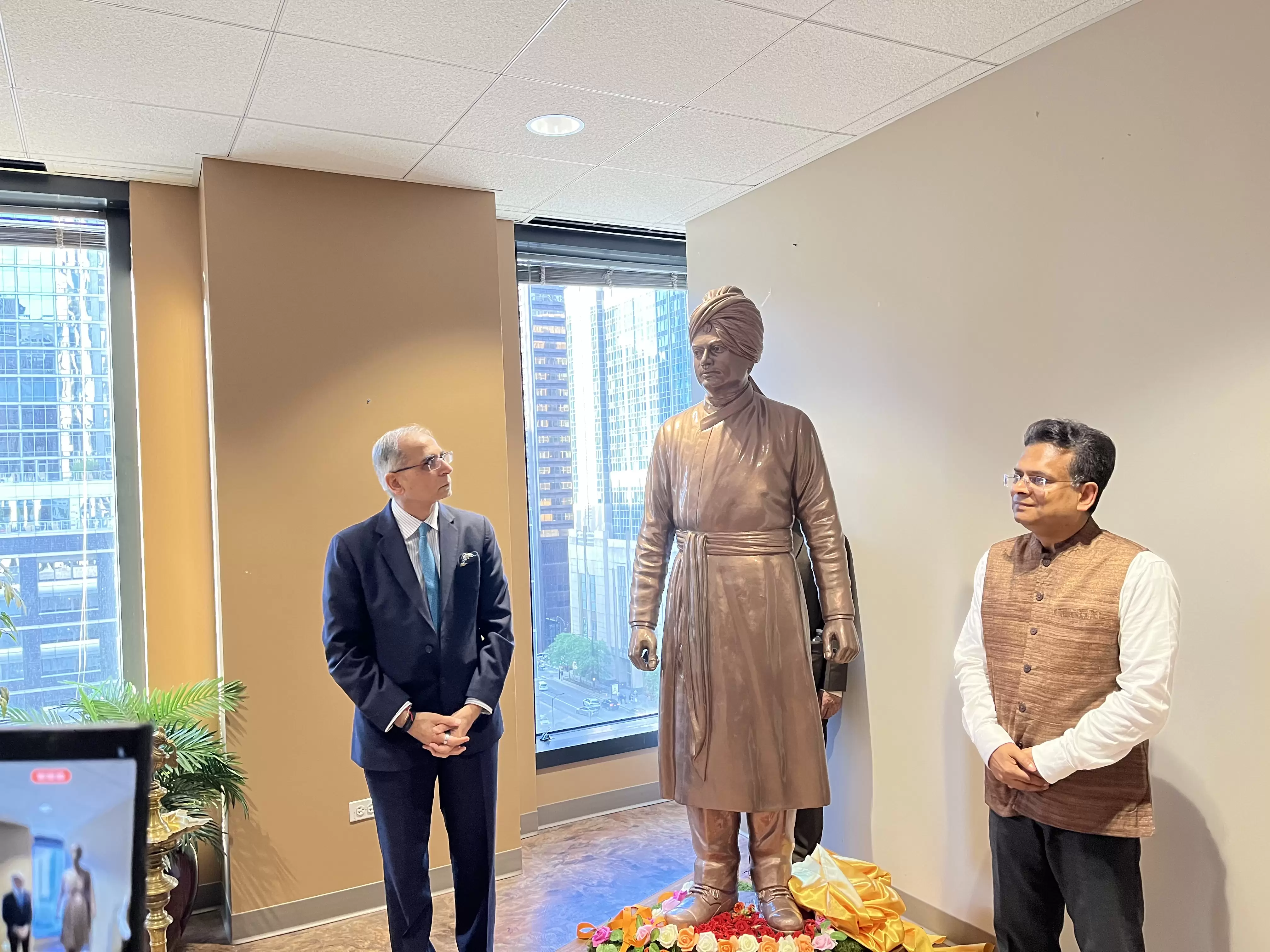
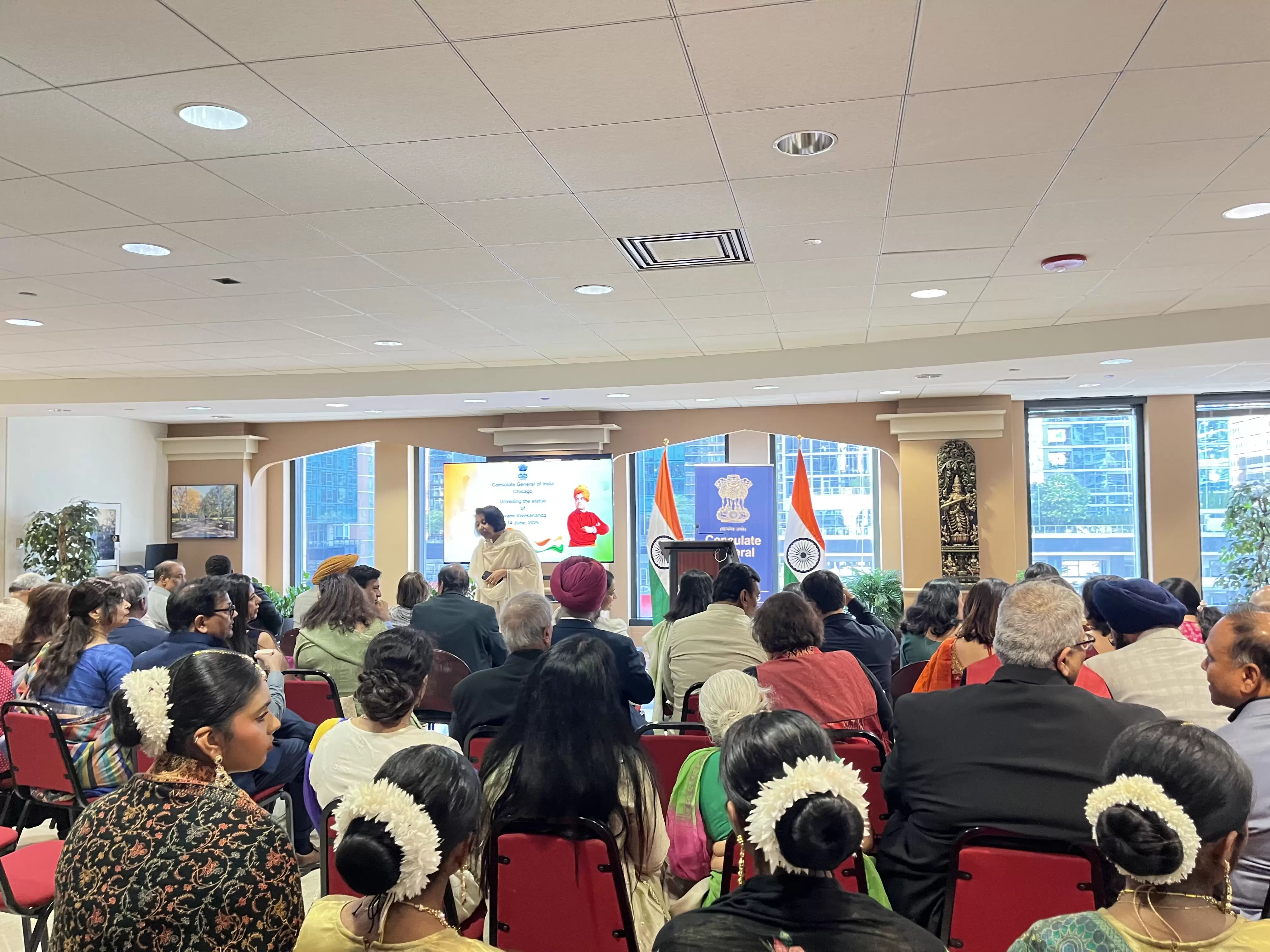
The name of Swami Vivekananda has a profound connection with both the City of Chicago and Kolkata. When Vinay Mohan Kwatra, India's ambassador to the United States, unveiled a life-size statue of Swamiji at the Indian Consulate in Chicago 133 years later, the event felt like Swamiji's homecoming of sorts.
On July 30, 1893, Swami Vivekananda, described by the Chicago Record (September 11, 1893) as a "learned Brahman Hindoo" with a "fleshy face… an orange turban and a robe of the same colour," arrived in Chicago. This "bright and intelligent" individual, noted for his "very good" English, had departed India on May 31, 1893, undertaking a lengthy journey to America to represent Hindus at the Parliament of Religions.
At the time of Swami Vivekananda's arrival in Chicago, India remained under British colonial rule and was characterized by widespread destitution, hardship, and demoralization and prolonged periods of exploitation and destruction by foreign invaders, compounded by the constraints of colonialism, had reduced a once-prosperous nation—renowned for its scientific achievements and as the land of the Vedas, Panini, Aryabhatta, and Patanjali—to a state of decline. In this context of desperation, India sought inspiration and renewal.
Swami Vivekananda provided this inspiration through his address at the Parliament of Religions. His 1893 visit to Chicago is widely regarded as a pivotal moment in the cultural exchange between East and West. Representing Hinduism at the inaugural Parliament of the World's Religions, he captivated the assembly on September 11 with his opening address, beginning with the now-famous salutation, "Sisters and brothers of America."
Swamiji's message, which emphasized universal tolerance, the rejection of religious bigotry, and the essential harmony among all faiths, received a standing ovation and brought him national recognition.
During his stay in the United States, Vivekananda traveled extensively, delivering lectures that introduced Vedanta philosophy. Swami Vivekananda addressed the prevalence of "sectarianism, bigotry, and its horrible descendants," noting that these forces have "filled the earth with violence… destroyed civilizations, and sent whole nations to despair."
Through his interactions, Swamiji introduced Hinduism, or "Sanatan Dharma," to a global audience. He emphasized that pluralism, respect for all, compassion, reason, logic, and scientific inquiry are defining characteristics of Hindu civilization, one of the world's oldest continuous civilizations. He also highlighted a religion "which has taught the world both tolerance and universal acceptance," referring to Hinduism. Through these efforts, he effectively established a lasting intellectual bridge between Indian spirituality and modern Western thought.
Swami Ishtmananda of the Vivekananda Vedanta Society of Chicago also addressed the gathering, which included local elected officials and members of the Indian diaspora. The event was organized in collaboration with the Indian American Community Foundation.
Leave A Comment
Related





.png)
ADVERTISEMENT

ADVERTISEMENT
E Paper
Video

Comments
Start the conversation
Become a member of New India Abroad to start commenting.
Sign Up Now
Already have an account? Login