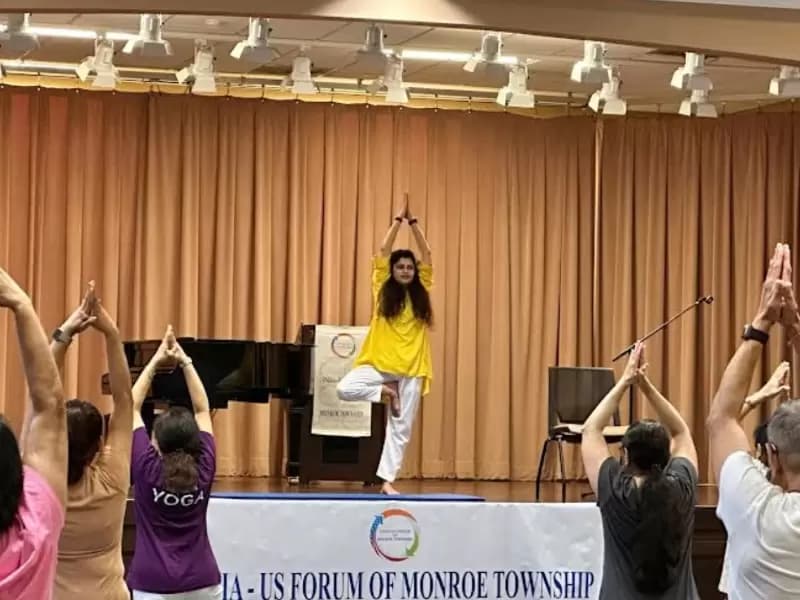
Nidhi Pandya performing yoga. / Courtesy photo
For many people in the Western world, yoga begins as a physical practice. It may start with a desire to become more flexible, reduce stress, improve posture, or simply find a healthier routine. Over time, however, many practitioners begin to discover that yoga offers something much deeper than movement alone.
Yoga has a quiet way of extending beyond the mat and into everyday life.
ALSO READ: UN hosts International Day of Yoga event
The true essence of yoga is not limited to a studio or a one-hour class. It can be found in the way we breathe during stressful moments, the way we respond instead of react, and the way we learn to slow down enough to become more aware of ourselves and the world around us.
In today’s fast-paced culture, many people move through the day on autopilot. Minds are constantly occupied with schedules, responsibilities, and endless streams of information. Even during moments of rest, the mind often continues racing.
This constant mental activity can leave people feeling disconnected, overwhelmed, and emotionally exhausted.
Yoga invites us to approach life differently.
At its core, yoga is a practice of awareness. Through mindful movement, pranayama, and meditation, yoga teaches us how to become more present — not only during practice, but throughout the day. Even something as simple as noticing the breath can create a pause between stress and reaction.
That pause can be transformative.
One of the most powerful aspects of yoga is that its teachings are practical and accessible. The calm cultivated during practice can gradually influence how we speak, work, eat, rest, and interact with others. Yoga encourages balance not only in the body, but also in daily living.
Pranayama, or conscious breathing, is especially valuable in modern life. Many people breathe quickly and shallowly without realizing it, particularly during periods of stress or anxiety. Gentle breathing techniques can help regulate the nervous system, quiet mental restlessness, and create a greater sense of emotional stability.
Meditation offers another opportunity to reconnect inwardly. It reminds us that stillness does not have to be complicated. Even a few moments of quiet each day can help create clarity, patience, and a deeper sense of grounding.
As the International Day of Yoga is observed each year on June 21, it serves as a reminder that yoga was never intended to be only a physical discipline. The word “yoga” derives from Sanskrit and means “to unite,” symbolizing harmony between body, mind, and consciousness.
The International Day of Yoga was officially recognized by the United Nations in 2014 following a proposal by Indian Prime Minister Narendra Modi during his address to the UN General Assembly. Supported by 175 countries, the resolution reflected yoga’s universal message of well-being, awareness, and human connection.
Today, yoga continues to grow across the world because its teachings remain deeply relevant to modern life. In a time marked by stress, distraction, and emotional fatigue, yoga offers something simple yet meaningful — the ability to reconnect with ourselves in a more conscious and compassionate way.
Perhaps that is why yoga continues to resonate with so many people across cultures and communities. It is not about perfection or performance. It is about learning to live with greater awareness, balance, and presence.
In a world that often pulls our attention outward, yoga gently guides us back inward — one breath, one moment, and one mindful step at a time.
Discover more at New India Abroad.
ADVERTISEMENT
ADVERTISEMENT
Comments
Start the conversation
Become a member of New India Abroad to start commenting.
Sign Up Now
Already have an account? Login