ADVERTISEMENT
ADVERTISEMENT



Inderjit Singh Bindra, a multifaceted bureaucrat who built Punjab, cricket and sports
During his career as a civil servant, Inderjit Bindra held several prestigious positions, including as Deputy Commissioner of Ludhiana from 1972 to 1974 and Patiala from 1975 to 1975, during which he established a reputation for swift, legally sound decision-making and administrative efficacy.
-
 Prabhjot Paul Singh
 - Sun, 25, Jan 2026
- 23:52 EST
- 295
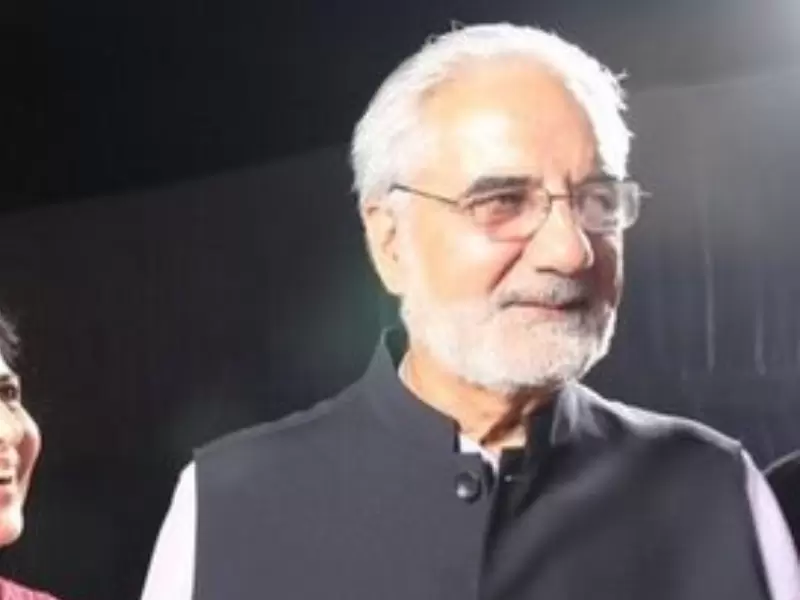 Inderjit Singh Bindra / Inderjit Singh Bindra via X
He was not only a doyen of Indian cricket, an administrator par excellence who commanded respect across multiple institutional domains, but also a gentleman, a keen golfer, a wonderful human being, and a trustworthy friend whose prime love was sports.
Inderjit Bindra and cricket were like two sides of a coin. No history of this modern-day sport would ever be considered complete without a substantial recognition of the immense contribution of this rarest of rare bureaucrats who served the Punjab Government after joining his parent cadre in 1966. (He had a brief stint as an IPS officer before getting into the elite service.)
He was a bureaucrat with a difference. Known for his quick decisions, he belonged to the rare band of civil servants who left little or no pendency of files at the end of the day. In his death, Punjab has lost one of its illustrious sons, an administrator par excellence and a custodian of institutional integrity.
I had a very long association with him. When the PCA stadium was coming up, I used to accompany him on his evening “inspection-cum-evaluation” walk around the complex. He would follow the progress meticulously and hold regular meetings with both the architect and the construction company. No deadlines were compromised.
ALSO READ: Indian expat Devesh Mistry passes away in Dubai
He always took his criticism well. As a captain of the Chandigarh Golf Club, he ordered the chopping off of the green tops of most of the trees. I came out with a front-page story in The Tribune, “Killing trees for their sport.” The next morning, when he called me, I told him that my respect notwithstanding, his action of wreaking havoc with the ecology could not be ignored in the public interest. He, instead of getting agitated, agreed with me to admit that it was a “wrong decision” and “chopping off green tops could have been avoided.” He kept his promise throughout, even while the PCA Stadium was being constructed.
He was a regular at the golf club, where his immediate playmates used to be flying Sikh Milkha Singh and bureaucrat RS Mann. He was one of the first few to use a cart on the course.
Better known as a cricket administrator, he not only transformed a mediocre Punjab team into prestigious national Ranji Trophy champions but also brought the sleepy township of Sahibzada Ajit Singh Nagar—Mohali—on the world map with one of the best cricket stadiums, the PCA Stadium. In fact, if Punjab could renovate, upgrade, and modernise its sports infrastructure after the reorganisation of the state in 1966, it was all because of his astute planning and farsightedness.
Not many would know about his love for sports other than cricket. Convinced that the public sector undertakings have a social role to play, he conceived, planned, and raised a hockey team in the public sector. Led by then Olympian—now an MLA from Jalandhar Cantonment—Pargat Singh and coached by international Sukhvir Singh Grewal, the team under the banner of Punjab Alkalis and Chemicals brought laurels to the state by winning several prestigious tournaments. His experiment of using public sector undertakings for checking sports drain from the state did not survive for long. The Alkalis team was disbanded after he was shifted from the Industries Department. This team had given Punjab and the country several outstanding players, most of whom later got absorbed into the Punjab police.
Inderjit Singh Bindra belonged to a vanishing category: the senior administrator who commanded respect across multiple institutional domains and whose work transcended the narrow bounds of his formal portfolio. Few civil servants transition successfully into sports administration at such rarefied levels; fewer still leave an indelible institutional legacy in both spheres.
KBS Sidhu, also a retired civil servant, while paying tribute to his senior colleague, wrote that Punjab has lost not merely a cricket administrator but a custodian of institutional integrity. India has lost a figure whose strategic vision helped position the nation as a cricketing superpower. And the broader world of cricket governance has lost one of its architects—a man whose tenure in positions of authority coincided with cricket’s globalisation and the assertion of non-Anglo spheres of influence over the sport’s direction.
“Bindra’s death marks the conclusion of an extraordinary institutional career spanning more than four decades, during which he moved seamlessly between the senior echelons of the civil service and cricket administration, bringing to both spheres a rare combination of decisive leadership, legal acumen, and entrepreneurial vision,” wrote KBS Sidhu.
“My memories of MrBindra are still vivid and fresh in my mind. It was he who got the infamous Chaura Bazar of Ludhiana cleared of its encroachments. He refused to bow under any pressure,” recalls Dronacharya hockey coach Baldev Singh of Ludhiana, who incidentally figures in the list of recipients of Padam Shri this year.
During his career as a civil servant, Inderjit Bindra held several prestigious positions, including as Deputy Commissioner of Ludhiana from 1972 to 1974 and Patiala from 1975 to 1975, during which he established a reputation for swift, legally sound decision-making and administrative efficacy.
When the Rajiv-Longowal accord was reached in 1985, wherein a provision was made to transfer the administrative control of Chandigarh to Punjab, Inderjit Bindra’s reputation as administrator par excellence made him the automatic choice for the position of Administrator of Chandigarh. Not only the merger of Chandigarh, but the whole accord was subsequently cold-shouldered.
He was a bureaucrat who remained glued to the happenings in the state. Between 1982 and 1987, when Punjab was going through its critically turbulent times, he was positioned as Special Secretary to the President of India, Giani Zail Singh.
He probably had the first-hand account of events leading to both Operation Blue Star (June 1984) and the subsequent assassination of the then Prime Minister Indira Gandhi (October 1984), as he played a delicate balancing act between the president and the new prime minister, Rajiv Gandhi, while the country witnessed unprecedented violence, the worst after the 1947 partition. The violence was heaped on a minority to which he and the president belonged. At this crucial juncture, Inderjit Bindra played the role expected of a mature bureaucrat to maintain the institutional equilibrium so that constitutional propriety and political stability were not impacted by the rising tensions and sectarian violence.
Coming to his passion, cricket, Inderjit Bindra set for himself the arduous task of reviving and rejuvenating the game in the state. He not only brought together some of the promising youngsters after some stalwarts like Bishan Singh Bedi, the Amarnath brothers, and Madan Lal had packed their bags and moved to Delhi and other cricketing centres, but he also tried to rectify the poor institutional management and the absence of competitive infrastructure. He initially built a team with MP Pandov and GS Walia as his working hands.
In 1978, he formally took over as president of the Punjab Cricket Association. Punjab started quickly ascending on the national scene and climaxed in 1992-93 when the state won for the first time the prestigious Ranji Trophy title. A state that was still then known for its supremacy in hockey, football, athletics, and other sports had arrived on the cricket scene as well.
Besides upgrading the existing infrastructure, including Gandhi Park in Amritsar and Burlton Park in Jalandhar, the PCA sent money for modernising its infrastructure; it was his vision that saw the Punjab Cricket Association coming up with a world-class facility at Mohali. As a tribute to his yeoman service to the game, the PCA stadium was named after him after he formally retired from his active association with the administration of the game in that state in 2014.
Inderjit Bindra is credited with marketing sport in a big way. It was he who roped in big companies for the live telecast of the game on various levels. Beyond tournament hosting, Bindra played a pivotal role in television rights monetisation. He recognised, with prescient clarity, that satellite television represented an unprecedented revenue opportunity for Indian cricket. His tenure as president (1993-96) marked a period of administrative and financial rejuvenation of the BCCI that made it the cash-rich sports body of the country. It was he who played a stellar role in pulling the World Cup Cricket out of England to bring it to India and South Asia through the 1987 Reliance Cup. In 1996, it was India, Pakistan, and Sri Lanka that played joint host to the World Cup, all because of his coordination and efforts.
He never worked for honours and awards. Commitment and perfection were his passions, as he was a man who never compromised and always stood by people he liked and admired.
Discover more at New India Abroad.
Leave A Comment
Related







ADVERTISEMENT

ADVERTISEMENT
E Paper
Video

Comments
Start the conversation
Become a member of New India Abroad to start commenting.
Sign Up Now
Already have an account? Login