ADVERTISEMENT
ADVERTISEMENT


Fading voices of folk
For Indians living abroad, this is not just a story from the hinterland—it is a fading inheritance.
-
 S. Raju
 - Wed, 15, Apr 2026
- 10:46 EDT
- 266
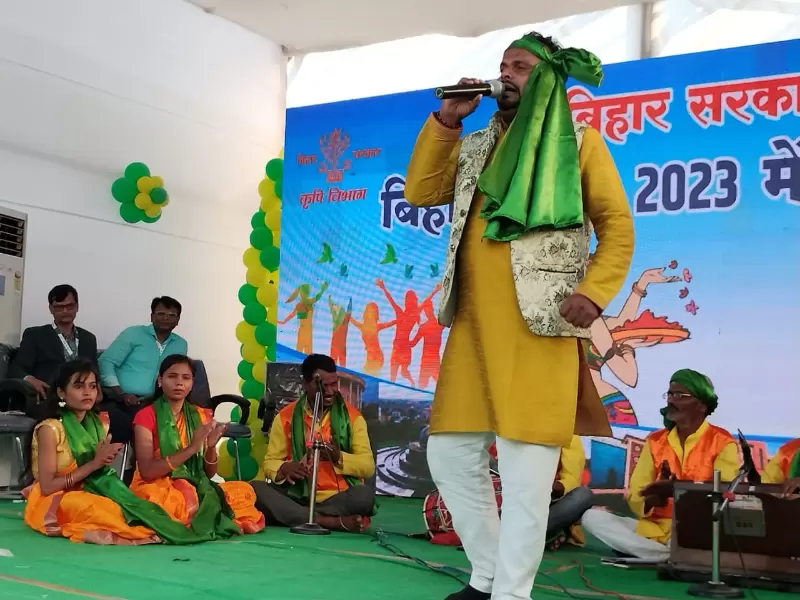 Akhilesh Lal Yadav , Birha singer / Special Arrangement
There was a time—not very long ago—when the heart of rural India beat to the rhythm of its folk arts. Under open skies and flickering lanterns, entire villages would gather to witness the magic of Nautanki, Ragini, Swang, Alha-Udal, Birha, Pandwani, Jogira, Dhobia Naach, Kehraua, Kathghodwa, Netua Naach, Jat-Jattin Naach, Bahurupia and the timeless storytelling of Indian Puppetry.
These were not mere performances—they were living narratives. They carried the stories of the Ramayana and Mahabharata, the valor of warriors, the journeys of national heroes, and the silent struggles of society. They questioned social evils like dowry and addiction, not through sermons but through emotion, music, and collective experience.
Also Read: The Martial Arts India forgot to export
Villages didn’t just watch these performances—they lived them. Artists were hosted with dignity, fed by the community, and respected as cultural torchbearers despite having no formal education. They were the voice of the people.
Today, that voice is fading.
From Chaupals to Screens: A Silent Shift
The chaupals have fallen quiet. The long nights of collective listening have been replaced by solitary scrolling. Smartphones and social media have redefined entertainment, leaving little space for traditional, community-driven art forms.
With shrinking performance spaces, limited government support, and declining financial returns, folk arts are struggling to survive. The younger generation—both in India and among the diaspora—remains largely disconnected. Even within artist families, children are choosing different paths, unwilling to inherit a legacy that no longer ապահովs dignity or livelihood.
A Tradition of Pain, Now in Pain
In Rafiganj, Bihar, Birha singer Akhilesh Yadav continues to sing a tradition rooted in viraha—the pain of separation, symbolized through the longing of the Gopis for Krishna.
But today, Birha itself stands at the edge of separation—from its roots, its audience, and its future.
“Youngsters now demand Shringar Ras—romance and glamour. The traditional depth is fading,” he says. The growing influence of orchestra-style performances has diluted its authenticity.
With dwindling audiences and inadequate income, survival has become a challenge. Despite his deep pride, Akhilesh does not want his children to take up this art.
He also points to the near disappearance of Netua Naach and Jat-Jattin Naach in Bihar. “Very few artists remain,” he says—a statement that echoes across many regions.
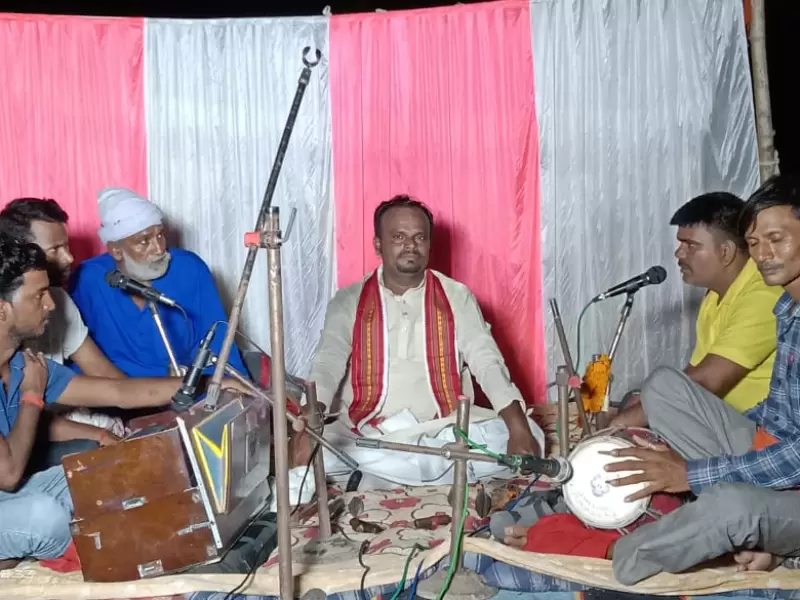 Akhilesh Lal Yadav with his group. / Special Arrangement
Echoes of Valor Fading into the Night
In Bihar’s Gaya district, Pravesh Paswan is among the few remaining artists who narrate the heroic saga of Alha and Udal.
“This is not easy,” he says. “We narrate their story through the night—it demands stamina, dedication, and deep knowledge. But youngsters are not interested anymore.”
Ironically, his schedule remains busy—not because the art is thriving, but because there are so few artists left to perform it.
Low income, fading recognition, and lack of patronage have pushed this powerful tradition to the brink.
Keeping Stories Alive—Against All Odds
In Varanasi, Mithilesh Dubey has spent decades trying to keep storytelling alive through puppetry.
Inspired by Mahatma Gandhi and guided by Narayan Desai, he created “Mohan to Mahatma”—a powerful narrative of Gandhi’s childhood and values. Since 2005, he has performed over 16,000 shows across 15 states.
Also Read: The “Dadi-Approved” biohack: Reclaiming ancestral wellness in 2026
Yet, the struggle remains deeply personal.
“Earlier, artists had respect and support. Today, even our children ask—what did you gain?” he says.
To survive, many artists now engage in promotional work, often at the cost of their art’s soul.
 Mithilesh Dubey Puppetry / Special Arrangement
A Living Archive of Forgotten Forms
Seventy-year-old Sunil Dutta Kabir of Azamgarh, associated with Indian People's Theatre Association since 1970 and founder of the National Lokrang Academy, recalls a rich spectrum of now-forgotten folk traditions.
“Jogira was satire on the system. Dhobia Naach was performed by washermen with ghunghru tied to their feet and waist. Kehraua came from the Kahar community who carried the bride’s doli. Kathghodwa used a hollow horse structure for dance,” he says.
But behind these vibrant forms lies a harsh reality.
“Most of these artists come from very poor families. They work as labourers, run small shops—just to survive. With no protection or support, their children don’t want to continue. These arts are dying.”
Ragini Between Respect and Ruin
In Bagpat, 75-year-old Sahdev Bedhadak continues a lifelong journey of storytelling through Ragini, carrying forward the legacy of Prithvi Singh Bedhadak.
From Maharana Pratap to Shivaji, his voice has narrated history and spirituality for decades.
But time has changed the audience.
“Earlier, villages welcomed us with immense respect. Today, many youngsters don’t even know this art,” he says, also expressing concern over rising vulgarity in some performances.
“Social media helps visibility—but the soul of folk arts lives only in live performance.”
Memories, Research, and a Race Against Time
For Dr Yashpal Singh of University of Delhi, these traditions are deeply personal memories. He recalls icons like Lakhmi Chand and Chandra Singh Baadi—artists who once defined rural cultural life.
“These were not just performers—they were legends. Today, their art is fading, and with it, our cultural identity,” he says.
Recognizing this urgency, Chaudhary Charan Singh University has initiated research on Nautanki under Prof K K Sharma.
“The aim is to document and preserve these traditions, which have links to the Natya Shastra and played a major role in social awakening—even during the freedom struggle,” Prof. Sharma explains, adding that similar research will follow for other folk arts.
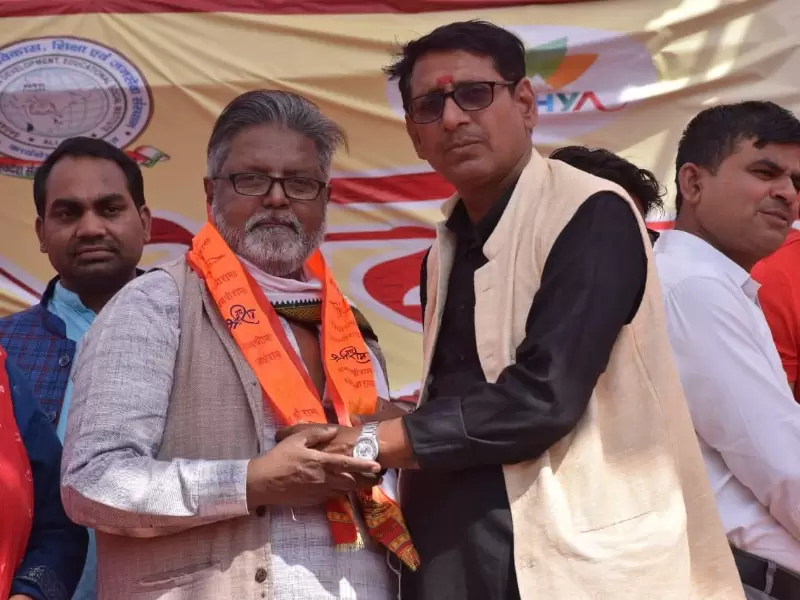 Sunil Datta Kabir / Special Arrangement
A Culture of Respect, Now a Memory
Former Union Minister Sompal Shastri recalls a time when folk artists were the pride of villages.
“These artists had no formal system of education—it was their native and innate talent that found expression through these art forms,” he says.
Villagers would host them, feed them, and treat them with deep respect. Their performances taught discipline, moral values, and social awareness.
“Today, many of them are gone. And the younger generation does not even know what has been lost.”
A Wake-Up Call for the Indian Diaspora
For Indians living abroad, this is not just a story from the hinterland—it is a fading inheritance.
While festivals and mainstream culture travel across borders, these grassroots traditions rarely do. The result is a growing cultural gap—where younger generations may celebrate India, but remain unaware of its deepest, most authentic expressions.
Supporting these art forms—through documentation, global showcases, cultural programs, and digital storytelling—is no longer optional. It is essential.
Because if these voices disappear from India, they will disappear from the world.
The Last Word
As noted by music professional Mannu Kohli of Delhi, “Folk arts are the pulsating expression of India’s cultural richness. They are passed through generations and represent the customs of communities. But today, many are facing extinction as artists shift to more lucrative professions. For any civilisation to remain relevant, its roots must be preserved—and the government’s role is vital.”
India’s folk arts are not relics.
They are living souls—fragile, fading, yet full of life.
The question is not whether they can survive.
The question is—will we let them?
Discover more stories on New India Abroad
Leave A Comment
Related







ADVERTISEMENT

ADVERTISEMENT
E Paper
Video

Comments
Start the conversation
Become a member of New India Abroad to start commenting.
Sign Up Now
Already have an account? Login