ADVERTISEMENT
ADVERTISEMENT



Language Legacy
The U.S. initially avoided naming an official language because the Founding Fathers were focused on freedoms rather than linguistic uniformity.
-
1759953093.png) Staff Reporter
Staff Reporter - Sun, 22, Feb 2026
- 02:55 EST
- 104
 Representative Image / Unsplash
Strong English skills are now essential for Florida drivers after recent highway crashes, involving Indian-origin drivers, all of whom held non-domiciled CDLs, raised safety concerns.
In 2026, Florida removed non-English Commercial Driver’s License (CDL) tests. Other states and federal authorities also tightened licensing rules.
Ironically, until recently, English was not the official language of the U.S. Most assume it is, but that’s not strictly true. Unlike most nations, the U.S. went centuries without declaring an official language, even with hundreds of millions of English speakers.
ALSO READ: Outrage Erupts After California Licensed Illegal Indian Immigrant Behind Fatal Florida Crash
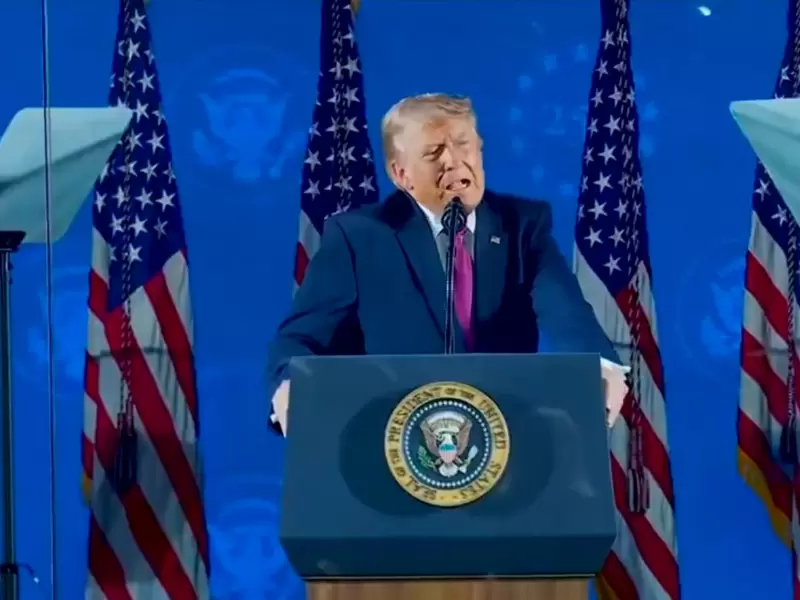
For instance, Bolivia has 37, Mali has 13, South Africa has 11, and Zimbabwe has 16. Only on March 1, 2025, did President Donald Trump sign an order making English the official language to foster unity, streamline government, and create a shared civic life in a nation with nearly 350 languages spoken.
The U.S. initially avoided naming an official language because the Founding Fathers were focused on freedoms rather than linguistic uniformity.
In the thirteen colonies, Dutch, French, German, and Native American languages were common, but English dominance was already assumed. Naming English now ensures that all federal and state government business will operate in English only.
Citizens who don’t speak English fluently may need interpreters for government services, but private-sector operations are unaffected. The administration must respect immigrant communities’ native languages to ensure America’s multicultural identity continues to flourish.
Interestingly, the United Kingdom also does not have English as its official language. Regional tongues like Welsh, Scots, and Gaelic are supported instead.
English, though originating in England, has evolved as a pluricentric language with dialects such as British, American, and Australian, shaped by Old Norse, French, and centuries of global influence. Today, it is the dominant language in the UK, the United States, Canada, Australia, Ireland, and New Zealand.
Shifting from historical quirk to modern regulation, U.S. language policy now reflects both immigrant roots and new priorities. What was once an unwritten custom is now law, shaping how Americans communicate, work, and interact daily.
Discover more at New India Abroad.
Leave A Comment
Related










ADVERTISEMENT

ADVERTISEMENT
E Paper
Video

Comments
Start the conversation
Become a member of New India Abroad to start commenting.
Sign Up Now
Already have an account? Login