ADVERTISEMENT
ADVERTISEMENT



Trust, once damaged, slow to rebuild: U.S. expert on India-U.S. trade deal
The assessment comes from Evan A. Feigenbaum, vice president for studies at the Carnegie Endowment for International Peace.
-
 IANS
IANS - Wed, 04, Feb 2026
- 12:07 EST
- 88
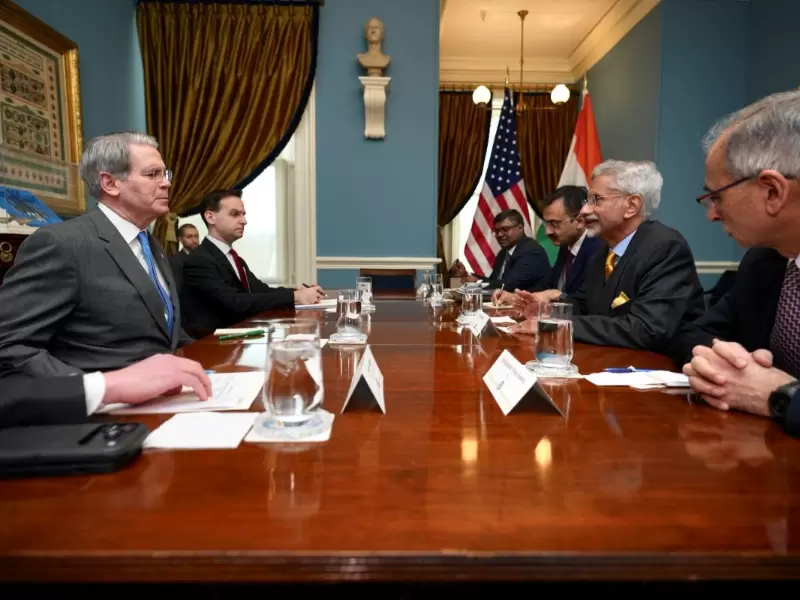 External Affairs Minister (EAM) S Jaishankar with U.S. Treasury Secretary Scott Bessent in Washington earlier on Feb. 4, 2026 / Courtesy: X/drsjaishankar
After months of rancor and uncertainty, the United States and India have announced an initial trade deal. The agreement eases a standoff that had become untenable for both sides, but it will not magically restore trust, a former senior U.S. government official has opined.
The assessment comes from Evan A. Feigenbaum, vice president for studies at the Carnegie Endowment for International Peace, who made the argument in an opinion piece published on the think tank’s blog on Feb. 4.
ALSO READ: Tech leader Kanwal Rekhi voices concern over U.S. reception
The timing matters. The U.S.-India announcement came just a week after India and the European Union concluded a long-negotiated Free Trade Agreement. Feigenbaum said the contrast is sharp. The EU deal is a formal trade agreement. Washington’s understanding with New Delhi is a trade “deal,” a term that implies flexibility and the risk of reversal.
U.S. President Donald Trump has said the deal cuts tariffs on Indian exports to 18 percent. That is down from a combined 50 percent rate. The earlier figure included a 25 percent base tariff and a 25 percent penalty linked to India’s purchases of Russian oil. Trump has also said India will buy US$500 billion in U.S. goods and services over time.
The White House described the deal as including an explicit Indian promise to stop buying Russian oil.
Feigenbaum said the previous tariff regime was unsustainable as it blocked progress across the relationship, and rolling it back was inevitable. Allowing ties to deteriorate further would have caused more damage.
The new tariff rate gives India a relative edge. Most ASEAN countries face tariffs of about 19 percent. Vietnam’s rate is 20 percent. Additional penalties apply in cases involving Chinese transshipment. In that context, 18 percent looks favorable for the Indian exporters.
Still, Feigenbaum cautioned against overreading the advantage. Tariffs are only one factor in trade and investment decisions. Differences of one or two percentage points are unlikely to outweigh Southeast Asia’s stronger supply chains and manufacturing base.
He also questioned the scale of projected trade. U.S. goods exports to India were US$41.5 billion in 2024. Services exports were US$41.8 billion. Reaching US$500 billion would require a dramatic increase. The figure, he said, should be seen as aspirational.
Energy remains sensitive. Feigenbaum noted that India has been gradually reducing imports of Russian crude. But he said New Delhi is unlikely to make such commitments explicit. India’s ties with Russia and its emphasis on strategic autonomy make a public break politically difficult.
Most importantly, he said recent months have re-politicized a relationship that had been largely depoliticized since the 2000s. The earlier oil-linked tariff tied to third-country choices set a precedent that could linger.
Washington and New Delhi are better off than they were months ago, Feigenbaum wrote. Both sides should take the win. But trust, once damaged, is slow to rebuild.
Discover more at New India Abroad.
Leave A Comment
Related









ADVERTISEMENT

ADVERTISEMENT
E Paper
Video

Comments
Start the conversation
Become a member of New India Abroad to start commenting.
Sign Up Now
Already have an account? Login