ADVERTISEMENT
ADVERTISEMENT



SBI report urges India to hold firm in U.S. trade deal negotiations
Report says India should avoid public escalation and negotiate after U.S. demands become clearer.
-
 IANS
IANS - Fri, 10, Jul 2026
- 04:39 EDT
- 24
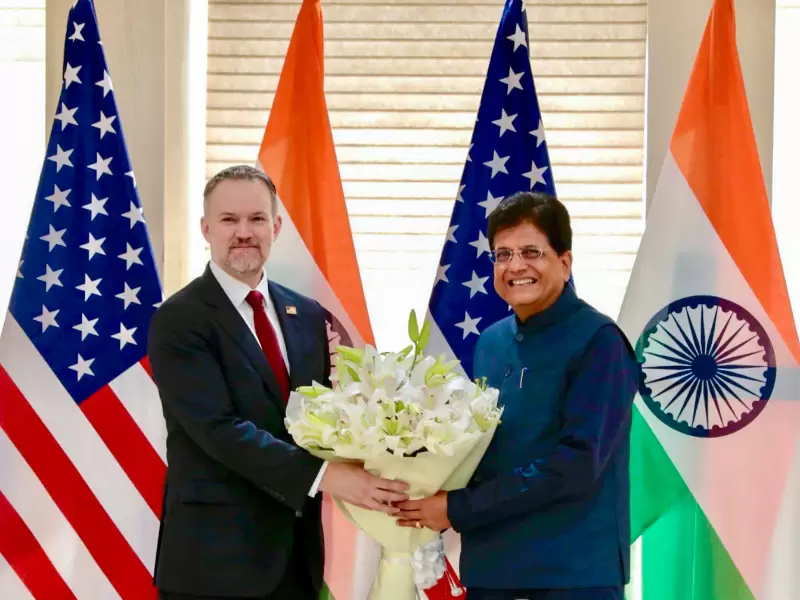 An SBI Research report says India should adopt a patient, long-term approach in negotiating a trade agreement with the United States. / IANS
India should remain patient in trade negotiations with the United States, avoid escalating tensions publicly and wait until Washington's bargaining position becomes clearer before making major concessions, according to an SBI Research report released on July 10.
The report said India's best strategy for securing a favorable trade agreement is to "wear down the opening position, not the relationship," while keeping discussions constructive, making limited and reversible offers, and allowing the Donald Trump administration's initial demands to confront market realities, China's strategic influence and alliance pressures.
Also read: PM Modi's visit 'real turning point' in New Zealand-India relationship, says Indian diaspora
India should then negotiate when "Washington's reservation price is clearer and India's value as a market, technology partner, defence buyer and Indo-Pacific counterweight is more visible," the report said.
"India's strategy should be to test the resolve of the U.S. administration and potentially accept a high-cost follow through in the short run and signal that India stands its ground for the long game. Dive sideways and test the resolve. India will win," said Dr. Soumya Kanti Ghosh, group chief economic adviser at the State Bank of India.
According to the report, the Trump administration is using uncertainty as a bargaining tool across multiple issues, including NATO, Iran, tariffs, Greenland, China and India.
India occupies a unique strategic position between NATO allies and China, the report said. While it does not possess China's concentrated economic leverage, it has significant strengths, including its large consumer market, technology talent, pharmaceutical industry, defence procurement, energy partnerships, influential diaspora and strategic importance in the Indo-Pacific.
Using game theory, the report argued that the U.S. administration is deliberately maintaining "incomplete information" about its negotiating approach, forcing trading partners to decide whether to concede, wait, test Washington's resolve or respond with countermeasures.
"The short-run payoff is leverage. The long-run cost is trust depreciation with the U.S.," the report said.
It added that repeated uncertainty could eventually weaken the effectiveness of future U.S. negotiating tactics.
"Interestingly such repeated uncertainties also teaches allies, rivals and markets to discount future signals. Alternatively, if every partner learns that the final U.S. position will be adjusted when costs rise, the bargaining value of the signal declines," the report noted.
The report also examined developments in global shipping following the June 17 memorandum of understanding between the United States and Iran aimed at ending the conflict.
Despite the agreement, uncertainty persists, it said, with shipping data through the Strait of Hormuz showing only limited and uneven signs of recovery.
According to the report, crude oil shipments have resumed gradually, but agricultural imports have recovered only tentatively, while liquefied natural gas and fertilizer-related shipments remain largely absent.
Discover more at New India Abroad.
Leave A Comment
Related








ADVERTISEMENT

ADVERTISEMENT
E Paper
Video

Comments
Start the conversation
Become a member of New India Abroad to start commenting.
Sign Up Now
Already have an account? Login