ADVERTISEMENT
ADVERTISEMENT



Why India's medical tourism hubs need trust infrastructure
Many will travel thousands of kilometres from home and place their well-being in the hands of professionals they have never met. Under those circumstances, trust becomes a prerequisite rather than a bonus.
-
 Alison Prentice
 - Fri, 05, Jun 2026
- 15:35 EDT
- 83
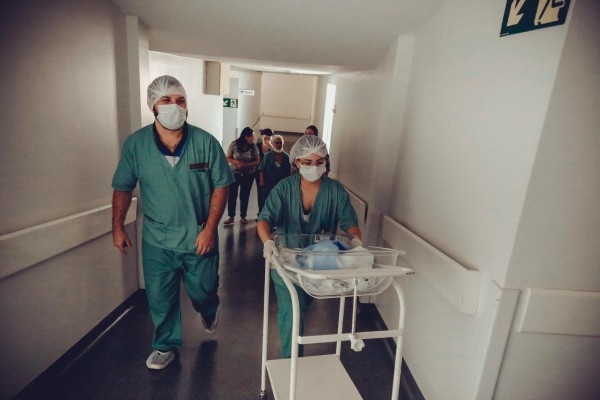 Representative Image / Image- Pexels
India's plan to develop five regional medical tourism hubs represents an ambitious effort to strengthen its position as a global healthcare destination.
The strategy builds on many of India's existing advantages, including internationally trained physicians, advanced clinical capabilities, competitive pricing, and growing healthcare capacity.
Yet there is a challenge that cannot be solved through construction alone. International trust, particularly with North American patients, often takes longer to build than physical infrastructure.
Policymakers frequently assume demand will arrive after infrastructure is completed. In medical tourism, the opposite is often true. Demand is heavily influenced by familiarity, and familiarity develops long before a patient begins researching treatment options. This distinction matters because medical tourism is unlike most industries. Patients are not purchasing a product.
They are making decisions involving health, risk, uncertainty, and often substantial financial commitments. Many will travel thousands of kilometres from home and place their wellbeing in the hands of professionals they have never met. Under those circumstances, trust becomes a prerequisite rather than a bonus.
Before patients compare hospitals, surgeons, or treatment packages, they often evaluate the country itself.
They ask questions that rarely appear in marketing reports. Is this healthcare system trustworthy? Will I feel safe there? Can I communicate effectively with providers? What happens if complications occur? Will my family feel comfortable travelling with me? The first decision in medical tourism is often not the hospital but the destination itself.
This reality has important implications for India's proposed hubs. Policymakers are not simply creating healthcare facilities. They are attempting to increase demand from patients who may currently default to destinations that benefit from years of accumulated familiarity. Countries such as Thailand and Singapore did not build their international reputations overnight.
Their visibility developed gradually through patient experiences, professional recognition, international partnerships, media exposure, and repeated reinforcement across multiple channels. Over time, those signals created familiarity. Familiarity reduced uncertainty. Reduced uncertainty increased consideration. The result was not simply awareness. It was preference.
This is where the conversation moves beyond healthcare and into economics. Governments routinely invest billions in physical infrastructure while paying less attention to the trust infrastructure required to fully utilize those assets. Roads require traffic. Airports require passengers. Medical tourism hubs require patient confidence.
Also Read; India introduces Ayush visa for foreign nationals seeking treatment
Without sufficient international trust, particularly in key source markets such as North America, even exceptional facilities can struggle to reach their full potential. This is not because the infrastructure lacks quality. It is because awareness and trust operate on different timelines. Visibility can be created quickly. Credibility develops much more slowly.
The risk facing India's proposed hubs is not poor infrastructure but authority delay. If authority-building begins only after the hubs become operational, policymakers may spend the early years generating recognition rather than benefiting from it.
The facilities may be ready to receive international patients, but the trust required to drive patient volume may still be under construction. The solution is not simply more advertising. It is earlier authority-building.
India should be investing now in the international credibility that future hubs will depend upon. That includes strengthening physician visibility in key markets, encouraging participation in global healthcare discussions, expanding international partnerships, promoting transparent communication around quality standards, and increasing independent English-language coverage of India's healthcare capabilities.
The Indian diaspora can also play an important role.
Overseas communities often serve as informal ambassadors who influence perceptions, share experiences, and help shape familiarity with a destination. Their networks can contribute to the broader ecosystem of trust that international patients rely upon when evaluating unfamiliar healthcare systems.
Importantly, authority-building is not a substitute for infrastructure development. It is a parallel investment. One creates capacity. The other creates demand. Both are necessary. India's proposed medical tourism hubs have the potential to become globally recognized healthcare destinations.
The facilities can be built. The investment can be secured. The clinical expertise already exists. The question is whether international trust will be given enough time to mature before those assets come online.
If India wants its medical tourism hubs operating at their full potential from the outset, authority-building cannot be treated as a post-launch activity. Construction creates capacity, but trust creates demand.
Policymakers who begin building that trust today will be far more likely to see those future investments achieve their intended economic impact when the doors finally open.
The writer is CEO of JCH Digital and a former Director of Nursing.
(The views and opinions expressed in this article are those of the author and do not necessarily reflect the official policy or position of New India Abroad.)
Discover more at New India Abroad.
Leave A Comment
Related








ADVERTISEMENT

ADVERTISEMENT
E Paper
Video

Comments
Start the conversation
Become a member of New India Abroad to start commenting.
Sign Up Now
Already have an account? Login