ADVERTISEMENT
ADVERTISEMENT


Trump signs bill to fund DHS after lengthy shutdown over ICE operations
It represented a victory for Trump and Senate Majority Leader John Thune, who had pressed House Republicans to pass the bill without modifications.
-
 Reuters
 - Thu, 30, Apr 2026
- 17:49 EDT
- 83
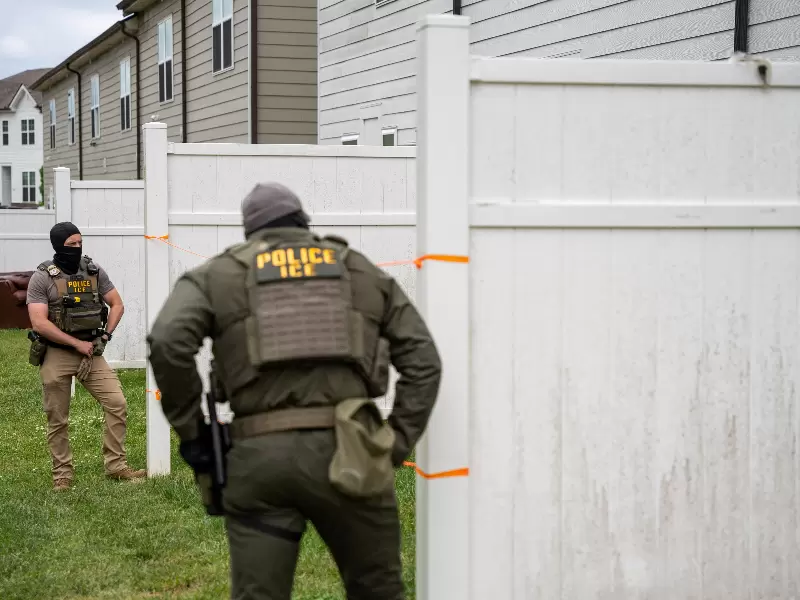 Federal immigration agents conduct operations at an apartment complex in Antioch, Tennessee, April 29. REUTERS/Seth Herald / REUTERS/Seth Herald
U.S. President Donald Trump on April 30 signed into law legislation funding Department of Homeland Security agencies including the Secret Service and Transportation Security Administration, ending a partial shutdown that has gripped DHS operations for nearly 11 weeks.
The logjam was broken when the Republican-controlled House of Representatives unanimously passed a Senate-approved bill that conservatives had refused to consider over the past month.
Also Read: Trump vows to continue public events
The House signed off on the legislation as officials warned that current funding was about to run dry, threatening chaos at airports and posing potential vulnerabilities to national security. It represented a victory for Trump and Senate Majority Leader John Thune, who had pressed House Republicans to pass the bill without modifications.
The legislation, which the Senate passed unanimously twice on March 27 and April 2, will fund DHS agencies that are not involved in Trump's immigration crackdown through September 30, the end of fiscal year 2026. Those agencies include FEMA, the U.S. Coast Guard and the Cybersecurity and Infrastructure Security Agency.
Calls for action on the broader DHS bill had intensified after Saturday's shooting at the White House Correspondents' Association dinner in Washington, where prosecutors say a man tried to assassinate Trump. The White House budget office has also warned that the homeland security operations affected would be unable to pay workers in May, which begins on Friday.
House Republican hardliners and other conservatives opposed the DHS bill because its language omitted funding for U.S. Immigration and Customs Enforcement and Border Patrol, following the fatal shootings of two U.S. citizens by immigration officers in Minneapolis.
"We threw a fit, and we had to. We held the homeland bill, the underlying funding bill, because we had to ensure that they could not isolate and eliminate those two critical agencies," said House Speaker Mike Johnson, who blamed Democrats for the bill's lack of immigration enforcement funding.
Republican leaders managed to ease those objections on April 29 by passing a $70 billion Senate-passed budget blueprint to provide new money for ICE and Border Patrol, which allowed congressional committees to begin writing separate funding legislation for those agencies. Republicans hope to pass that legislation in May by using a special "budget reconciliation" procedure that allows them to circumvent Democratic opposition in the Senate.
"Now that that box is checked, we are allowed then to proceed and go through with the rest of it," Johnson said.
The two immigration enforcement agencies received over $130 billion in funding last year through the same procedure - a huge boost that Trump requested to carry out his massive migrant deportation campaign.
Funding for most of DHS ran out on February 14, as Democrats pressed Republicans and the White House to accept new constraints on ICE and Border Patrol. Democrats insisted that immigration enforcement be subject to the same operational rules as police forces across the United States, including a requirement that judicial warrants be obtained before agents can enter private homes. But weeks of negotiations ended in stalemate.
Johnson eased concerns about DHS funding by ignoring calls from hardline conservatives who wanted the Senate bill modified to eliminate language specifying that it did not fund ICE and Border Patrol. Modified legislation would have had to return to the Senate for approval, risking the chance that Democrats might object.
In pressing for House passage this week, Thune, the top Senate Republican, acknowledged the challenge Johnson has faced unifying his fractured 217-212 Republican majority, which delayed consideration of the budget resolution for more than five hours on Wednesday over differences involving separate farm legislation.
“He has to do what he has to do,” Thune told reporters. “He needs every Republican and that is a real challenge on a good day. And, you know, sometimes aren’t a lot of good days around here.”
Discover more at New India Abroad.
Leave A Comment
Related











ADVERTISEMENT

ADVERTISEMENT
E Paper
Video

Comments
Start the conversation
Become a member of New India Abroad to start commenting.
Sign Up Now
Already have an account? Login