ADVERTISEMENT
ADVERTISEMENT



Real Test for Solidarity: The war, security risk and energy crisis in Asia
Perhaps the most controversial aspect of East Asia’s response to the 2026 war is the quiet abandonment of “green” idealism in favor of “black” survivability.
-
 Parishti Kaushik
 -
 Badri Narayanan Gopalakrishnan
 - Sat, 28, Mar 2026
- 13:46 EDT
- 108
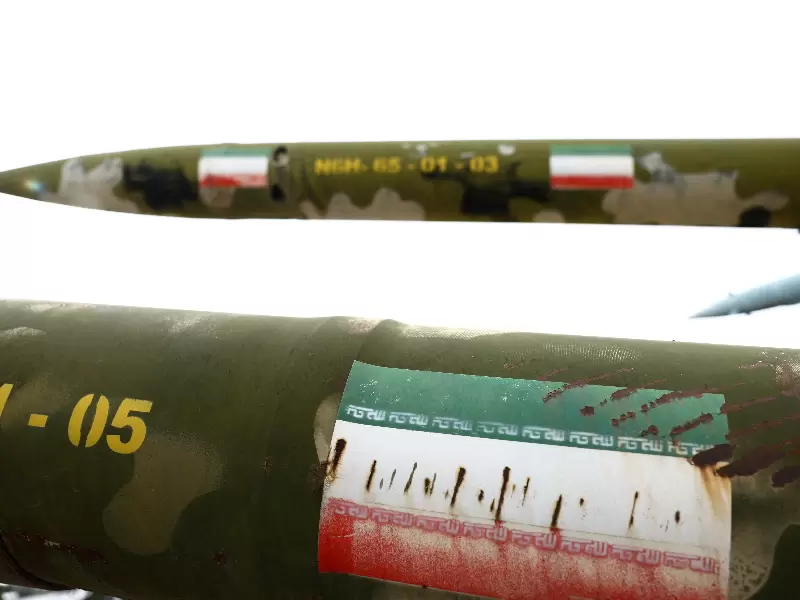 FILE PHOTO: Iranian missiles are displayed in a park, amid the U.S.-Israeli conflict with Iran, in Tehran, Iran, March 26, 2026. / Majid Asgaripour/WANA (West Asia News Agency) via REUTERS/File Photo
The rapid escalation of hostilities between the United States, Israel, and Iran in early 2026 served as a brutal stress test for the security architecture of East Asia, a test the region largely failed. For decades, the Association of Southeast Asian Nations (ASEAN) and the Gulf Cooperation Council (GCC) have operated on the premise that “comprehensive frameworks” and “joint statements” could substitute for hard security guarantees.
The 2026 crisis exposed this diplomatic fragility. While the shelling of Iranian infrastructure and the subsequent closure of the Strait of Hormuz dominated headlines, the real story unfolded in the boardrooms of East Asian state utilities. There, the “Malacca Dilemma” transformed from a theoretical academic concept into an immediate logistical nightmare.
Also Read: Iran-linked hackers breach FBI director's personal email, publish excerpts online
The diplomatic response to the 2026 escalation can be best described as performative. The foundational May 2025 ASEAN-GCC-China Summit was heralded as a triumph of South-South cooperation, producing a Joint Statement replete with commitments to “sustainable resilience” and “conflict resolution.” Yet, when kinetic warfare erupted less than a year later, the institutional response was anaemic.
The structural weakness lies in the associations’ reliance on consensus-based decision-making, which functions effectively in peace but induces paralysis in war. The ASEAN-GCC Framework of Cooperation (2024-2028) outlines cooperation in energy and low-carbon technologies but conspicuously lacks a collective security clause or a rapid-response mechanism for supply chain shocks.
Consequently, when the Strait of Hormuz became a no-go zone, shutting in millions of barrels of crude, ASEAN could only issue statements urging “self-restraint”. The associations proved to be excellent platforms for issuing communiqués but irrelevant actors in securing the tankers required to keep East Asian economies running.
Technical Fragmentation as a Security Risk
The most damning indictment of regional integration is not diplomatic, but infrastructural. East Asia’s inability to mitigate the energy shock is a direct consequence of the failure to realize the ASEAN Power Grid (APG). First proposed in 1997, the APG remains a fragmented patchwork of bilateral deals rather than a unified multilateral market, though there has been some momentum now.
From a technical standpoint, the region is strangled by “systemic inertia.” As of 2025 , only 8 out of 18 planned priority interconnections were operational. The region remains heavily siloed, while Lao PDR functions as the “Battery of ASEAN,” exporting hydropower to Thailand and Vietnam, island nations like the Philippines remain electrically isolated.
The heralded Lao PDR-Thailand-Malaysia-Singapore Power Integration Project (LTMS-PIP) , while a technical milestone proving that 100 MW could flow across four nations, is statistically negligible against a backdrop where energy demand is projected to triple by 2050.
The bottleneck is not engineering, but the “bankability” of cross-border agreements. The lack of a unified regulatory framework means that every interconnection requires tedious, ad-hoc negotiations over wheeling charges and technical codes. The inability to create a “bankable” commercial structure has left the region with a financing gap estimated at billions of dollars capital that is unlikely to materialize in a high-risk war scenario.
Without a fully integrated grid to wheel renewable electrons from the Mekong to the industrial hubs of Malaya and Java, the region lacks the “power flexibility” required to absorb the shock of volatile fossil fuel markets.
The Malacca Dilemma
While the world watched Hormuz, East Asia’s secondary point of failure, the Strait of Malacca, faced its own existential pressure. This 900-kilometer chokepoint, handling over 25% of global trade and a massive volume of oil transit, suffers from the “Malacca Dilemma," the fear that a blockade here would asphyxiate the region’s economies.
Regional governments have attempted to mitigate this risk through Chinese capital, a strategy that is as risky as it is necessary. Investments under the Belt and Road Initiative (BRI) have poured into Malaysian infrastructure, specifically the Kuantan Port expansion and the Melaka Gateway. Deep-water terminals capable of handling Ultra Large Container Vessels (ULCVs) and 200,000 DWT ships have technically increased throughput capacity.
However, this infrastructure comes with geopolitical strings. The Kuantan Port, now 40% owned by a Chinese state-linked entity, and the East Coast Rail Link (ECRL) are designed to bypass the Singaporean chokehold, effectively integrating Malaysia into China's logistics supply chain.
This creates a paradox, to secure their energy transit against a potential Western or regional blockade, ASEAN states have embedded themselves deeper into the security architecture of a superpower that is itself a protagonist in the broader geopolitical tension. The port infrastructure improves logistics efficiency by 35%, but it also ossifies the region’s dependence on a single external actor for its maritime security.
Also Read: The Sovereign correction: Logic behind America’s war with Iran
The Stubborn Necessity of Coal
Perhaps the most controversial aspect of East Asia’s response to the 2026 war is the quiet abandonment of “green” idealism in favor of “black” survivability. Despite the optical commitment to the Paris Agreement, the data reveals a stubborn entrenchment of coal-fired power plants (CFPPs).
The technical justification for this is irrefutable. Variable Renewable Energy (VRE) sources like solar and wind suffer from intermittency and, crucially, a lack of “system inertia.” As grids move from synchronous spinning machines (turbines) to inverter-based systems (solar), they lose the physical inertia required to stabilize frequency during disruptions.
In a war scenario where cyber-attacks on grids are a kinetic reality, that physical inertia is a matter of national security.
Consequently, regional policy has pivoted toward “Clean Coal Technology” (CCT) rather than rapid phase-outs. The economic logic is brutal, with young coal fleets (many under 15 years old) and a projected 2.6-fold increase in energy demand, early decommissioning is financially ruinous.
Instead, governments are pushing for Ultra-Supercritical (USC) technology and Co-firing with ammonia or biomass. In the face of a disruption in Middle Eastern LNG and oil, domestic or regional coal remains the only reliable baseload guarantor of sovereignty.
Conclusion
The 2025-2026 crisis should be viewed as a tombstone for the era of performative regionalism. The “ASEAN Way” of non-interference and consensus proved impotent against the hard physics of energy scarcity. The region’s survival depended not on the Frameworks of Cooperation signed in Riyadh or Jakarta, but on the reality of coal stockpiles and Chinese-built deep-water ports.
Until the ASEAN Power Grid evolves from a “roadmap” into a unified, bankable market capable of wheeling gigawatts of power instantaneously across borders, the region will remain a geopolitical price-taker, dangerously exposed to the whims of distant wars.
Discover more at New India Abroad.
Leave A Comment
Related












ADVERTISEMENT

ADVERTISEMENT
E Paper
Video

Comments
Start the conversation
Become a member of New India Abroad to start commenting.
Sign Up Now
Already have an account? Login