ADVERTISEMENT

ADVERTISEMENT



The legacy of H. Charles Grawemeyer: A scientific blueprint for world peace
Charlie Grawemeyer funded five awards at the University of Louisville that have come to be known as the "Nobels of the North".
-
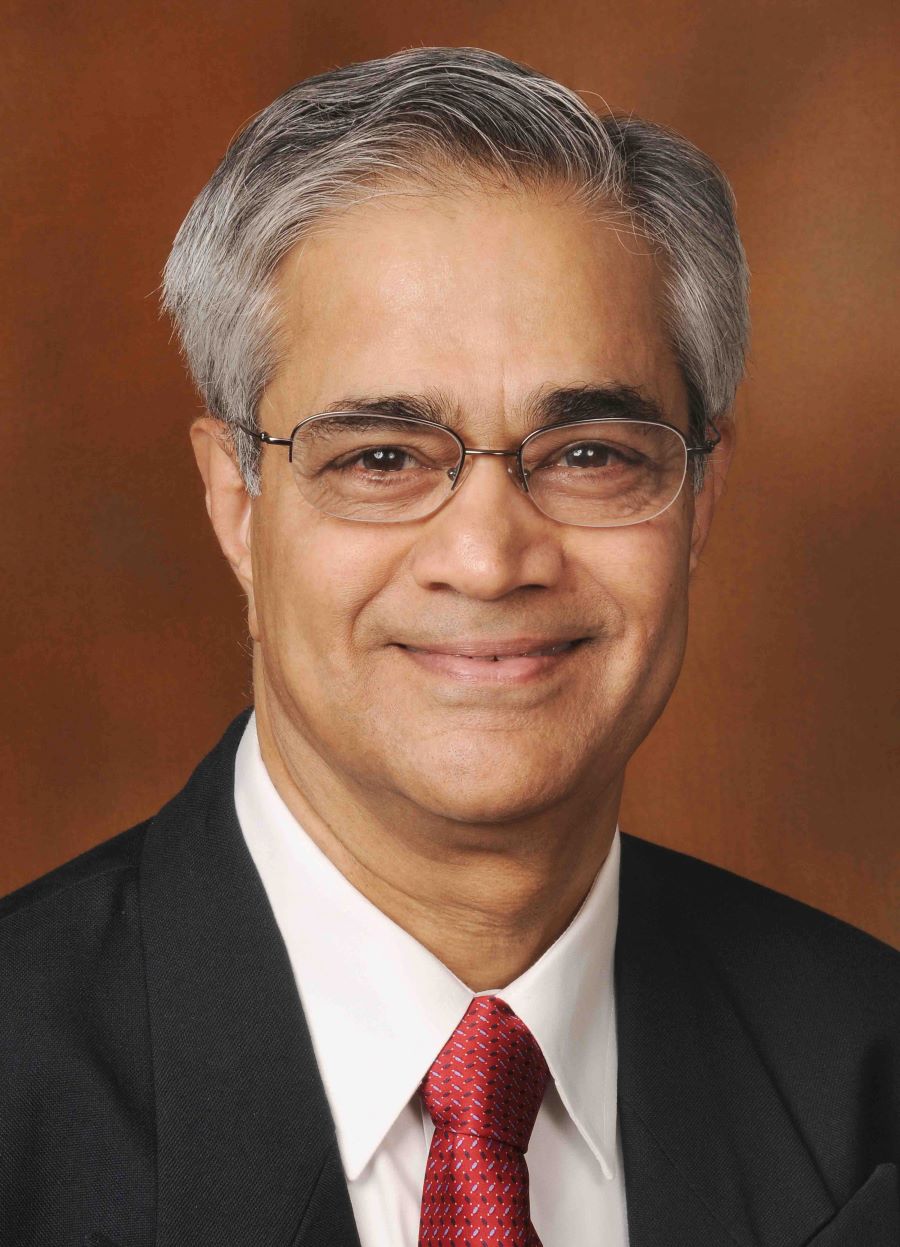 Pradeep B. Deshpande
 - Sat, 21, Mar 2026
- 10:53 EDT
- 14
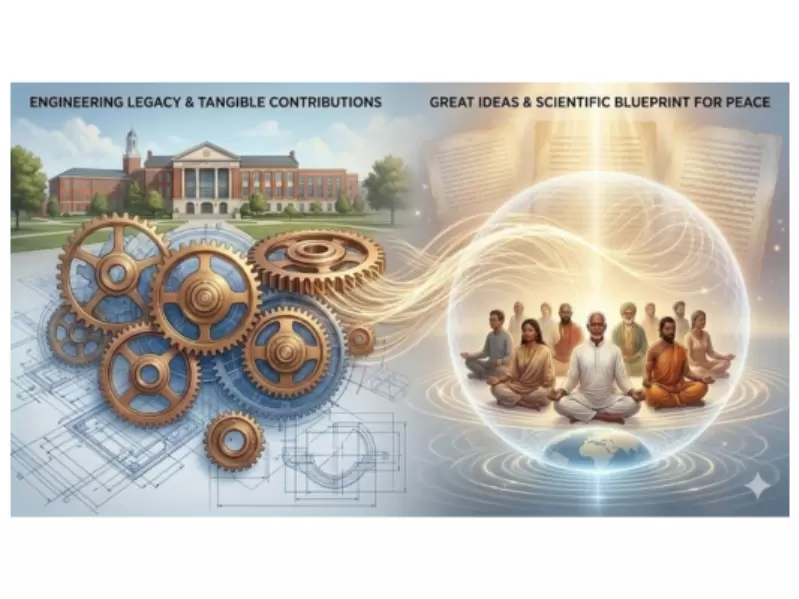 Representative Image / Generated using AI
H. Charles Grawemeyer (1912–1993) was an illustrious alumnus of our department, an industrialist, and a philanthropist whose legacy remains inextricably linked to the institution.
While successful entrepreneurs donate to their alma maters for the construction of physical buildings or athletic facilities, Grawemeyer was driven by a more cerebral and ambitious goal: to identify and reward "great ideas" with the potential to change the world.
Early Life and the Engineering Mindset
A native of Louisville, Grawemeyer graduated in 1934 during the Great Depression. He later became the CEO of Reliance Universal, a chemical coatings company. His background in engineering and heavy industry gave him a practical, results-oriented mindset. However, his personal interests were deeply rooted in the arts, humanities, and the preservation of global stability.
I first met him in the mid-1980s at the inauguration ceremony of the Vogt Engineering Center. I was serving as the Chair of the Department of Chemical Engineering then.
In the brief encounter, his skepticism of "ivory tower" academic achievements—those that lacked real-world application—was evident. He believed that ideas were the most powerful force in human history and deserved the same recognition as scientific breakthroughs or literary masterpieces.
Also Read: The Raga cortisol connection: Ancient sounds for modern burnout
The Evolution of the Grawemeyer Awards
In 1984, Grawemeyer gave the University of Louisville an initial endowment of $7 million to establish several prizes. His vision was to create a "thinking person's prize" that would eventually be known internationally as the "Nobels of the North". Today, the awards are presented in five distinct categories:
-
Music Composition: Recognizing outstanding cultural contributions.
-
Education: Focusing on ideas that improve the way we learn and teach.
-
Religion: Awarding significant contributions to the understanding of the relationship between human beings and the divine.
-
Psychology: Highlighting breakthroughs in the understanding of the human mind.
-
Improving World Order: Grawemeyer’s most personal category, established in 1988 to recognize ideas that promote international understanding and collaboration.
Grawemeyer believed the survival of humanity depended on finding new ways to manage global conflict and foster cooperation. By the time he died in 1993, he had ensured his foundation would fund these prizes in perpetuity, transforming the University of Louisville into a global hub for intellectual discourse.
The Paradox: Awards Without Peace?
As we reach early 2026, the Grawemeyer Award for Improving World Order has been presented 35 times. Similarly, the Nobel Peace Prize has been awarded 106 times. If so many "great ideas" for peace have been recognized and funded, why isn't the world more peaceful?
The short answer is no; the world is not more peaceful today than it was in Grawemeyer’s time. In fact, global stability has reached its most fragile point in decades. This suggests that while we are excellent at identifying brilliant ideas, we have failed to identify the root causes of discord and violence.
The S-R-T Framework: A Scientific Analysis of Conflict
To explain this failure, we must examine the human mindset through a framework of three fundamental components: S, R, and T.
-
S (Sattva): Includes truthfulness, honesty, and empathy.
-
R (Rajas): Encompasses ego, greed, and intense ambition.
-
T (Tamas): Includes lying, cheating, and causing injury through word or deed.
These components undergo a slow transformation over thousands of years, inducing a repeated cycle of rise and decline in societies. As the S component of a civilization increases, that society rises toward a golden age.
However, the S component cannot increase indefinitely. When it reaches its peak, the T component begins to rise, and the civilization enters a period of decline. This transformation is universal; history shows there are no exceptions.
At any given moment on the world stage, some societies are in a state of rise (high S) while others are in a state of T-driven decline. This misalignment makes the actualization of an "Improved World Order" through traditional diplomacy nearly impossible.
This is the wisdom of the Bhagvad Gita, corroborated with data and evidence from the Encyclopedia Britannica. My article, A Chemical Engineer Learns new Lessons from the Bhagvad Gita has earned an award from California News Publishers Association.
The Challenge of Measurement and Transformation
The transformation of the global mindset from R and T toward S is a well-posed scientific problem, but it cannot be solved through logic or "ivory tower" thinking alone. Positive change must come from within the individual.
Although the S, R, and T components cannot be directly measured, they are strongly and positively correlated with human emotions, which are measurable. Positive emotions like compassion and kindness reflect a high S-component, while destructive emotions correlate with R and T.
Conclusion: A Program for the Future
The corrective action required for global peace involves a systematic program aimed at shifting the mindset of the global population from R and T toward S. This is perhaps the greatest "idea" of all—one that moves beyond the theoretical and into the biological and psychological reality of the human condition.
The transformation of the global population from R and T towards S is not amenable to products of reason. The required positive changes must come from within. This is accomplished by transcending the realm of reason by enhancing the focus of attention with yogic practices like meditation. And since emotions can be measured, progress can be audited.
Grawemeyer established the five awards in liberal arts in the belief that the problems were beyond the reach of engineering disciplines. He would be pleasantly surprised that a chemical engineer, that too from his own department, has shed light on how to reshape the world.
Charlie Grawemeyer lived a life of modest personal habits but immense generosity. He believed that a single idea, properly nurtured, could change the world. By combining his vision for world order with a scientific understanding of the human mindset, we may finally be able to break the cycle of rise and fall and move toward a truly peaceful world.
Discover more at New India Abroad
Related







ADVERTISEMENT

ADVERTISEMENT
E Paper
Video

Comments
Start the conversation
Become a member of New India Abroad to start commenting.
Sign Up Now
Already have an account? Login