ADVERTISEMENT

ADVERTISEMENT



The Hindu New Year: When time, nature, and life align
For many Hindus living outside India, this day has a different kind of meaning. It is less about scale and more about memory.
-
 Dr. Vinay Nalwa
 - Thu, 19, Mar 2026
- 00:40 EDT
- 17
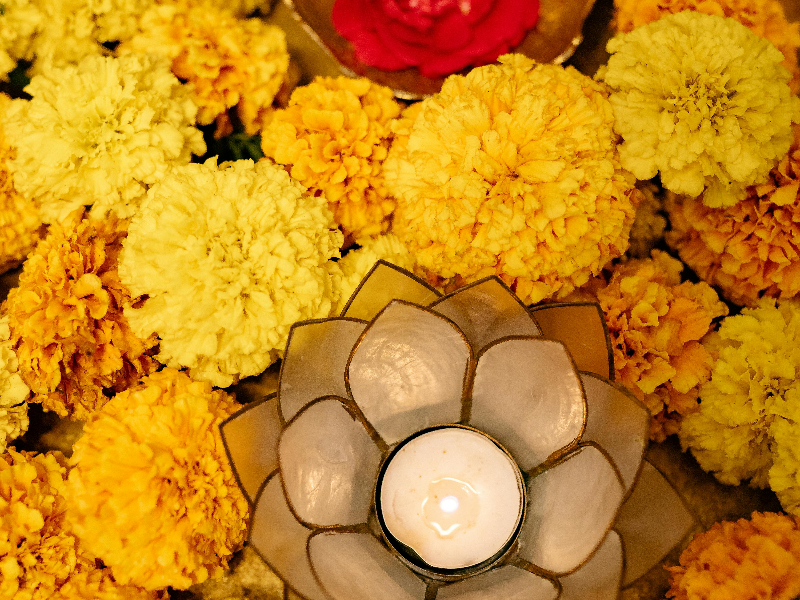 Representative image / Pexels
There are certain rhythms every civilisation carries forward. Some are written in monuments, some preserved in memory, and some lived quietly through everyday habits. They survive not because they are enforced, but because they continue to make sense to those who inherit them.
In the Indian spring, one such rhythm can be felt rather than seen. The air softens, trees begin to show new leaves, and life seems to return to a pace it had briefly set aside. This is when the Hindu New Year arrives, not as a fixed date, but as something that rises naturally from the season itself.
Across India, it is known by many names. Ugadi in the south, Gudi Padwa in Maharashtra, Navreh in Kashmir, and Puthandu in Tamil Nadu. The names change, the languages change, but the experience remains familiar. It is not just people who mark this beginning. Nature does too.
In the Hindu understanding, time is not just counted. It is observed. The New Year begins on Chaitra Shukla Pratipada, the first day of the lunar cycle that marks the arrival of spring in the Hindu calendar. Texts like the Brahma Purana speak of this as the beginning of creation, when the order of the world was first set into motion. Whether one sees this as belief or symbolism, the idea is clear. Time is not separate from life. It moves with it.
What is striking is how naturally this larger idea enters everyday life. Homes are cleaned, not out of compulsion, but because it feels like the right time to do so. Food is prepared using what the season offers. In parts of southern India, Ugadi Pachadi, a traditional preparation that brings together different tastes, is made to mark the day. Sweet, bitter, and sour come together in one dish. It is a simple way of saying something most philosophies take time to explain.
Life does not come in one flavour.
ALSO READ: India’s right to claim its Hindu identity: Fighting unfair views
There was a time when the study of the skies and the search for meaning were not seen as different pursuits. Works like the Surya Siddhanta show how carefully planetary movements were observed and calculated. The calendar that comes from this is not arbitrary. It follows a pattern that people could see, track, and live by. Even today, much of life, from festivals to personal decisions, is guided by this system.
This sense of time did not remain limited to one geography. It travelled. In Nepal, the Vikram Samvat, a traditional Hindu calendar era, still serves as the national calendar. In Sri Lanka and Thailand, New Year celebrations follow seasonal transitions that feel familiar in their spirit. In Cambodia and parts of Indonesia, similar patterns continue, shaped by older cultural links. These are not identical traditions, but they carry a resemblance that is difficult to ignore.
For many Hindus living outside India, this day has a different kind of meaning. It is less about scale and more about memory. A small ritual at home, a meal shared with family, sometimes just a moment of pause. These become ways of staying connected.
This is even more visible in places shaped by indentured history. In Mauritius, Trinidad and Tobago, Guyana, Suriname, Fiji, and South Africa, communities carried these traditions across oceans under difficult circumstances. They did not always have temples or resources, but they had memory. Over time, that was enough. The New Year, in these places, is not just a festival. It is continuity.
Back in India, the diversity of celebration is easy to see. In Maharashtra, a Gudi is raised outside homes. In Karnataka and Andhra Pradesh, Ugadi marks the start of a new cycle. In Kerala and Tamil Nadu, the first sight of the day is carefully arranged. In Punjab, Baisakhi coincides with the harvest. In Assam, Bihu brings music and movement into the open. Each region does it differently, but none of it feels disconnected.
There are also layers of history that people attach to this time. It is often linked, in tradition, with the coronation of Lord Rama in Ayodhya, a moment that represents the return of order. The beginning of Chaitra Navratri also falls in this period, leading up to Ram Navami. The Vikram Samvat calendar is associated with King Vikramaditya, while in more recent history, Dayanand Saraswati established the Arya Samaj around this time. These references do not all come from the same source or period, but they point in a similar direction. Renewal is not just seasonal. It can be social, even civilisational.
What holds all of this together is a simple idea. Life works better when it is in balance. The Hindu New Year reflects that. It brings together nature, routine, memory, and belief without forcing them into one form.
In a world where time is often reduced to schedules and deadlines, this way of seeing it feels different. It slows things down just enough to notice the change around us. It reminds us that beginnings do not have to be declared loudly. Sometimes, they arrive quietly, already in motion.
And perhaps that is what this New Year really offers. Not just a start, but a reminder that we are already part of something that continues.
The writer is an author and columnist.
(The views and opinions expressed in this article are those of the author and do not necessarily reflect the official policy or position of New India Abroad.)
Related







ADVERTISEMENT

ADVERTISEMENT
E Paper
Video

Comments
Start the conversation
Become a member of New India Abroad to start commenting.
Sign Up Now
Already have an account? Login