ADVERTISEMENT

ADVERTISEMENT



India’s budget 2026–27: Roadmap for growth, reform, and global engagement
Changes in taxation, foreign investment rules, NRI-focused ease-of-living measures, and incentives for global enterprises operating out of India are designed to lower barriers between India and the world.
-
1744362597.jpeg) Arun Anand
Arun Anand - Sun, 01, Feb 2026
- 07:47 EST
- 48
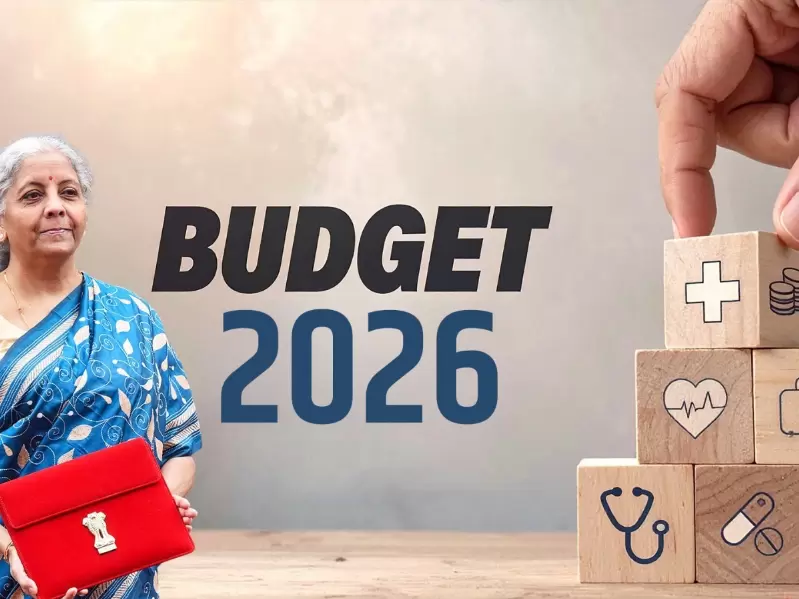 Representative Image / Photo source: AI/IANS
India’s Union Budget 2026–27 arrives at a moment when the global economy is marked by uncertainty, geopolitical churn, and fractured supply chains. Against this backdrop, the budget is more than an annual financial statement—it is a declaration of how New Delhi views India’s role in the world, and how it seeks to engage global capital, talent, and ideas closely tied to India and its overseas community.
Anchored in three defining kartavyas—driving sustained economic growth, building human capacity, and ensuring broad-based inclusion—the budget underscores an India stepping confidently into its next stage of economic evolution. The emphasis on advanced manufacturing, semiconductors, digital and physical infrastructure, clean energy, services, and resilient global supply chains makes the intent clear: India wants to emerge as a stable and dependable growth engine in an increasingly fragmented global order. For the Indian diaspora, this vision opens new avenues for investment, innovation, collaboration, and deeper participation in India’s long-term development journey.
Also Read:Union Budget 2026-27 announces major relief for NRIs, PROIs
Just as significant are the structural reforms embedded in the budget. Changes in taxation, foreign investment rules, NRI-focused ease-of-living measures, and incentives for global enterprises operating out of India are designed to lower barriers between India and the world. Simplified tax compliance, rationalised remittance norms, targeted support for IT and data centres, and trust-based customs systems together reflect an effort to make engagement with India smoother and more predictable for overseas Indians and global businesses alike. These choices shape not only macroeconomic outcomes, but also the evolving relationship between the diaspora and a reform-oriented, self-assured India on the global stage.
Fiscal Prudence with Welfare Commitments
Even while sustaining one of the world’s largest social welfare programmes—including free food grains for nearly 800 million citizens, pensions, and other benefits—the government has maintained fiscal discipline. The fiscal deficit for 2026–27 is projected at 4.3 per cent of GDP, improving from 4.4 per cent in the previous year. The debt-to-GDP ratio is also set to decline to 55.6 per cent, reflecting a calibrated approach where savings on interest payments are redirected back into productive economic activity.
First Kartavya: Accelerating Growth
The first kartavya focuses squarely on accelerating and sustaining growth through targeted interventions. Manufacturing is being scaled up across seven strategic and frontier sectors. The Biopharma SHAKTI initiative, with an outlay of ₹10,000 crore over five years, aims to position India as a global biopharmaceutical manufacturing hub, supported by new and upgraded NIPER institutions and an expanded clinical trials network.
The launch of India Semiconductor Mission 2.0 signals a renewed push towards full-stack semiconductor capabilities, supported by higher allocations for electronics components manufacturing. Dedicated Rare Earth Corridors in mineral-rich states, new chemical parks, advanced construction and infrastructure equipment schemes, and a container manufacturing ecosystem further strengthen India’s industrial base.
Championing SMEs and Infrastructure
Small and medium enterprises remain central to the self-reliant India vision. A ₹10,000 crore SME Growth Fund and additional support for micro enterprises through the Self-Reliant India Fund aim to nurture future industrial champions.
Infrastructure receives a decisive boost, with public capital expenditure rising to ₹12.2 lakh crore. New mechanisms such as an Infrastructure Risk Guarantee Fund are intended to crowd in private investment and reduce project uncertainties.
Creative Economy, IT, and Global Investment
The budget also recognizes emerging growth drivers. The “Orange Economy” is set to expand through AVGC content creator labs, university townships, and targeted skilling initiatives. The IT sector—India’s global growth engine—benefits from simplified safe harbor rules, higher thresholds, and faster pricing agreement mechanisms.
To attract global investment, the government has announced long-term tax incentives for cloud service providers using Indian data centres, exemptions for non-resident experts, and favourable regimes for warehousing, tooling, and manufacturing in bonded zones.
Trade, Exports, and Ease of Living
A major thrust of the Union Budget 2026–27 lies in reshaping India’s trade and logistics architecture to make cross-border movement of goods faster, more predictable, and globally competitive. Customs procedures are set to undergo a comprehensive digital transformation, with multiple government clearances being integrated into a single, interconnected online window. Risk-based, technology-driven systems—using advanced imaging, AI-enabled scanning, and minimal physical intervention—aim to reduce delays, lower transaction costs, and bring India’s border processes in line with global best practices.
For exporters, especially small businesses, artisans, start-ups, and diaspora-linked enterprises, the complete removal of the ₹10 lakh per consignment cap on courier exports marks a significant reform. This step opens the door for Indian MSMEs to access international markets through e-commerce platforms without artificial constraints. The fisheries sector also gains from export-oriented measures, with fish caught by Indian vessels in the Exclusive Economic Zone or on the high seas being treated as duty-free exports, reinforcing India’s ambitions in the global seafood value chain.
Equally noteworthy are the measures aimed at improving the everyday experience of international travellers and overseas Indians. Baggage rules governing international travel are set to be modernised, with enhanced duty-free allowances that reflect contemporary travel patterns and consumer realities. Honest taxpayers are offered simplified avenues to resolve disputes by paying a modest additional amount in lieu of prolonged litigation, reducing uncertainty and compliance fatigue for NRIs with financial ties to India.
Taken together, these initiatives convey a clear and consistent message to the Indian diaspora. The Union Budget 2026–27 positions India as an economy that is open to the world, committed to reforms, disciplined in its public finances, and serious about lowering friction in global engagement. More importantly, it signals an invitation to the global Indian community—not merely as observers or remitters, but as long-term partners in India’s journey towards growth, innovation, and national transformation in an increasingly interconnected world.
The writer is an author and a columnist. He has authored more than 15 books including 'Taliban: War and Religion in Afghanistan'.
(The views and opinions expressed in this article are those of the author and do not necessarily reflect the official policy or position of New India Abroad)
Related









ADVERTISEMENT

ADVERTISEMENT
E Paper
Video

Comments
Start the conversation
Become a member of New India Abroad to start commenting.
Sign Up Now
Already have an account? Login