ADVERTISEMENT

ADVERTISEMENT



House of Lords commemorates the 200th birth anniversary of Dadabhai Naoroji
Conversations among guests reflected on Naoroji’s ideas, his courage in challenging imperial power through constitutional means.
-
1747754650.png) Ishani Duttagupta
Ishani Duttagupta - Sun, 21, Dec 2025
- 01:37 EST
- 10
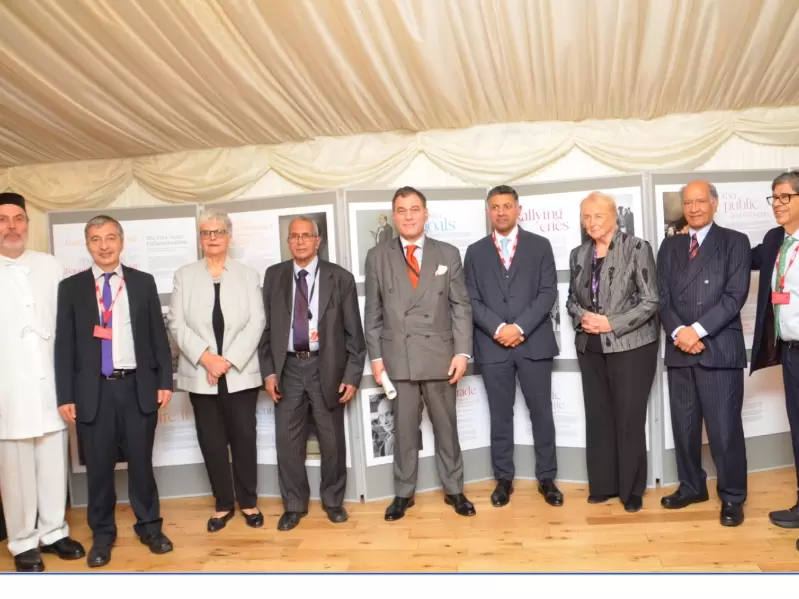 Naoroji (1825–1917) was the first Asian member of the British Parliament, serving as the Liberal MP for Finsbury Central from 1892 to 1895. / Ishani Duttagupta
The British House of Lords played host to the bicentenary of Dadabhai Naoroji’s birth last week. Hosted by entrepreneur and peer Lord Karan Bilimoria, the reception brought together about 150 dignitaries, from Zoroastrian community leaders to senior diplomats. The guest list served as a testament to the “Grand Old Man” of India’s broad and enduring legacy within the halls of British power.
Naoroji (1825–1917) was the first Asian member of the British Parliament, serving as the Liberal MP for Finsbury Central from 1892 to 1895. An economist, academic, businessman and political thinker, he is best known for developing the Drain Theory, which exposed how colonial rule systematically extracted wealth from India. He was also a founding member of the Indian National Congress and a lifelong advocate for political representation, equality and self-governance.
The event and accompanying exhibition were sponsored and hosted by Lord Bilimoria. Malcolm Deboo, president of the Zoroastrian Trust Funds of Europe (ZTFE), served as co-host. The exhibition, created by Omar Ralph, traced Naoroji’s life and work, situating his parliamentary career within the wider history of Indian and Parsi engagement in British public life.
Ralph, who introduced the exhibition, spoke about the importance of presenting British-Indian political history within the British Parliament. Conversations among guests reflected on Naoroji’s ideas, his courage in challenging imperial power through constitutional means, and his continuing relevance to contemporary debates on representation, justice and progressive politics.
Lord Bilimoria, founder of Cobra Beer, co-chair of the India All-Party Parliamentary Group (APPG) and a Crossbench member of the House of Lords since 2006, reflected on continuity, mentorship and shared achievement within the Zoroastrian community and the British Parliament. Reflecting on his own journey, he observed, “People say I follow in the footsteps of my great-grandfather — an entrepreneur, a public servant and a member of the Rajya Sabha — and four generations later, I follow in his footsteps.”
He added, “In many ways, I follow in the footsteps of Dadabhai Naoroji, who was a businessman, also an academic and a politician, the first ethnic minority ever to be elected to this Parliament, and I am privileged to follow in his footsteps.”
Baroness Prashar, an independent Crossbench peer, former university chancellor, former chair of the Parole Board, the first-ever chair of the Judicial Appointments Commission and a former civil service commissioner, reflected on the enduring lessons of Naoroji’s life. She noted that “apart from being the first Asian elected to the House of Commons, Naoroji was one of the most prominent freedom fighters in India — he was anti-racist, anti-imperialist and a feminist of global significance, and his ideas have transcended borders.”
Sir Vince Cable, former leader of the Liberal Democrats, former Cabinet minister and former chief economist at Shell, highlighted Naoroji’s intellectual range, noting that “he was a mathematics professor in India and later a professor of Gujarati literature at University College London.”
Lord Dholakia, the first ethnic minority leader of a major political party in the U.K. when he served as president of the Liberal Democrats and a former deputy leader of the Liberal Democrats in the House of Lords, reflected on Naoroji’s ability to bridge political worlds. He observed that “he brought two different areas of politics together — the knowledge of India and its politics, having served three times as president of the Indian National Congress, and parliamentary life in Britain.”
Related




ADVERTISEMENT
ADVERTISEMENT
E Paper
Video

Comments
Start the conversation
Become a member of New India Abroad to start commenting.
Sign Up Now
Already have an account? Login