ADVERTISEMENT

ADVERTISEMENT



Expert questions Trump administration’s Venezuela oil strategy
Roxana Vigil said key elements of the administration’s Venezuela policy appear internally inconsistent and poorly defined.
-
 Ritu Marwah
 - Mon, 19, Jan 2026
- 03:45 EST
- 40
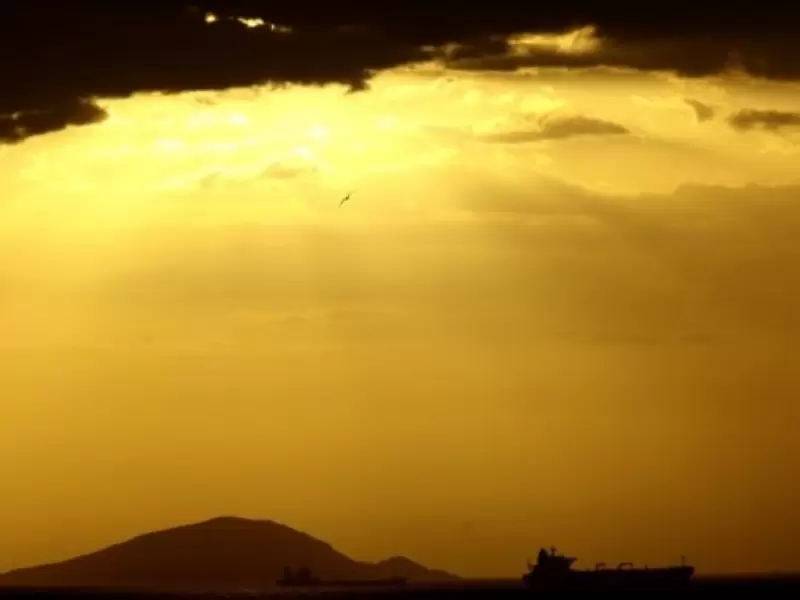 Oil cargo ships are pictured at sunset in Puerto la Cruz city, Venezuela, on June 11, 2011. / Xinhua/Juan Carlos Hernandez/IANS
An international affairs expert has raised doubts about the Trump administration’s approach to Venezuela, arguing that the strategy lacks clarity, underestimates global oil market realities, and sidelines democratic accountability.
Roxana Vigil, an international affairs and national security expert specializing in U.S. policy toward Latin America, made the remarks during an American Community Media briefing, where she said key elements of the administration’s Venezuela policy appear internally inconsistent and poorly defined.
While Secretary of State Marco Rubio has outlined a three-phase plan for Venezuela, Vigil said President Donald Trump has not publicly endorsed a democratic transition as part of that framework.
“Until we hear President Trump articulate some policy or some support for a transition, my sense is that this is not going to be an actual part of the plan,” Vigil said, adding that Trump appears to be personally directing Venezuela policy.
Vigil noted that Venezuela currently produces about 900,000 barrels of oil per day, less than one percent of global supply. While marginal globally, oil remains central to Venezuela’s economy, which is overwhelmingly dependent on energy revenues.
To meet the administration’s stated goal of rebuilding Venezuela’s oil sector, Vigil said sweeping institutional reforms would be required, including new laws, economic stability, and a functioning rule of law. She argued such changes can realistically be carried out only by a democratically elected government capable of reassuring investors.
President Trump has suggested that rebuilding Venezuela’s energy sector could require investments of up to $100 billion, a scale Vigil questioned given current market conditions.
“The global oil market is very well supplied,” she said, pointing to rising production from non-OPEC countries such as the United States, Canada, Brazil, Argentina, and Guyana. The International Energy Agency refers to these producers as the “Americas Quintet,” which Vigil said is expected to add significant new supply in the coming years.
ALSO READ: Trump's Venezuela focus frustrates top aides
As a result, she warned of potential oversupply, reducing demand for additional Venezuelan crude. She also highlighted technical challenges tied to Venezuela’s heavy, sulfur-rich oil, which requires specialized transport and refining infrastructure available at only a limited number of refineries worldwide.
Sanctions pose another major obstacle, Vigil said. Venezuela’s government, oil sector, and financial system remain under extensive U.S. sanctions, creating uncertainty for investors.
“What the market would be looking for is a long-term sanctions waiver commitment, not something short-term,” she said, noting that oil investments require long planning horizons.
So far, Vigil said, no such assurances have been announced. Instead, the administration has indicated that the U.S. government will sell Venezuelan oil indefinitely, with the Treasury Department’s Office of Foreign Assets Control issuing authorizations that may allow certain transactions. However, she said details remain unclear, including whether approvals would be broad or case-specific.
Vigil also addressed the continued U.S. naval blockade off Venezuela’s coast, which the administration has said will remain in place to enforce oil sanctions and disrupt the so-called “shadow fleet” transporting sanctioned oil from Venezuela, Iran, and Russia.
She said using military force to enforce sanctions represents a significant escalation and raises legal and geopolitical questions, including whether Venezuelan oil would now be diverted largely to the United States and how that could affect Venezuela’s existing energy partnerships.
Another concern, Vigil said, is the lack of transparency around how proceeds from U.S. sales of Venezuelan oil would be managed. Based on current indications, she said the funds would not flow through the U.S. Treasury or traditional oversight channels, but instead settle in U.S. accounts, with some reports suggesting offshore arrangements.
Vigil questioned who would ultimately control and distribute the money, noting that some funds may need to go to Vice President Delcy Rodríguez to operate the current government, raising sanctions and ethical concerns.
Although Trump has said oil revenues would benefit the Venezuelan people, Vigil argued that Venezuelans themselves are excluded from decision-making.
“Right now, the Venezuelan people are not being represented at this table,” she said, adding that the political opposition has also been shut out of discussions on how proceeds would be used.
Without a representative oversight mechanism, Vigil warned, the administration’s humanitarian claims risk remaining rhetorical.
“To prevent these proceeds from falling into corruption, as history tells us programs like this often do, you would need an independent third party to control both the funds and their distribution,” she said.
Related






ADVERTISEMENT
ADVERTISEMENT
E Paper
Video

Comments
Start the conversation
Become a member of New India Abroad to start commenting.
Sign Up Now
Already have an account? Login