ADVERTISEMENT
ADVERTISEMENT



Data loophole exposed near White House: Democratic lawmakers
Under the rules finalised in January 2025, the Justice Department identified 736 sensitive US government-related locations where even data from a single device could not legally be sold to foreign adversaries.
-
 IANS
IANS - Fri, 22, May 2026
- 04:00 EDT
- 129
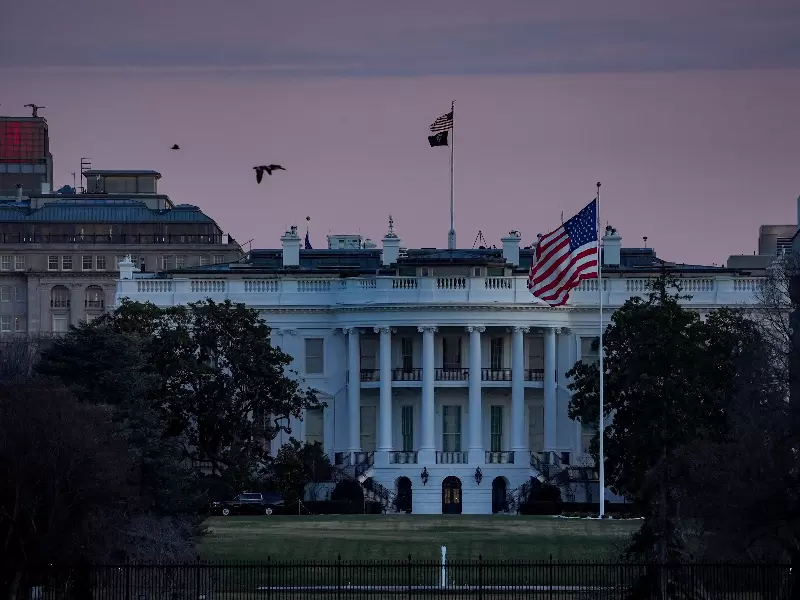 A view of the White House at the White House in Washington, D.C., U.S., March 2, 2026. / REUTERS/Ken Cedeno
Democratic lawmakers have accused the U.S. Justice Department of failing to protect some of America’s most sensitive government sites from the sale of mobile phone location data that could be exploited by China, Iran and other foreign adversaries using artificial intelligence tools.
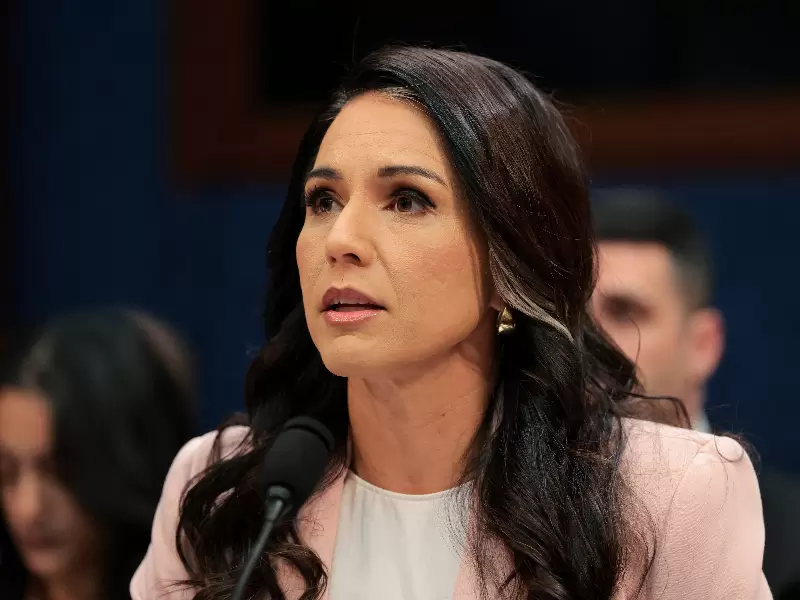
In a sharply worded letter to Director of National Intelligence Tulsi Gabbard and Acting Attorney General Todd Blanche, Senator Ron Wyden, Senator Martin Heinrich and Representative Sara Jacobs warned that gaps in federal rules have left the White House, CIA headquarters, Congress, the Supreme Court and nuclear weapons laboratories outside protected zones banning the sale of location data.
The lawmakers said the sale of Americans’ location data by brokers “poses a serious threat to U.S. national security, particularly when data about U.S. government employees is sold to foreign governments.” They added that such information “can reveal sensitive information that can be exploited for espionage purposes.”
The letter follows a 2024 executive order issued by then-President Joe Biden directing the Justice Department to regulate sales of sensitive data to countries identified as threats, including China, Russia, Iran, North Korea, Cuba and Venezuela.
Under the rules finalised in January 2025, the Justice Department identified 736 sensitive U.S. government-related locations where even data from a single device could not legally be sold to foreign adversaries. But the lawmakers said major intelligence and national security facilities were omitted from the list.
“In addition, DOJ’s list of 736 sensitive U.S. government-related locations does not include some of the most sensitive U.S government locations,” the lawmakers wrote.
ALSO READ: AAG Dhillon to probe Washington women’s prison housing policy
They said the protected list excluded the headquarters of the CIA, the National Reconnaissance Office and the National Geospatial-Intelligence Agency. They also said continuity-of-government facilities and federal laboratories involved in designing nuclear weapons were left unprotected.
The lawmakers highlighted that the White House, Congress and the Supreme Court were also not covered under the restrictions, even though the rules protected other government housing sites, including the Vice President’s residence at the Naval Observatory and Fort McNair, where several senior Trump administration officials reportedly reside.
Wyden, Heinrich and Jacobs urged the Justice Department to replace what they described as an “incomplete list” with a broad protection zone covering the entire National Capital Region around Washington.
“Given the serious national security threat posed by the ongoing sale of data to foreign adversaries from sensitive U.S. government facilities, we urge DOJ and the DNI to promptly act to address these problems,” they wrote.
The lawmakers also criticised the department for limiting restrictions to only six countries. They argued that nations conducting surveillance against Americans or countries with weak privacy laws should also be included because data brokers could otherwise resell Americans’ information to hostile governments.
The letter cited warnings in Biden’s executive order that AI systems could combine multiple datasets to identify U.S. officials and government personnel whose connections to federal agencies “would be otherwise obscured in a single dataset.”
Growing concerns in Washington over data brokers and AI-enabled surveillance have intensified amid rising tensions with China and increased scrutiny of foreign cyber and intelligence operations targeting the United States. U.S. lawmakers from both parties have repeatedly warned that commercially available location data can expose military personnel, intelligence officers and government officials to tracking, blackmail and espionage risks.
Discover more at New India Abroad.
Related







.JPG)

ADVERTISEMENT

ADVERTISEMENT
E Paper
Video

Comments
Start the conversation
Become a member of New India Abroad to start commenting.
Sign Up Now
Already have an account? Login