ADVERTISEMENT

ADVERTISEMENT



Chemical engineer and Cardiologist team up to validate a 5000-year-old mantra
They teamed up to conduct a study on the efficacy of the mantra, Aum Namo Bhagavate Vasudevaya for hypertension.
-
1761239531.png) Pradeep K. Singh
Pradeep K. Singh -
 Pradeep B. Deshpande
 - Sat, 07, Mar 2026
- 15:19 EST
- 35
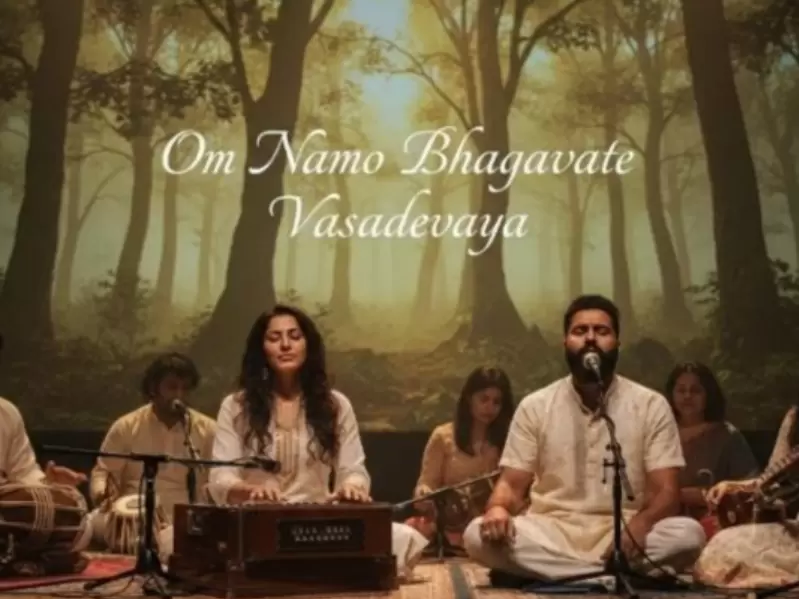 Kirtankar Jahnavi Harrison and her troupe chanting Aum Namo Bhagavate Vasudevaya / Generated using AI
Researchers have investigated the efficacy of Gayatri Mantra for restoring the neurochemical balance between the two hemispheres of the brain, and for increasing the brain regions associated with the cognition function.
The literal translation of Aum Namo Bhagavate Vasudevaya is "O Lord, I bow to the Divine One who dwells in all beings."
In the Vedic tradition, mantras are not "invented" in the modern sense but "revealed" to Rishis during deep meditation. The mantra is traditionally associated with Maharishi Narada, the celestial sage. Its primary home is the Bhagavata Purana (Srimad Bhagavatam) and the Vishnu Purana.
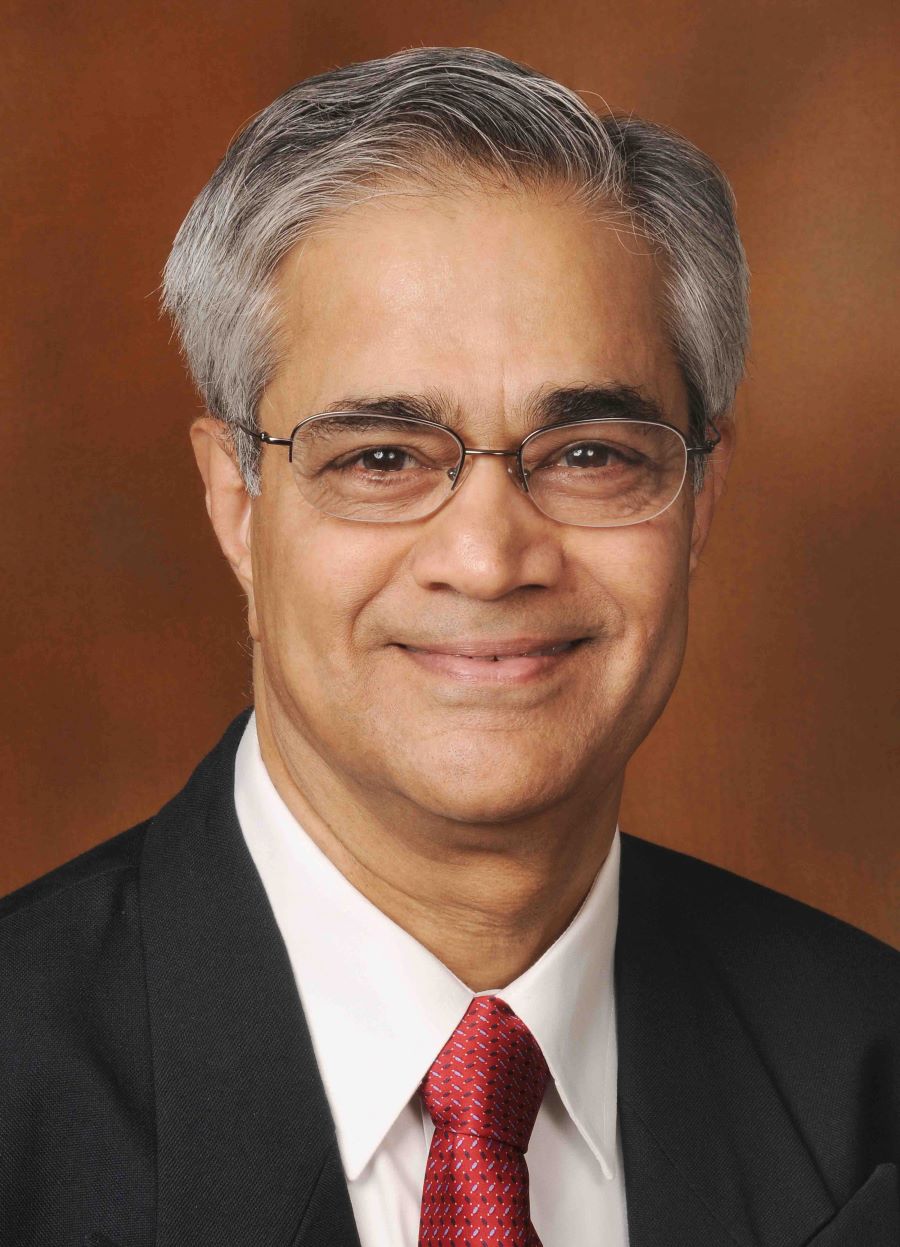
I (second author) am an 83-year-old Indian American academic. In January 2024, I had an annual visit with my cardiologist, and the cardiologist was a bit alarmed upon seeing my blood pressure readings. He changed my medicines but that wasn’t sufficient.
Then, one day late last year, my blood pressure shot up to 200/99, and my wife took me to the emergency room of a local hospital. After examination, the emergency room physician said to me, “since yours is an asymptomatic hypertension, there is no need to do anything, and he sent us home.” Not a very reassuring recommendation.
Also Read: Model minority myth masks rising heart risks in South Asian Americans, physician says
The second author then asked me to take the blood pressure readings in the am, in midafternoon and just before I went to bed, all three just before I took the blood pressure medicines. The idea was to adjust/change my medicines depending on what the data revealed.
I started doing this but sometime on Day 3, I remembered traveling from Pune to Goa in 2015, to visit the Adhyatma Vishwavidyalaya (Spiritual University) to study the efficacy of Aum Namo Bhagavate Vasudevaya mantra.
The organization’s newspaper, Dainik Sanatan Prabhat reported at the time, while Saints can diagnose the vibrations and Sattva (purity) of a person through subtle perception, the scientific minded require "direct proof" through scientific instruments. The purpose of the test was to provide that empirical evidence.
The device I used goes by the name, Bio-Well. It was used to measure the relevant parameters of four subjects before-and-after a 40-minute recitation of Aum Namo Bhagavate Vasudevaya.
With the device connected to my laptop computer with a USB cable, the subject inserts the fingers of both hands, one at a time, and places them on the glass electrode of the device when the computer operator presses the scan button. Bio-Well then applies a harmless electrical current to the finger. The finger’s response to this electrical stimulus is a burst of photons which are captured by the computer and analyzed with software. The intensity of the photonic discharge (pixels) and the area of the discharge produces three parameters relevant to this study: (1) Pranic energy, (2) Stress level and (3) chakra alignment.
We previously explained in the article, Chronic Stress and Longevity that for good health, the pranic energy of a person should remain stable or trend higher, stress level should trend lower and the chakras should all move closer to the central vertical line. Table I depicts the results for the four subjects while Figure 1 depicts the chakra alignment of the four subjects.
Table I reveals that for the first three of four subjects, the pranic energy has increased and stress level has gone down. Figure 1 shows that the chakra alignments of the first three subjects had also improved. We do not know this for a fact, but I believe the fourth subject was given a negative mantra to chant just to test if the device Bio-Well would recognize this. The last entry in Table I and in Figure 1 both reveal that for this subject, pranic energy has reduced, stress level has increased chakra alignment has deteriorated pursuant to the mantra chanting session. These are powerful results although the sample size is small.
Buoyed by these results, I decided to try out the Aum Namo Bhagavate Vasudevaya mantra for managing my blood pressure. On the first three days, I merely measured my blood pressure three times a day just before taking blood pressure medicines as per the second author’s instructions. These data are shown in Tabel II.
My blood pressure readings on Day 1-3 may be seen to be generally high.
For Days 4-10, I included 15 minutes of mantra chanting before taking the blood pressure readings in the am, in midafternoon and at bedtime. Table II shows that the blood pressure readings are now generally lower.
Adding Mindfulness Practice
On October 26, 2025, a quiet yet profound movement began in Fort Worth, Texas. Nineteen Buddhist monks, led by Venerable Bhikkhu Pannakara and accompanied by a rescue dog named Aloka (Sanskrit for "enlightenment"), embarked on a 2,300-mile "Walk for Peace" toward Washington, D.C.. Their journey was marked by heartwarming public interactions and tragic adversity; in November 2025, a vehicle struck their escort, resulting in one monk losing a leg. Yet the pilgrimage continued — a living testament to the message of non-violence and healing they seek to spread.
The core message the monks carried is simple but transformative: without internal peace, there can be no world peace. Huge crowds gathered to see the monks in cities and towns along the way. Everywhere they went, Venerable Pannakara urged the crowds to practice mindfulness regularly.
There are several benefits of mindfulness, among them, better control of blood pressure. I added a fifteen-minute mindfulness practice before mantra chanting for Day 11-20. Table II reveals that the mindfulness practice has further improved blood pressure control.
NOTE: Always get the approval of your healthcare professionals before adopting the mindfulness-mantra practices and the ideas in this article.
(The views and opinions expressed in this article are those of the author and do not necessarily reflect the official policy or position of New India Abroad)
Discover more at New India Abroad.
Related









ADVERTISEMENT

ADVERTISEMENT

ADVERTISEMENT
E Paper
Video

Comments
Start the conversation
Become a member of New India Abroad to start commenting.
Sign Up Now
Already have an account? Login