ADVERTISEMENT

ADVERTISEMENT


California forestry jobs initiative expands opportunity amid tight job market
Against this backdrop, California’s forestry sector is positioning itself as an alternative, one tied not only to employment but to the state’s escalating environmental crisis.
-
 Ritu Marwah
 - Mon, 06, Apr 2026
- 02:14 EDT
- 23
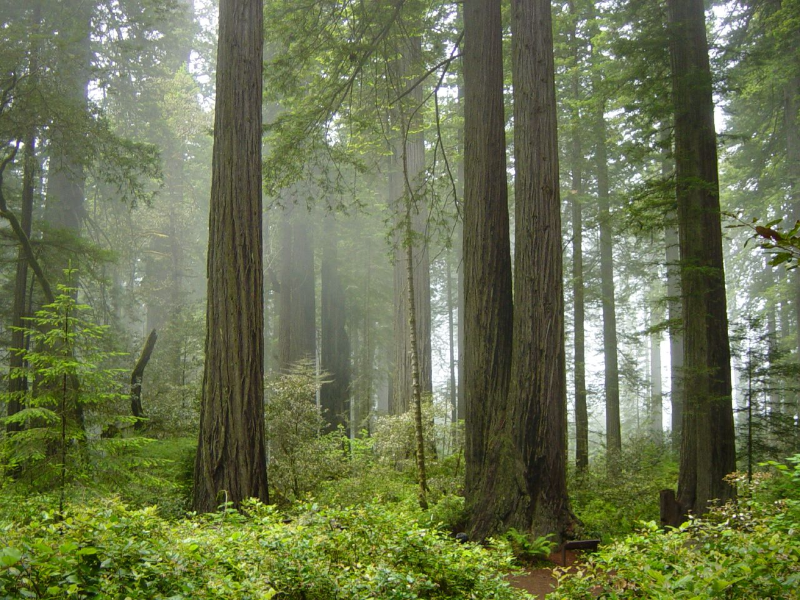 Representative image / Wikipedia
At a time when job prospects for recent graduates are among the most challenging in more than a decade, a new initiative in California is turning attention to an often-overlooked sector: forestry.
Speaking at a recent American Community Media briefing, Matt Dias, president and CEO of the California Forestry Association, highlighted a stark reality. According to the Federal Reserve Bank of New York, the labor market for college graduates in 2025 has tightened significantly, with hiring slowdowns across federal agencies, tech companies and consulting firms. Entry-level roles are shrinking, in part due to automation and artificial intelligence, leaving many young job seekers with fewer pathways into stable careers.
Against this backdrop, California’s forestry sector is positioning itself as an alternative, one tied not only to employment but to the state’s escalating environmental crisis.
The California forestry sector jobs initiative
The California Forestry Sector Jobs Initiative, supported by Cal Fire and led in partnership with the California Forestry Association, aims to bridge a growing workforce gap. The program focuses on expanding access to education, training and career pathways while reaching communities that have historically been left out of the sector.
“This is about building awareness as much as building workforce,” said Matt Dias, president and CEO of the California Forestry Association. “There are entire regions of the state that don’t even realize there is a private-sector forestry economy.”
The initiative comes at a critical moment. California’s wildfire crisis has intensified over the past decade, burning more than 11 million acres, roughly 11% of the state. What was once seen as a regional issue is now statewide, affecting air quality, water systems and entire communities.
Industry leaders say meeting this challenge will require a significant expansion of the workforce, and a more diverse one.
Historically, forestry companies have relied on local, rural communities to fill jobs. But that model is no longer sufficient. Staffing shortages, combined with an aging workforce, have forced the industry to rethink recruitment.
“We’ve had internal barriers,” Dias said. “We haven’t done a good job reaching out to urban areas, to Southern California, to the Bay Area, or to underserved communities. That’s what we’re trying to change.”
The initiative seeks to open doors to a wide range of roles, not just traditional forestry work but positions across an integrated supply chain that includes trucking, construction, IT, sales and office administration. Many jobs offer on-the-job training, allowing workers to enter without prior experience and advance over time.
At present, the sector employs roughly 55,000 workers in California, with dozens of job openings already listed and expectations that this number will grow into the hundreds in the near future.
Importantly, organizers emphasize that the jobs are not limited to those with specialized degrees. While universities such as Cal Poly Humboldt, UC Berkeley and Cal Poly San Luis Obispo offer forestry and natural resource programs, many positions are vocational, requiring skills such as welding, equipment operation or logistics.
“There’s something that fits everybody,” Dias said.
The initiative also aims to address longstanding gaps in representation. While Latino workers have historically been present in field roles, leaders acknowledge that broader outreach is needed, particularly to women and other underrepresented groups.
“The barrier hasn’t been a lack of interest,” Dias said. “It’s been a lack of outreach.”
Even concerns that wildfires themselves might deter applicants appear unfounded. In fact, interest in forestry-related education and careers has grown alongside the crisis, particularly among younger generations motivated by environmental concerns.
Ultimately, organizers stress that tackling California’s wildfire emergency will require collaboration across sectors — government, private industry, nonprofits and local communities alike.
“There’s no single entity that can solve this,” Dias said. “It’s truly an all-hands-on-deck moment.”
For job seekers navigating an uncertain employment landscape, the message is clear: Opportunity may lie in places they haven’t yet considered, deep in the forests and at the front lines of climate resilience.
“We are the perfect place for people who are looking for a new career path or just starting their career. You can come here. We will go and guide you through the application process and learn a new career, a new trade. We’re willing to train you from within. You don’t have to come with experience to learn those new jobs. So we will go in and we’ll help you every step of the way.”
Discover more stories on New India Abroad
Related











ADVERTISEMENT

ADVERTISEMENT
E Paper
Video

Comments
Start the conversation
Become a member of New India Abroad to start commenting.
Sign Up Now
Already have an account? Login