ADVERTISEMENT

ADVERTISEMENT



2026: The dawn of Q2 in the 21st century
As 2026 begins, we are not merely turning a calendar page. We are crossing a psychological and historical threshold.
-
 Rakesh Malhotra
 - Fri, 02, Jan 2026
- 01:58 EST
- 27
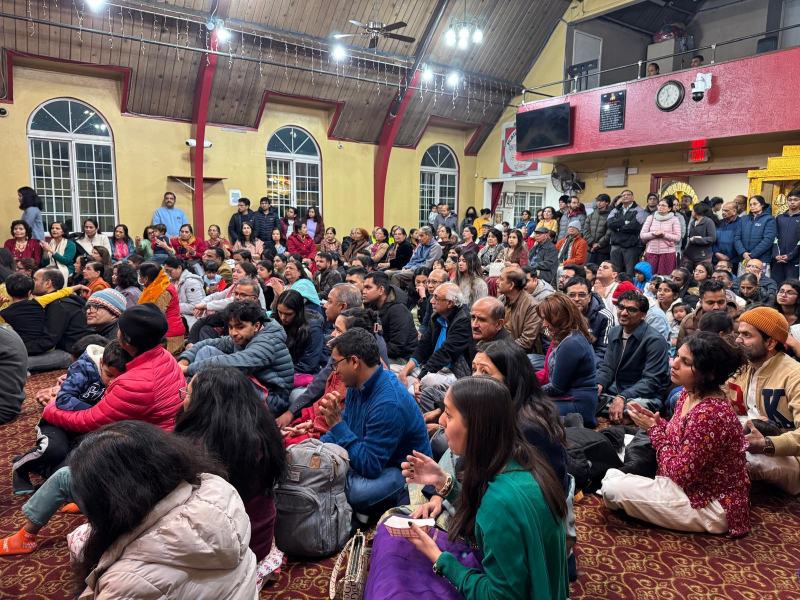
 Representative image / Courtesy Photo
The first quarter of the 21st century — those intense, formative years from 2001 to 2025 — has quietly closed. A chapter defined by acceleration, uncertainty and transformation has reached its natural pause. What lies ahead feels different, not because the world has suddenly become calmer, but because we have grown more conscious of what we have unleashed.
This is the beginning of Quarter Two.
The first quarter: An age of shock and speed
The early decades of this century were anything but gentle.
We began with fears of technological collapse that never arrived, only to witness an explosion of connectivity that reshaped nearly every human relationship. We watched intelligence, both artificial and collective, emerge as a defining force. We lived through pandemics that pushed humanity inward and crises that forced us back toward one another. Old institutions wavered. New empires, built on code rather than land, rose faster than nations ever could.
Certainties dissolved. Possibilities multiplied.
The first quarter was not about mastery; it was about experimentation. We built tools in haste, asked questions loudly and imperfectly, and learned — sometimes painfully — what scale without wisdom can do.
From experiment to experience
What distinguishes 2026 is not novelty, but maturity.
The experiments of the early century have now yielded their first real harvests. Some outcomes have been bitter. Many have been extraordinary. Most have been instructive.
We now understand that technology is not neutral, that growth without purpose hollows meaning, and that progress divorced from humanity eventually turns against itself. We have learned that speed is powerful, but direction is decisive.
The questions we once shouted in confusion can now be asked with clearer voices. The dreams we once sketched casually have become blueprints demanding responsibility.
2026: The adulthood of the century
Every era has an adolescence — chaotic, impulsive, energetic and unsure of itself. The first 25 years of this century carried exactly that character.
With 2026, the 21st century enters adulthood.
This does not mean stability replaces change. It means intent replaces impulse. It means discernment begins to matter more than disruption. It means leaders across business, policy, culture and community are no longer judged solely by what they can invent, but by what they choose to build and protect.
We are beginning to understand the power we now hold — in data, in biology, in energy and in narrative. And slowly, sometimes unevenly, we are learning to wield that power with wisdom rather than wonder alone.
From disruption to direction
The next quarter-century will not be defined by disruption for its own sake. That era has run its course. What defines the years ahead will be direction.
Not invention alone, but intention.
Not scale alone, but meaning.
Not growth alone, but shared prosperity.
The central question of our time is no longer, Can we change the world?
It is, What kind of world do we choose to inhabit?
Choosing the world we build
The future will be shaped less by tools and more by values.
A sustainable world in this second quarter must be:
rooted in peace rather than perpetual conflict,
lifted by joy rather than constant anxiety,
sustained by happiness that is shared, not hoarded.
This is not idealism. It is pragmatism informed by experience. Systems that ignore human dignity eventually fail. Economies that exclude eventually fracture. Progress that forgets people ultimately reverses itself.
A leadership moment
This is, unmistakably, a leadership moment. Leadership in Q2 of the century will look different from leadership in Q1. It will demand:
positive action over loud positioning,
bold thinking anchored in empathy,
courage paired with restraint.
Love, faith and belief — often dismissed as soft — will emerge as strategic assets. Not as sentiment, but as stabilizers in an age of volatility. The leaders who endure will be those who understand that trust compounds faster than capital and that meaning scales more sustainably than metrics alone.
The opening bell
2026 is not a finish line. It is an opening bell.
The game ahead is longer. The stakes are higher. The responsibility is clearer. And the opportunity to build something wiser than what we inherited is real.
The second quarter of the 21st century has begun. History will not measure us by how fast we disrupted, but by how deliberately we chose, how thoughtfully we built, and how human our progress ultimately became.
The future is no longer waiting to be imagined. It is asking to be shaped.
The author is the President of Global Indian Diaspora Foundation.
(The views and opinions expressed in this article are those of the author and do not necessarily reflect the official policy or position of New India Abroad.)
Related




ADVERTISEMENT
ADVERTISEMENT
E Paper
Video

Comments
Start the conversation
Become a member of New India Abroad to start commenting.
Sign Up Now
Already have an account? Login