ADVERTISEMENT
ADVERTISEMENT



Kiran Desai examines patriotism through immigration and race
She pointed to the emotional distance migration creates, noting how India can begin to feel remote for those who leave.
-
 Pranavi Sharma
 - Sat, 24, Jan 2026
- 00:59 EST
- 108
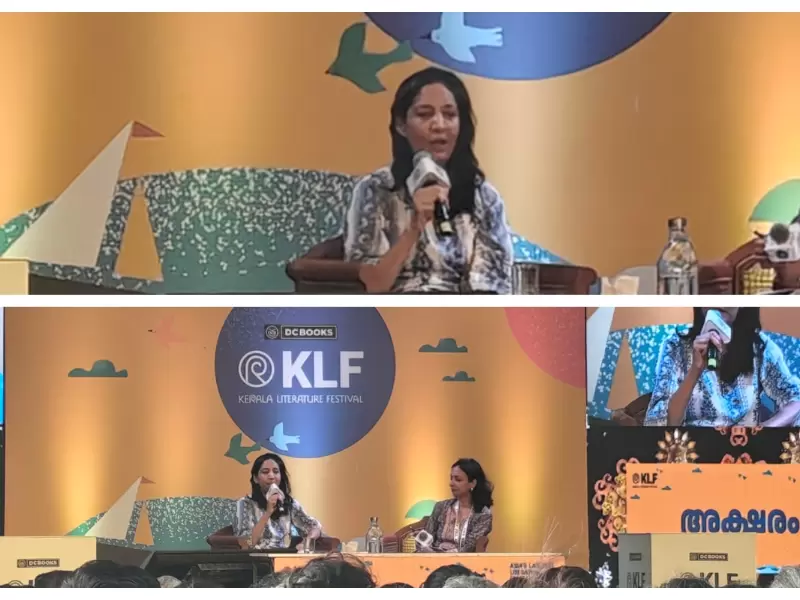 Kiran Desai at Kerala Literature Festival in Kozhikode / New Indian Abroad
Indian American author Kiran Desai said ideas of patriotism for migrants are often tangled with departure and assimilation, arguing that for many Indians, becoming American is treated as a patriotic act.
She was speaking during a panel discussion about her 2025 Booker shortlisted novel 'The Loneliness of Sonia and Sunny' at the sidelines of the Kerala Literature Festival in Kozhikode, where she was responding to questions about migration, identity and power.
Desai was discussing the character from her book. Sunny, a young journalist raised in what she described as a “very westernised, very anglicised” family, shaped from childhood to leave India, study abroad and remain there. She said this kind of upbringing reflects a rarely acknowledged pressure within certain immigrant classes: “there's a demand towards whiteness,” she said, describing a progression toward belonging in what she called “the white world.”
In the narrative she outlined, Sunny enters a relationship with an American woman and takes pride in what he sees as his achievement. Desai said that pride quickly turns into shame, leading him to deliberately dismantle the relationship. She described him as becoming “outraged by this huge power divide between India and the United States, and the western world and the eastern world and the rich world and the poor world.”
ALSO READ: Kiran Desai to present new novel in Houston on Nov. 17
That anger, she said, grows into what she called “racial rage,” which overwhelms the character for a period of time.
During the discussion, a question was raised about how migrants should understand patriotism. Desai framed the dilemma bluntly: “am I patriotic if I become more American, am I patriotic if I become, if I'm more Indian?”
She pointed to the emotional distance migration creates, noting how India can begin to feel remote for those who leave. She cited a recurring pattern she has observed, where migrant children treat their parents to trips such as Alaskan cruises, landscapes far removed from India. In that context, she described the reflections of Babita, Sunny’s mother, who hopes for such a journey herself and concludes, “how strange it is that, you know, if you are a patriotic Indian, you become an American and you leave.”
Discover more at New India Abroad.
Related










ADVERTISEMENT

ADVERTISEMENT
E Paper
Video

Comments
Start the conversation
Become a member of New India Abroad to start commenting.
Sign Up Now
Already have an account? Login