ADVERTISEMENT
ADVERTISEMENT



India gradually diversifying export basket to mitigate higher U.S. tariffs: Report
For electronic goods, the share has risen for the UAE, according to the Bank of Baroda Report.
-
 IANS
IANS - Fri, 02, Jan 2026
- 09:05 EST
- 127
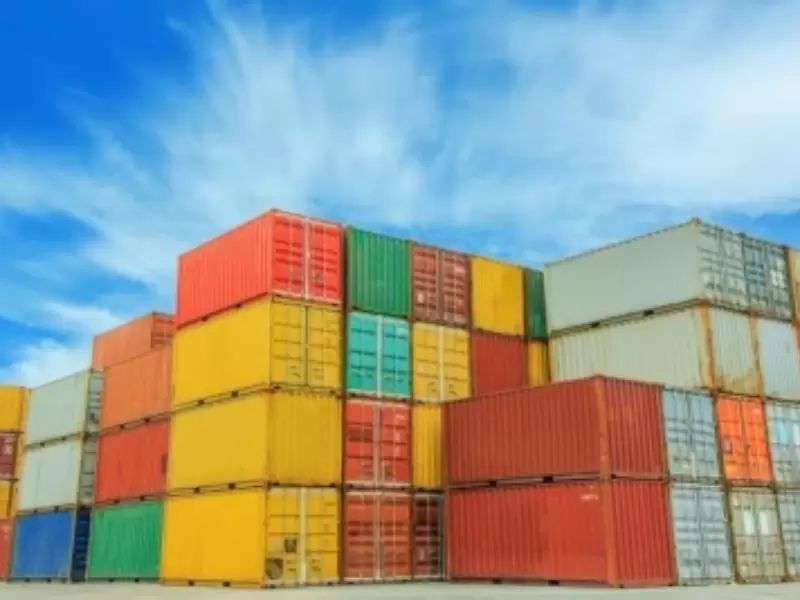 India gradually diversifying export basket to mitigate higher U.S. tariffs: Report / Courtesy AI image/IANS
In order to help insulate the output loss on account of the higher U.S. tariff rate, India’s export profile has seen a case of frontloading and re-routing of exports following the changing tariff environment, a report showed on Jan. 2.
India’s export basket is undergoing a structural shift in response to 50 percent U.S. tariffs and the absence of a formal trade deal.
For marine products, a significant increase in the share of exports is observed for countries such as China and Thailand. For electronic goods, the share has risen for the UAE, while for gems and jewelry, it increased significantly for Hong Kong, according to the Bank of Baroda Report.
Also Read: FTA with India means more jobs, exports, higher incomes: New Zealand PM
“The shares may be small on an individual basis, but cumulatively, with more focus on diversification, integration with global supply chains, competitive pricing, and improved logistics, a stronger substitution effect may, to some extent, insulate the negative impact of the higher tariff rate of the U.S. till we have a formal trade deal in place,” said Dipanwita Mazumdar, Economist, Bank of Baroda.
During the April-Aug. 2025 period, the frontloading of exports to the US happened at a faster pace to get a cost advantage. The next period, Sept.-Nov. 2025, shows some degree of diversification, with exports to the rest of the world excluding the U.S. picking up and some trimming down of exports to the U.S.
However, the U.S. continues to be the export market, said the report.
Going forward, scope for further diversification remains, especially for commodities such as readymade garments, gems, jewelry, textiles (excluding readymade garments), and machinery and instruments.
“Thus, these sectors hold significance in terms of targeted policy initiatives to boost export competitiveness. This might help to insulate the output loss on account of the higher tariff rate,” the report noted.
Overall, while the US remains a dominant export market, India is gradually building substitution channels through wider geographic outreach to mitigate tariff impact.
Leave A Comment
Related








ADVERTISEMENT

ADVERTISEMENT
E Paper
Video

Comments
Start the conversation
Become a member of New India Abroad to start commenting.
Sign Up Now
Already have an account? Login