ADVERTISEMENT
ADVERTISEMENT



Hockey India’s road to LA 2028 Olympic qualification
Canadian coach Tejinder Aujla discusses India’s road to the Los Angeles 2028 Olympic Games.
-
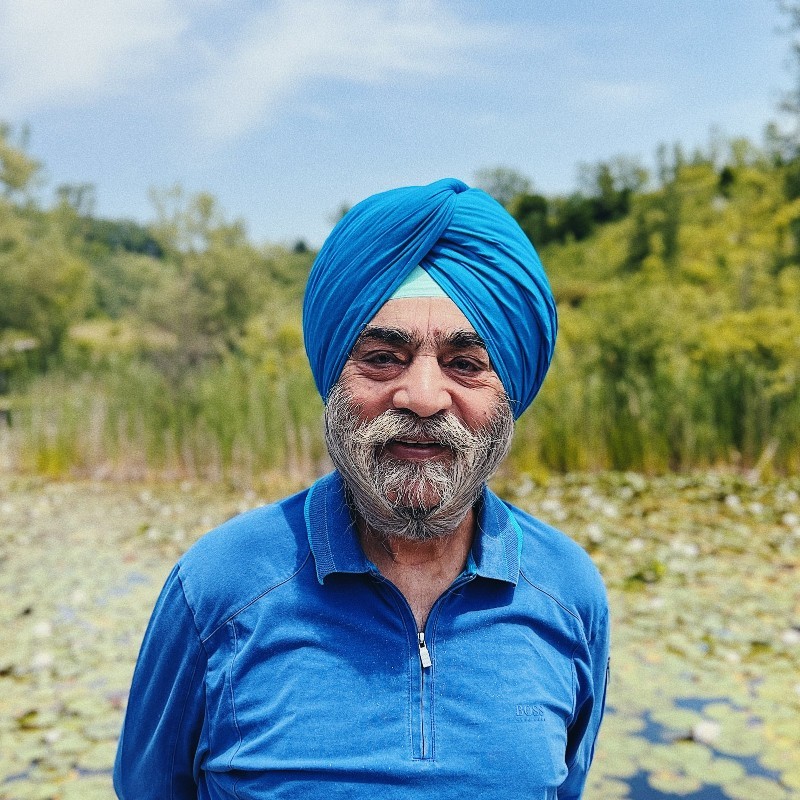 Prabhjot Paul Singh
 - Wed, 24, Dec 2025
- 00:39 EST
- 197
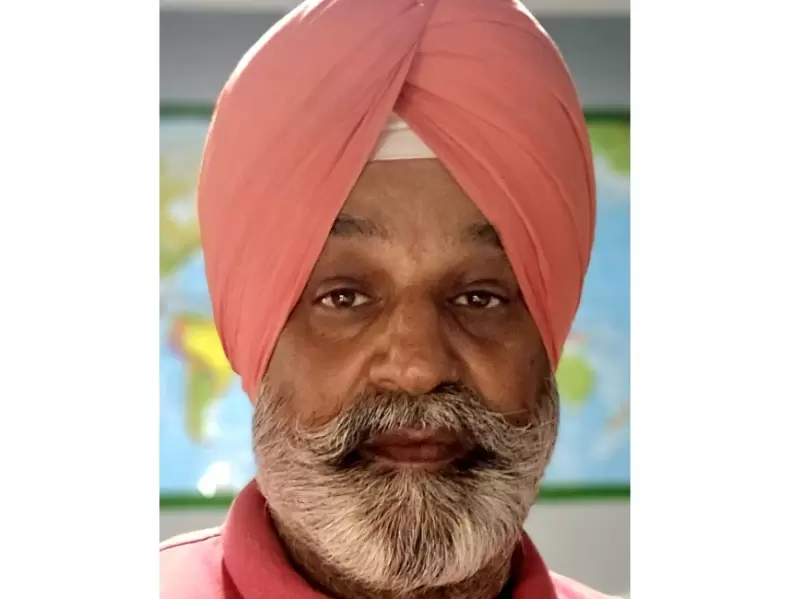 Coach Tejinder Aujla / Prabhjot Paul Singh
Tejinder Singh Aujla, a former national-level Indian hockey player who represented the Border Security Force in various national-level tournaments in India and attended several national camps, is a passionate teacher, coach and historian of Indian hockey. He comes from Kukarpind, a village in Jalandhar Cantonment that has long served as a nursery of hockey. Now settled in Surrey, British Columbia, Canada, Tejinder Aujla is credited with nurturing Canadian juniors at the Lucknow World Cup.
In 2028, when the Olympic Games return to Los Angeles for the third time, hockey will be the cynosure not only for the strong Indian diaspora in the United States and worldwide, but also for the global fraternity that witnessed the hockey competition at the 1932 Olympic Games conducted under unique conditions.
There were only three teams in the fray. Besides the hosts, the United States, and Japan, the then defending champions, the Indian team — comprising stalwarts like Dhyan Chand, his brother Rup Singh and Sansarpur’s Gurmit Singh — travelled several weeks by sea to reach Los Angeles, where it won its second successive gold with fluent 11-1 and 24-1 wins over Japan and the U.S., respectively.
In 1984, when the Olympic Games returned to Los Angeles for the second time, India was back again as defending champion after winning gold at the Moscow Olympic Games. The team featured players such as Romeo James, Merwyn Fernandes, Mohammed Shahid, M.M. Somaya, Manohar Topno, Iqbaljit Singh and Hardeep Grewal, with winger Zafar Iqbal in command. India lost only one match — 2-4 to Australia — and played a goalless draw against Germany to finish fifth. India ended its campaign with a 5-2 win over the Netherlands.
Now, the Games are returning to Los Angeles for a record third time. Though it is too early to predict which teams will qualify for the Olympic hockey tournament, there are certainties and others on the edge, as the gap among the top 20 hockey-playing nations continues to narrow.
What are the chances of the Indian team playing its third consecutive Olympic Games in Los Angeles? To find out, and to assess the state of preparedness of the Indian team, I spoke with Tejinder Aujla. Here are excerpts from the interview:
Tejinder Aujla: “As the countdown to the Los Angeles 2028 Olympic Games begins, Indian men’s hockey faces a demanding and multi-layered qualification process. While India has consistently remained in the mid-pack of the world’s top hockey nations, Olympic qualification for LA 2028 will require strategic planning, sustained performance and consistency against elite global opposition.
India has three clearly defined pathways to secure an Olympic berth: the FIH Pro League, the Asian Games, or an FIH Olympic Qualification Tournament. Each route presents distinct challenges, with varying degrees of competitiveness and risk.
The FIH Pro League is perhaps the most demanding route. The winners of Pro League Season 7 (2025–26) and Season 8 (2026–27) will earn direct Olympic berths. If a single team wins both seasons, the Season 8 quota will be awarded to the runner-up.
The second option is the 2026 Asian Games in Aichi-Nagoya, Japan, from Sept. 19 to Oct. 4. The gold medallist will secure the Asian Olympic quota. Despite India’s strong continental record, the Asian Games allow no margin for error.
The third option is the FIH Olympic Qualification Tournaments in early 2028. Two tournaments will be held, each featuring eight teams, with the two finalists earning Olympic berths. This pathway is the most unpredictable, involving high-pressure knockout matches.”
Q: What do you think will be the best way for India to reserve its berth in the LA 2028 Olympic Games?
Tejinder Aujla: “None will be easy. It is going to be a test of nerves, not a cakewalk. Qualification cannot be taken for granted and will demand sustained excellence rather than sporadic success.
In the FIH Pro League, India’s chances appear to be around 60 percent. Winning either season would be a formidable challenge given the strength of teams such as the Netherlands, Belgium, Germany and Australia.
At the Asian Games, India’s chances may appear high — around 90 percent — but Asian dominance can no longer be assumed. A single substandard match can derail an entire Olympic cycle.
If the first two routes fail, the Olympic qualifiers become the final opportunity. Despite the pressure, this route appears favorable for India, with an estimated 95 percent chance of qualification.”
Q: Will back-to-back bronze medals at the Tokyo and Paris Olympics boost morale?
Tejinder Aujla: “India unquestionably belongs on the Olympic stage. But the challenge is execution in an unforgiving global landscape. Rankings and medals can be deceptive. Against true Olympic heavyweights, warning signs remain.
Despite investment in infrastructure and coaching, India has not achieved sustained dominance like Belgium, Germany, Australia or the Netherlands.”
Q: Can India rely on the core group from Tokyo 2020 and Paris 2024?
Tejinder Aujla: “India’s core group is now at or past peak athletic age. Rivals are fielding younger squads. India remains overly reliant on experience while struggling to prepare replacements.
Elite nations manage transition seamlessly. India has yet to ensure a smooth pipeline from juniors to senior ranks.”
Q: What is your view on hockey administration in India?
Tejinder Aujla: “Under Narinder Dhruv Batra, Hockey India made significant progress, including two Olympic medals. However, persistent criticism may undermine sustainability.
Foreign coaches have played a vital role, and while Indian coaches are important, they must meet global standards. What Indian hockey needs is a development-driven leader with vision, passion and long-term commitment.”
Related



ADVERTISEMENT

ADVERTISEMENT
E Paper
Video

Comments
Start the conversation
Become a member of New India Abroad to start commenting.
Sign Up Now
Already have an account? Login