ADVERTISEMENT
ADVERTISEMENT



Smithsonian to present Pahari paintings from Himalayan India
Titled Of the Hills: Pahari Paintings from India’s Himalayan Kingdoms, the exhibition will be on view from April 18 through July 26, 2026
-
 Malvika Choudhary
 - Wed, 17, Dec 2025
- 14:18 EST
- 14
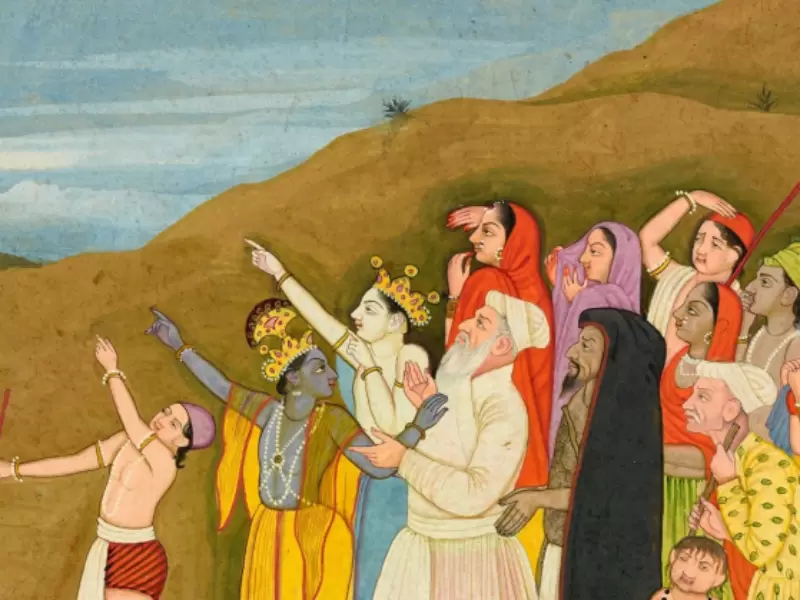 Attributed to an artist from the generation (ca. 1725–ca. 1785) after Manaku and Nainsukh; “Krishna and His Family Admire a Solar Eclipse, canto 10.82,” from a Bhagavata Purana (Ancient Tales of the Lord) (detail); India, Himachal Pradesh state, 1775–80; opaque watercolor on paper; / National Museum of Asian Art, Smithsonian Institution, Freer Collection, Purchase from the Catherine and Ralph Benkaim Collection—Charles Lang Freer Endowment, F2017.13.5
The Smithsonian’s National Museum of Asian Art in Washington announced a new exhibition showcasing art from India’s Himalayan foothills region.
Titled Of the Hills: Pahari Paintings from India’s Himalayan Kingdoms, the exhibition will be on view from April 18 through July 26, 2026. It brings together 48 canonical works and rarely seen pieces, including several that have never been publicly exhibited.
Also Read: Indian artifacts among 600 high-value items stolen from UK museum
Many of the works are drawn from the Catherine and Ralph Benkaim Collection, acquired by the museum between 2017 and 2018, and are presented alongside paintings from the museum’s own South Asian and Himalayan collections.
Featured works include Krishna and His Family Admire a Solar Eclipse, from the Bhagavata Purana, attributed to an artist from the generation following Manaku and Nainsukh and dated to about 1775–80 in present-day Himachal Pradesh.
According to the museum, the exhibition traces the development of Pahari painting traditions between 1620 and 1830, a period when rulers of small Hindu kingdoms across the Himalayan region commissioned artworks that blended local artistic practices with broader cultural influences.
The works are known for intricate detailing, naturalistic figures and vivid colors, created using opaque watercolors made from ground pigments, beetle wings and gold.
“These paintings are swoon-worthy,” said Debra Diamond, Elizabeth Moynihan curator for South and Southeast Asian Art. “Created with opaque watercolors made from ground pigments, beetle wings and gold, it’s no surprise that they are among the most beloved of Indian paintings. Paradoxically, they also are among the least well understood.”
“We are thrilled to share these extraordinary paintings from the Benkaim collection with the public, some for the very first time,” said Chase F. Robinson, director of the National Museum of Asian Art.
“Together with other works from our museum’s rich South Asian and Himalayan collections, they allow us to deepen our understanding of Indian culture and pursue new avenues of scholarship,” Robinson added.
The exhibition is organized chronologically and examines the role of artistic collaboration across three key periods. An introductory gallery situates the works within the Himalayan landscape, exploring how painters helped establish the region as a sacred geography.
Related










ADVERTISEMENT
ADVERTISEMENT
E Paper
Video

Comments
Start the conversation
Become a member of New India Abroad to start commenting.
Sign Up Now
Already have an account? Login