ADVERTISEMENT
ADVERTISEMENT



Pakistan faces mounting internal strains after Op Sindoor: ORF
New study says Islamabad has leveraged regional turmoil and renewed US engagement while facing mounting economic, political and security challenges at home.
-
1759953093.png) Staff Reporter
Staff Reporter - Fri, 12, Jun 2026
- 18:08 EDT
- 43
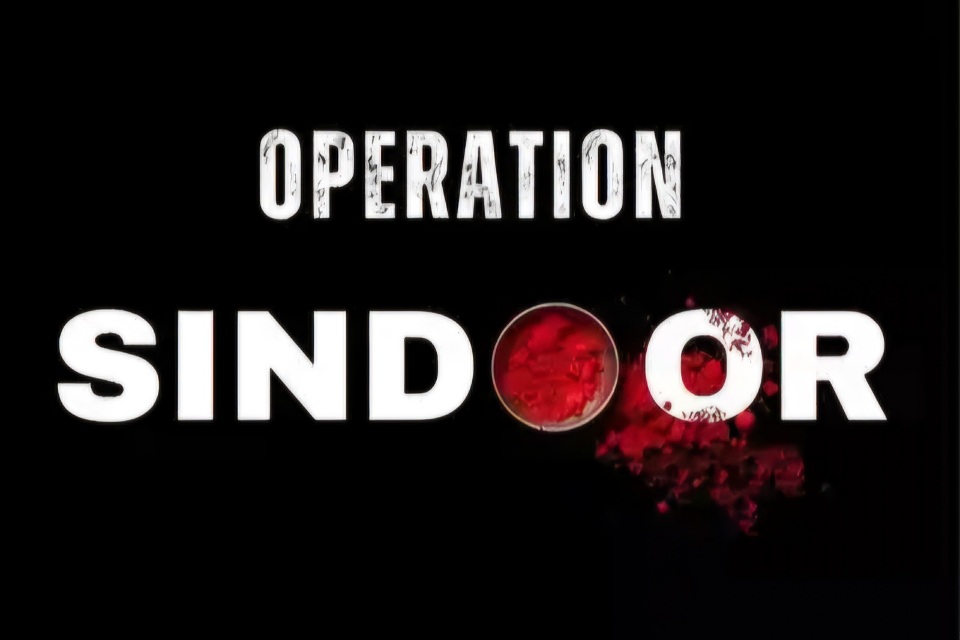 Operation Sindoor logo. / PIB
Pakistan is grappling with mounting political, economic and security challenges even as it seeks to project a narrative of success following Operation Sindoor, according to a new report.
The Observer Research Foundation's (ORF) report, ‘Pakistan in Perspective: A Post-Operation Sindoor Analysis’, says Pakistan has sought to project Operation Sindoor and its mediation efforts in the Middle East as strategic and diplomatic successes, using both to bolster its standing among domestic and international audiences.
Also Read: Operation Sindoor: India’s Demonstration of Deep-Strike Precision and Strategic Resolve
Edited by Shivam Shekhawat and Sushant Sareen, the 96-page report assesses Pakistan's internal developments, military establishment and foreign relations in the year since the conflict, which the authors describe as a period of rapid geopolitical change and growing military consolidation within Pakistan.
Renewed relevance after Operation Sindoor
The report notes that Pakistan has attempted to build a "victory" narrative around Operation Sindoor and subsequent diplomatic developments, presenting itself as an increasingly important regional player amid shifting global dynamics.
It points to Pakistan Deputy Prime Minister and Foreign Minister Ishaq Dar's meeting with US Secretary of State Marco Rubio in Washington on May 29, 2026, during which Rubio acknowledged Islamabad's efforts in mediating the ongoing Middle East conflict and reiterated Washington's commitment to expanding trade and investment cooperation with Pakistan.
According to the editors, Pakistan's renewed diplomatic relevance stems from several factors, including the ongoing conflict involving Iran, the return of the Trump administration in Washington and the growing role of Pakistan's military in shaping foreign policy as civilian institutions weaken.
The report argues that these developments have allowed Islamabad to reposition itself internationally despite longstanding economic and political challenges. Several chapters examine Pakistan's relationships with the United States, China, Russia and the European Union, as well as its efforts to expand influence across South Asia.
The study identifies China and the United States as the two most consequential external actors in Pakistan's strategic calculations. While Pakistan continues to rely heavily on its partnership with Beijing, the report notes an upswing in ties with Washington and describes the relationship as increasingly transactional in nature.
At the regional level, the report argues that Pakistan has sought to capitalize on changing geopolitical circumstances following Operation Sindoor to improve its diplomatic standing, even as India continues to expand political and economic partnerships across South Asia.
Military dominance shapes Pakistan's future
Despite Pakistan's diplomatic gains, the report paints a stark picture of domestic conditions, repeatedly highlighting the expanding influence of the military across political, economic and social spheres.
An underlying theme throughout the report is the military's "oversized role" in governance and policymaking. The authors argue that the country's hybrid civil-military system remains inherently fragile, even as it appears stable on the surface.
They contend that the elevation of Army Chief Asim Munir to field marshal in May 2025 and subsequent constitutional changes have further consolidated military authority.
The report also raises concerns about Pakistan's long-term development trajectory. While the country has a population of nearly 260 million and one of the world's youngest demographics, the study says inadequate investment in education, healthcare and human capital continues to hinder growth.
Pakistan's literacy rate, female workforce participation and broader human development indicators remain among the weakest in the region, according to the report.
Economic vulnerabilities remain another major concern. The report notes that Pakistan is operating under its 24th International Monetary Fund program since 1958 and argues that recent stabilization measures have not addressed underlying structural weaknesses.
The country continues to struggle with a narrow tax base, chronic energy-sector problems, governance challenges and dependence on external financial assistance.
The report warns that without substantial domestic reforms, Pakistan risks remaining trapped in a recurring cycle of financial crises and international bailouts.
Security challenges also feature prominently in the study. One chapter describes the insurgency in Balochistan as perhaps Pakistan's gravest internal challenge, noting that militant groups have evolved into more sophisticated organizations capable of conducting complex attacks on security forces, infrastructure and Chinese-linked projects.
The report says the insurgency has become increasingly urban in character and has gained greater international visibility in recent years.
Another chapter examines Pakistan's media environment, arguing that both traditional and digital media are frequently used to reinforce state narratives, particularly regarding India and national security issues. The report contends that military influence continues to shape the country's information landscape despite the expansion of digital platforms.
The study also reviews Pakistan's military capabilities, including the army, navy, air force and nuclear posture. It argues that Pakistan's military modernization efforts remain largely India-centric, while examining the performance of the Pakistan Air Force during Operation Sindoor and Islamabad's strategy of using nuclear deterrence to constrain India's conventional military options.
The editors conclude that Pakistan is undergoing rapid transformation at a time of heightened regional uncertainty, with increasing concentration of power in the military establishment and shifting geopolitical dynamics creating new opportunities and risks for the country. Understanding these developments, they argue, is critical to assessing their implications for South Asia and the wider international system.
Discover more at New India Abroad.Related




.png)


ADVERTISEMENT

ADVERTISEMENT
E Paper
Video

Comments
Start the conversation
Become a member of New India Abroad to start commenting.
Sign Up Now
Already have an account? Login