ADVERTISEMENT
ADVERTISEMENT



Krishnamoorthi unveils college accountability legislation
Lawmakers seek to block federal aid for low-value college programs that leave students with debt and poor outcomes.
-
 Pranavi Sharma
 - Sat, 18, Jul 2026
- 02:34 EDT
- 79
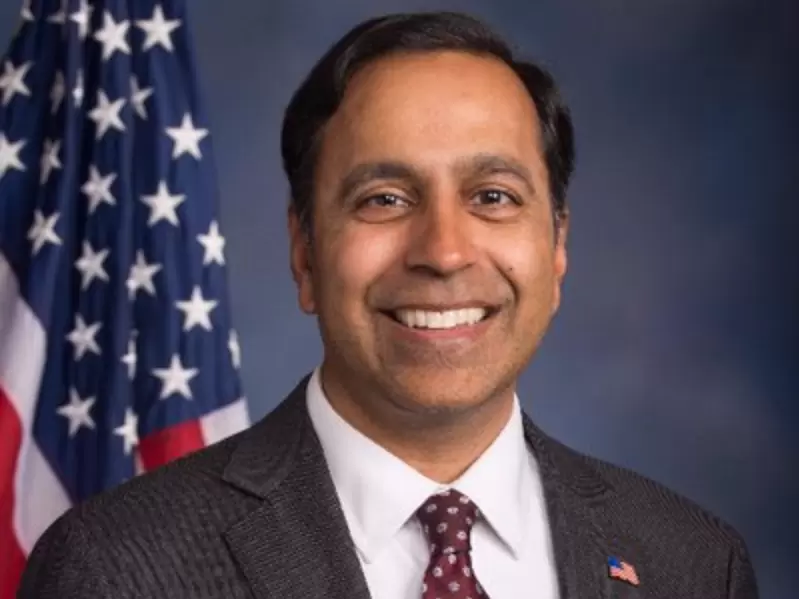 Rep. Raja Krishnamoorthi / Photo: X/@CongressmanRaja
Rep. Raja Krishnamoorthi and Sen. Jeff Merkley reintroduced legislation July 16 that would make certain higher education programs ineligible for federal financial aid if they fail to provide students with meaningful career outcomes, targeting what the lawmakers described as predatory college programs that leave borrowers with high debt and limited employment prospects.
The 'Protecting Students from Worthless Degrees Act' would bar federal education assistance from flowing to degree programs that do not meet accountability standards. According to the lawmakers, the bill also responds to the Trump administration's recent changes to federal student aid regulations, including a final rule they said weakens oversight of college programs and delays accountability for programs preparing students for occupations where most workers earn tipped income.
"Students should never spend years earning a degree, take on tens of thousands of dollars in debt, and then discover they were never actually qualified for the career they were promised," Krishnamoorthi said.
"Higher education should be a pathway to the middle class—not a pipeline to debt. Our bill ensures colleges receiving taxpayer dollars actually prepare students for the careers they promise."
Merkley said the legislation would restore protections for students while ensuring federal funds support programs that provide economic value.
"Students should not be saddled with a worthless degree or mountains of debt for pursuing the dream of higher education," Merkley said.
"The Protecting Students from Worthless Degrees Act restores common-sense protections so graduates are not left with unmanageable debt and ensures that federal funds are not going toward worthless college degrees. This is a win-win for both students and taxpayers—delivering on the promise of quality education, meaningful career opportunities, and the responsible investment of federal financial aid dollars."
The bill would restore a debt-to-earnings standard for for-profit college programs and nondegree certificate programs at any institution. Programs that consistently leave graduates with debt disproportionate to their earnings would lose access to federal financial aid.
It would also extend an earnings premium test to undergraduate certificate programs, require programs, including distance education programs, to meet applicable federal or state licensure and accreditation requirements, and eliminate a one-year delay in accountability for programs leading to occupations where most workers receive tipped income. The measure would also allow states to enforce their laws against online schools based in other states.
The legislation is cosponsored by Sens. Dick Durbin and Richard Blumenthal, along with Rep. Danny K. Davis.
Several education advocacy organizations endorsed the measure, including The Institute for College Access & Success, Third Way, The Century Foundation and New America's Higher Education Program.
Christopher Madaio, senior adviser for federal and state accountability at The Institute for College Access & Success, said the bill "takes important steps to protect students from worthless degrees that do not lead to the jobs they were promised and builds on efforts to ensure taxpayer dollars are not wasted on programs that do not deliver for students."
Michelle Dimino, director of education at Third Way, said the legislation would strengthen accountability for programs that fail to provide students with meaningful economic opportunities.
Carolyn Fast, director of higher education policy and senior fellow at The Century Foundation, said the bill would "help restore meaningful accountability in higher education and protect students from low-value, often predatory programs."
Wesley Whistle, project director for student success and affordability at New America, said the legislation would help ensure students can obtain jobs that enable them to repay the debt they incur while pursuing higher education.
Discover more at New India Abroad.
Leave A Comment
Related







ADVERTISEMENT

ADVERTISEMENT
E Paper
Video

Comments
Start the conversation
Become a member of New India Abroad to start commenting.
Sign Up Now
Already have an account? Login