ADVERTISEMENT
ADVERTISEMENT



Indian TV veterans discuss media's evolution at New York symposium
Panelists examined Indian television's growth, challenges and future during an annual symposium hosted in Elmont, New York.
-
1759953093.png) Staff Reporter
Staff Reporter - Thu, 02, Jul 2026
- 01:14 EDT
- 51
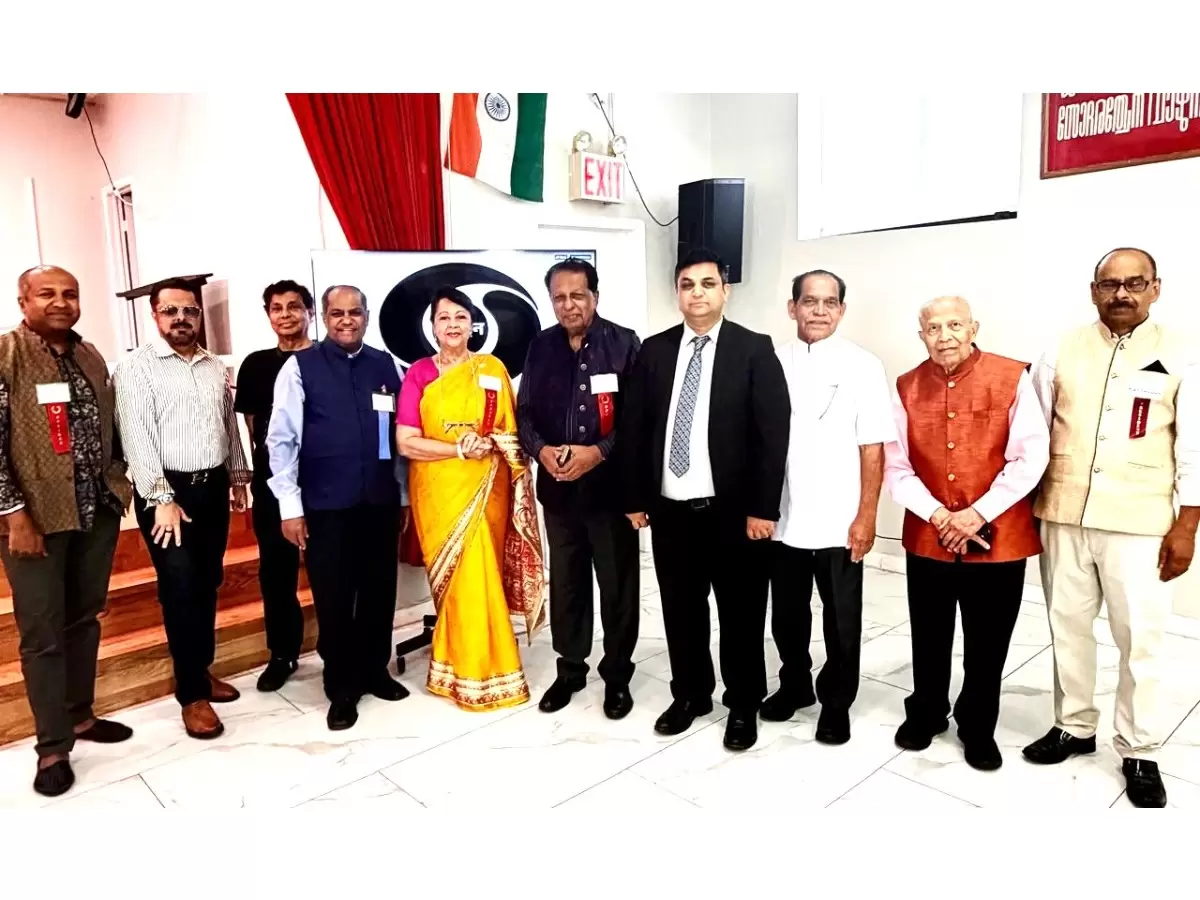
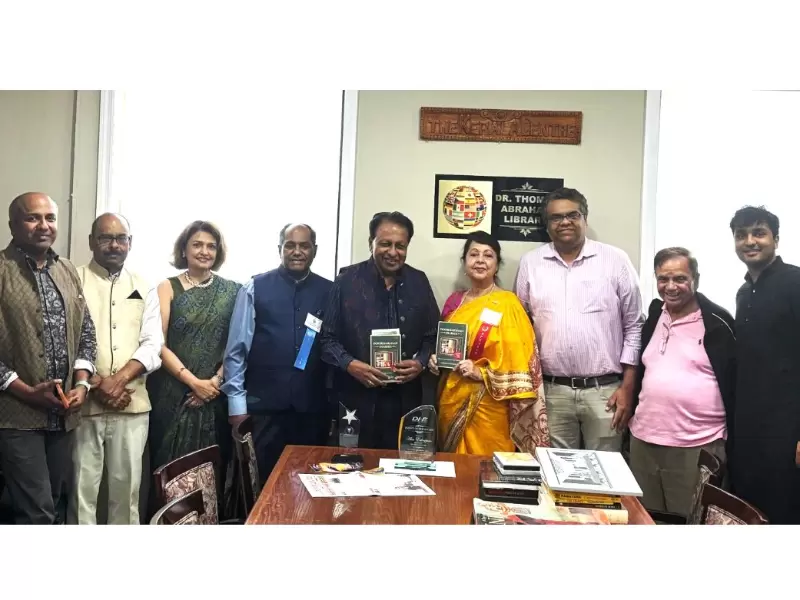 Speakers visit the Indian Diaspora Center based at Dr. Thomas Abraham Library. From l. to r. Sree sreenivasan, Alex Esthappan, Roopa Unnikrishnan, Dr. Thomas Abraham, T.P. Sreenivasan, Sheila Chaman, Ajeet Singh, Bhom Banta and Krishna Sreenivasan / Courtesy photo
The Indian Diaspora Center at the Dr. Thomas Abraham Library, in collaboration with the Global Organization of People of Indian Origin-Manhattan Chapter (GOPIO-Manhattan) and the Indian American Kerala Cultural and Civic Center, hosted its 2026 Annual Symposium on June 28 at the Kerala Center in Elmont, New York.
The event, titled 'Indian Television – Yesterday, Today and Tomorrow,' brought together former television presenters, journalists and media professionals to discuss the evolution of Indian television, its current challenges and its future.
The symposium opened with a networking reception followed by welcome remarks from Kerala Center President Alex Esthappan, who said the organization was proud to house the Dr. Thomas Abraham Library and the Indian Diaspora Center.
Dr. Thomas Abraham, founder of the Indian Diaspora Center, outlined the organization's mission to preserve the history and contributions of the global Indian diaspora. He also highlighted GOPIO's initiative to establish India Collections in public libraries across the New York metropolitan area through book donations from the Consulate General of India and members of the Indian American community.
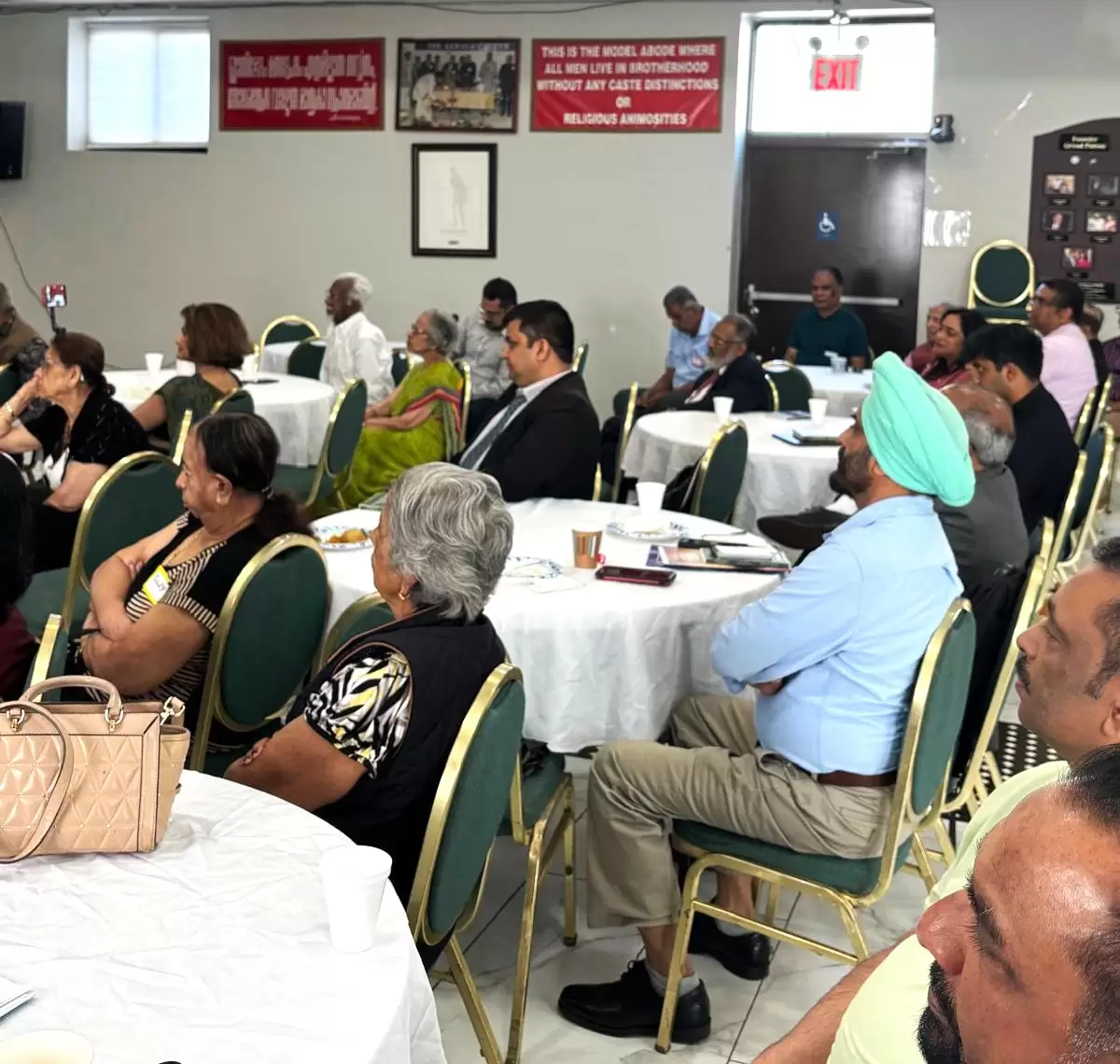
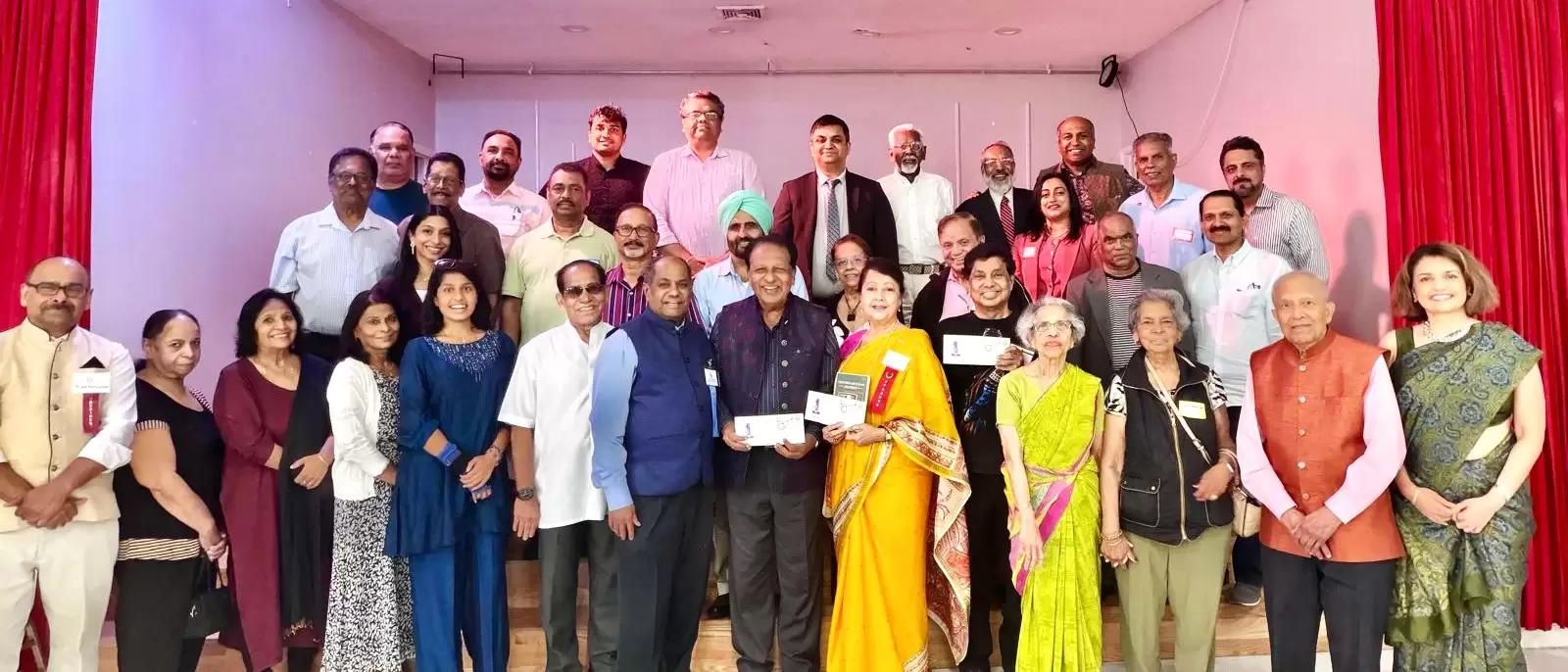
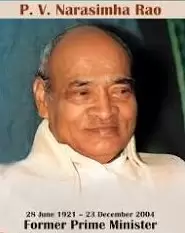
Because June 28 marked the birth anniversary of former Indian Prime Minister P. V. Narasimha Rao, former Doordarshan news presenter Ramu Damodaran delivered a tribute before the panel discussion.
"P. V. Narasimha Rao is rightly remembered for launching India's economic liberalization. Equally significant, however, was his commitment to liberalizing the human mind. One visible expression of that vision was opening Indian television to new channels and new opportunities, giving viewers a genuine choice in what they could watch," Damodaran said.
He said Rao believed India's greatest strength was its human talent and argued that expanding the economy and media landscape created greater opportunities for innovation. Damodaran also said Rao admired the United States' ability to attract skilled professionals.
"Mr. Rao was perhaps the first Indian Prime Minister to fully appreciate how effortlessly the United States attracted and benefited from the world's finest minds. He believed that, irrespective of politics, India should learn from that example by creating an environment where talent could flourish and innovation could thrive," he said.
The discussion was moderated by Sree Sreenivasan and featured former Doordarshan news presenter Sheila Chaman and former Indian Ambassador T. P. Sreenivasan. Chaman spoke about her recently published book, 'Doordarshan Diaries: The Golden Era of Television,' which documents the history of Indian television through the experiences of former Doordarshan employees.
She recalled that early news presenters often wrote or edited their own scripts and delivered broadcasts from memory because teleprompters were not available. Chaman also presented archival photographs tracing Indian television's development from its 1959 launch to the introduction of color broadcasts during the 1982 Asian Games.
She said India's television industry changed significantly after the economic reforms of the early 1990s, when private broadcasters entered the market following the arrival of international television networks. Chaman noted that India now has more than 900 satellite television channels while Doordarshan operates about 50 regional and national channels.
Former Ambassador T. P. Sreenivasan reflected on his transition from diplomacy to television after retiring from the Indian Foreign Service.
"It is ironic that the oldest member of this panel is speaking about the newest trends in television," he said, describing himself as an "accidental television journalist."
He said the rise of regional television channels created new opportunities for journalism and public discussion, adding that some broadcasters that began with limited resources later became influential media organizations.
"Both professions share a common purpose—to educate and inform the public. Diplomats do it discreetly; journalists do it publicly," he said.
During the discussion, Damodaran said accountability has become one of the defining features of television over the past three decades.
"If there is one element which has transformed television in the last 35 years, it is the emergence of accountability and that anyone who appears on television needs to be prepared to justify actions taken, or not taken, and place that justification before the people of India," he said.
"It is clear that audiences should demand better coverage as democracy in India and abroad depends on it," he added.
During the audience discussion, panelists expressed concern over sensationalism and confrontational television debates, contrasting them with the style of earlier news broadcasts. T. P. Sreenivasan also discussed the growth of regional broadcasters and independent news creators on YouTube.
"To have a chance to talk about the past, present and future of the richest, most diverse TV landscape in the world was exciting. Only GOPIO and Dr Thomas Abraham could conceive of and convene such an unusual discussion," Sree Sreenivasan said.
The symposium drew community leaders, media professionals, scholars and members of the Indian American community. Speakers were presented commemorative U.S. Postal Service First Day Covers issued during the first Global Convention of People of Indian Origin in New York in 1989. Kerala Center Vice President Daisy Stephen delivered the vote of thanks.
Discover more at New India Abroad.
Leave A Comment
Related


ADVERTISEMENT

ADVERTISEMENT
E Paper
Video

Comments
Start the conversation
Become a member of New India Abroad to start commenting.
Sign Up Now
Already have an account? Login