ADVERTISEMENT
ADVERTISEMENT



Indian American leaders renew call for wealth tax as Musk hits $1 Trillion
Democratic lawmakers cited Musk's rising fortune to argue for taxing extreme wealth and funding public programs.
-
 Malvika Choudhary
 - Fri, 12, Jun 2026
- 17:58 EDT
- 51
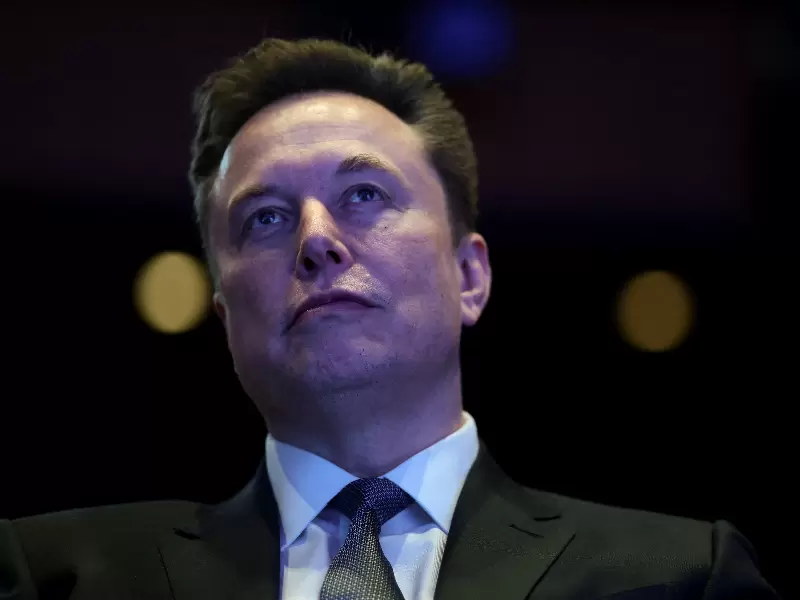 Elon Musk attends the U.S.-Saudi Investment Forum in Washington, D.C., U.S., November 19, 2025. / REUTERS/Evelyn Hockstein/File Photo
Indian American lawmakers renewed calls for higher taxes on the ultra-wealthy after Elon Musk became the world's first trillionaire on June 12, a milestone reached following SpaceX's historic public market debut and soaring investor demand.
Reacting to the development, Rep. Pramila Jayapal posted a video statement on social media criticizing the concentration of wealth among a small number of individuals.
Also Read: Musk, already world's richest person, eyes $1 trillion fortune
"That's total bullshit. Nobody should be a trillionaire," Jayapal said. "Right now, we've got way too much wealth concentrated with the tiniest group of people. And what we need to do is tax the wealth."
Jayapal said she has introduced legislation aimed at taxing accumulated wealth and argued that the country's tax system should do more to address economic inequality.
My thoughts on Elon Musk becoming the world’s first trillionaire. pic.twitter.com/lXoWrWseu2
— Rep. Pramila Jayapal (@RepJayapal) June 12, 2026
Rep. Ro Khanna echoed those concerns, arguing that a small tax on Musk's fortune could finance major public programs.
"Brad, a 5 percent tax on Elon's trillion net worth would literally pay for free college and trade school for every American. And with the market's growth, he still would be worth over a trillion dollars! You don't think that's worth it?" Khanna wrote in a post on X.
Khanna also noted that Musk's wealth now exceeds South Africa's projected 2026 gross domestic product and said a 5 percent tax on fortunes of that scale could fund free public college and trade schools, $10-a-day childcare and special-needs education nationwide.
Brad, a 5% tax on Elon's trillion net worth would literally pay for free college and trade school for every American.
— Ro Khanna (@RoKhanna) June 12, 2026
And with the market's growth, he still would be worth over a trillion dollars!
You don't think that's worth it? https://t.co/eGbmrvggDM
The comments came during an online exchange with investor Brad Gerstner, who defended Musk's record of wealth creation. Gerstner said Musk has paid more than $100 billion in taxes during his lifetime, including a record $11 billion tax bill in 2021. He argued that imposing heavy taxes on unrealized wealth could discourage entrepreneurship and may have hindered the growth of companies such as Tesla and SpaceX, which employ tens of thousands of people.
New York City Mayor Zohran Mamdani joined the criticism, posting: "Reason #1,000,000,000,000 why we should tax the rich."
Reason #1,000,000,000,000 why we should tax the rich. https://t.co/ELgIUwwXns
— Mayor Zohran Kwame Mamdani (@NYCMayor) June 12, 2026
Others celebrated the milestone as evidence of Musk's impact on technology and industry. Sriram Krishnan, ex Senior Policy Advisor for AI, White House, congratulated Musk, calling SpaceX "a truly iconic singular company" and praising its mission of taking humanity "to Mars — and beyond."
congratulations to @elonmusk on creating a truly iconic singular company that is just getting started on its mission of getting us all to Mars - and beyond.
— Sriram Krishnan (@sriramk) June 12, 2026
SpaceX's initial public offering raised a record $75 billion and valued the rocket, satellite and artificial intelligence company at $1.77 trillion, making it the largest IPO in U.S. history. The stock opened at $150 per share, 11 percent above its IPO price of $135, and later pushed the company's valuation above $2 trillion. The rally lifted Musk's net worth to more than $1 trillion, driven largely by his stake in SpaceX alongside holdings in Tesla and other ventures.
Founded in 2002, SpaceX has evolved from a private rocket company into a sprawling aerospace, satellite internet and AI enterprise. Its Starlink satellite network serves millions of customers globally, while the company remains a major contractor for NASA and the U.S. government.
Discover more stories on NewIndiaAbroad
Related




.png)



ADVERTISEMENT

ADVERTISEMENT
E Paper
Video

Comments
Start the conversation
Become a member of New India Abroad to start commenting.
Sign Up Now
Already have an account? Login