ADVERTISEMENT
ADVERTISEMENT



India hosts BRICS Women Ministers in Kochi
The meeting is expected to translate discussions at the officials' level into broader policy direction for the expanding BRICS grouping.
-
 Richa Singh
 - Tue, 07, Jul 2026
- 12:25 EDT
- 41
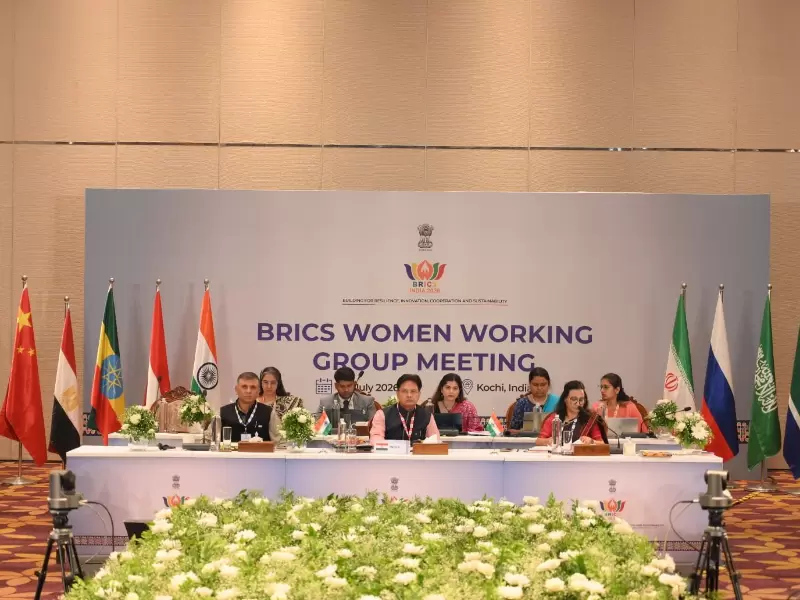 BRICS delegates continued deliberations on Day 2 of the Women Working Group Meeting in Kochi, / X@MinistryWCD
India will host the BRICS Women Ministerial Meeting in Kochi, Kerala, on July 8 and 9, marking one of the key ministerial engagements under its BRICS Chairship in 2026.
Ministers and heads of delegation from BRICS member countries are expected to deliberate on a shared framework for advancing women's empowerment, with an emphasis on translating policy commitments into practical cooperation across the bloc.
The meeting comes as India places women-led development at the centre of its broader diplomatic agenda during its BRICS presidency. New Delhi has repeatedly argued in multilateral forums that women should not merely be beneficiaries of development programmes but active participants in economic growth, technological innovation and climate resilience.
India's 2026 BRICS Chairship is built around four priorities—Resilience, Innovation, Cooperation and Sustainability. The Women's Track has been designed to align with these themes, reflecting India's effort to integrate gender-related issues into wider discussions on development, economic transformation and social inclusion rather than treating them as standalone concerns.
The ministerial meeting follows the BRICS Women Working Group Meeting held in Kochi on July 6 and 7, where senior officials from member countries discussed sector-specific priorities and worked on draft outcomes.
The ministerial deliberations are expected to provide political direction to those proposals and identify areas where member countries can deepen collaboration through joint initiatives and knowledge-sharing.
According to the official programme, discussions will focus on expanding women's economic participation, strengthening digital and financial inclusion, promoting entrepreneurship, and increasing women's representation in leadership roles.
Delegates are also expected to examine women's contributions to climate action, food security and nutrition—areas that have assumed greater significance amid global concerns over economic uncertainty, supply-chain disruptions and climate-related risks.
The meeting is being held under India's BRICS Chairship theme, "Building for Resilience, Innovation, Cooperation and Sustainability," which the government has described as a people-centric and humanity-first approach to international cooperation. The theme reflects New Delhi's attempt to position inclusive growth and sustainable development as central elements of the BRICS agenda.
The Women's Ministerial Meeting also illustrates how BRICS has broadened its engagement beyond finance, trade and geopolitics. While the grouping was initially known for discussions on economic cooperation among emerging economies, its agenda has steadily expanded to include public health, education, innovation, agriculture, culture and gender equality.
Dedicated ministerial platforms such as the Women's Track are intended to facilitate policy exchanges and encourage collaboration on issues with direct social and economic impact.
For India, the event offers another opportunity to showcase domestic initiatives aimed at improving women's participation in governance, entrepreneurship, education and technology. Alongside the ministerial sessions, exhibitions will highlight India's work in areas including rural development, science and technology, nutrition and education, presenting examples of women-led initiatives across sectors.
The programme will also include plenary sessions and thematic panel discussions involving policymakers, domain experts and practitioners. These sessions are expected to focus on sharing best practices, discussing innovative policy models and identifying opportunities for partnerships among BRICS member countries.
The outcomes of the Kochi meeting are expected to contribute to the broader set of recommendations emerging from India's BRICS Chairship in 2026. While ministerial meetings do not produce legally binding commitments, they often shape future cooperation programmes, influence the agenda for leaders' summits and provide policy direction for sectoral working groups across the grouping.
Discover more at New India Abroad.
Leave A Comment
Related








ADVERTISEMENT

ADVERTISEMENT
E Paper
Video

Comments
Start the conversation
Become a member of New India Abroad to start commenting.
Sign Up Now
Already have an account? Login