ADVERTISEMENT

ADVERTISEMENT



IND-EU FTA, GSP withdrawal, and increasing web of regulatory measures
The real test of the India-EU FTA is not the implementation of the same, but to tone down the impact of the EU’s regulatory measures.
-
 Himanshu Jaiswal
 -
 Badri Narayanan Gopalakrishnan
 - Mon, 09, Feb 2026
- 09:00 EST
- 19
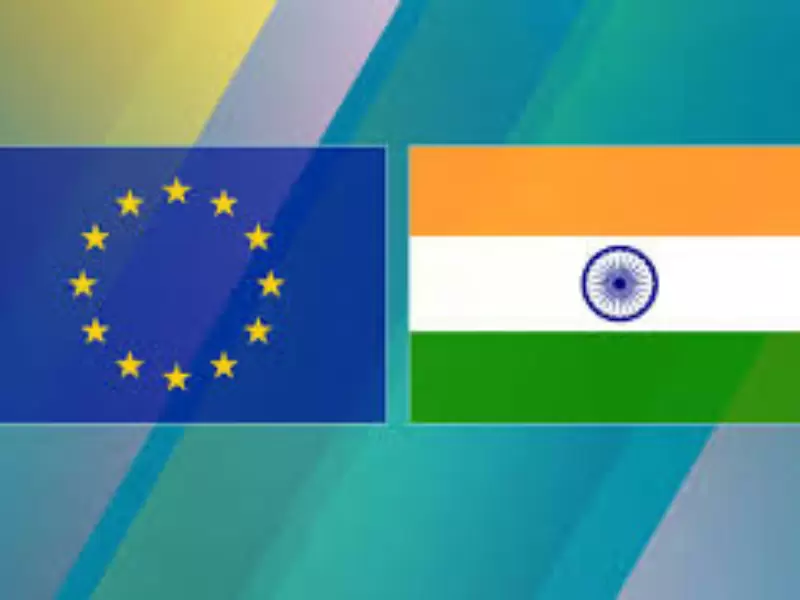 Representative Image / EU Trade - European Union
Bilateral trade between India and the European Union has shown sustained momentum in recent years, underscoring the strategic relevance of the newly concluded India-EU Free Trade Agreement negotiations.
In 2024-25, India-EU merchandise trade was valued at around INR 11.5 lakh crore (USD 136.5 billion), with Indian exports accounting for roughly INR 6.4 lakh crore (USD 75.9 billion). Trade in services has also expanded steadily, reaching INR 7.2 lakh crore (USD 83.1 billion) in 2024.
Under the agreement, India has secured preferential access to the EU market across 97 percent of tariff lines, covering 99.5 percent of trade value, while India has offered tariff concessions on 92.1 percent of its tariff lines, covering 97.5 percent of EU exports. These commitments are structured through a mix of immediate tariff elimination, phased reductions over several years, and tariff-rate quotas.
Also Read: India’s EU Outreach: Strategic foresight or reactive pivot?
At the same time, India has safeguarded key sensitive sectors, including dairy, cereals, poultry, soymeal, and select fruits and vegetables, reflecting a calibrated approach that balances export expansion with domestic economic sensitivities.
Negotiations on a standalone Investment Protection Agreement and an Agreement on Geographical Indications are still ongoing, while provisions facilitating the movement of natural persons further enhance the agreement’s strategic depth.
In this sense, the India-EU FTA represents a sound trade strategy for both partners, particularly in an era of global trade uncertainty and rising protectionism.
However, the timing of the agreement coincides with the withdrawal of the Generalized System of Preferences (GSP) benefits, providing lower tariff benefits, which take effect on January 1, 2026.
This is not the first time the EU has limited the preferential benefits under the GSP; it did the same earlier in 2013 and 2023.
However, this time’s withdrawal is completely implemented for three years, meaning all major exports to the EU, including minerals, chemicals, plastics and rubber, textiles and garments, stone and ceramics, precious metals, and iron and steel, etc., will be subject to the Most-Favoured Nation (MFN) tariffs rather than preferential tariffs under the GSP.
The GSP withdrawal will erode the price competitiveness of Indian exports, especially in the price-sensitive sectors like garments and footwear. Due to this, the EU buyers may shift their demand to Bangladesh or Vietnam in the near term.
But, GSP benefits may be recouped through the FTA, subject to approval from both New Delhi and Brussels which may take several months, if not longer. Till then, Indian exporters have to hang in there. The bigger issue here is not the GSP withdrawal or tariffs, which might act as a short-term shock, but the burgeoning regulatory measures in the EU, which may be more drastic for India's exports.
Through instruments such as the Carbon Border Adjustment Mechanism (CBAM), the EU Deforestation Regulation (EUDR), and Corporate Sustainability Due Diligence (CSDD), the EU introduces a new layer of non-tariff barriers that were not fully negotiated within the FTA. It is this tension between tariff liberalization and regulatory tightening that will ultimately determine the real economic impact of the India-EU trade deal.
Also Read: India- EU strategic partnership
CBAM, which imposes the world’s first carbon tax, is a carbon-related costs on imports of steel, aluminum, cement, and other carbon-intensive products to align their carbon costs with EU producers, will surely raise the compliance cost for businesses. This will compel Indian exporters to either absorb carbon charges or reduce prices to stay competitive.
Iron and steel, and aluminum, the major goods to the EU, will be impacted by this regulation. While the EUDR will negatively impact the agricultural goods to the EU, as the EUDR prohibits products from being sourced from deforested land.
Further, both EUDR and CSDD impose extensive due-diligence, traceability, and reporting requirements on imported goods, covering food products, raw materials, and complex value chains.
These rules demand granular supply-chain information that Indian firms, especially small and medium enterprises (SMEs), are unprepared for. Compliance costs and the administrative burden of data collection, supplier certification, and traceability could negate tariff advantages and disproportionately affect Indian exporters.
Not just India, EUDR has roiled up many EU trading partners. Indonesia has labeled this as the EU’s ‘Regulatory Imperialism.’
While the FTA includes several safeguards to address market-access erosion arising from sustainability measures, their effectiveness remains uncertain, as consultation-based mechanisms are often time-consuming and can undermine business confidence. This underscores the need for proactive domestic action.
A key priority is strengthening domestic preparedness, as many Indian exporters, particularly small and medium enterprises, lack the technical and financial capacity to meet complex reporting and traceability requirements. Targeted government support, alongside the role of industry associations and export promotion councils in pooling compliance functions, can significantly reduce firm-level costs.
At the same time, compliance efforts should be aligned with India’s broader economic strategy. Many EU regulatory requirements overlap with India’s own objectives on decarbonization, sustainable agriculture, and supply-chain transparency.
Strategic alignment can help exporters avoid fragmented standards and lower adjustment costs, while investments in cleaner production and improved data systems can enhance resilience to future regulatory shocks beyond the EU market.
Hence, the real test of the India-EU FTA is not the implementation of the same, but to tone down the impact of the EU’s regulatory measures, and the preparedness of the domestic industry.
Himanshu is a Research Fellow at InfiSum, Badri Narayanan is the Director and Founder at InfiSum.
(The views and opinions expressed in this article are those of the author and do not necessarily reflect the official policy or position of New India Abroad)
Discover more at New India Abroad.
Related









ADVERTISEMENT

ADVERTISEMENT
E Paper
Video

Comments
Start the conversation
Become a member of New India Abroad to start commenting.
Sign Up Now
Already have an account? Login