ADVERTISEMENT
ADVERTISEMENT



Harmeet Dhillon sues Illinois city for 'race discrimination'
Dhillon said race-based government benefits are unconstitutional and unlawful.
-
 Malvika Choudhary
 - Tue, 16, Jun 2026
- 18:51 EDT
- 28
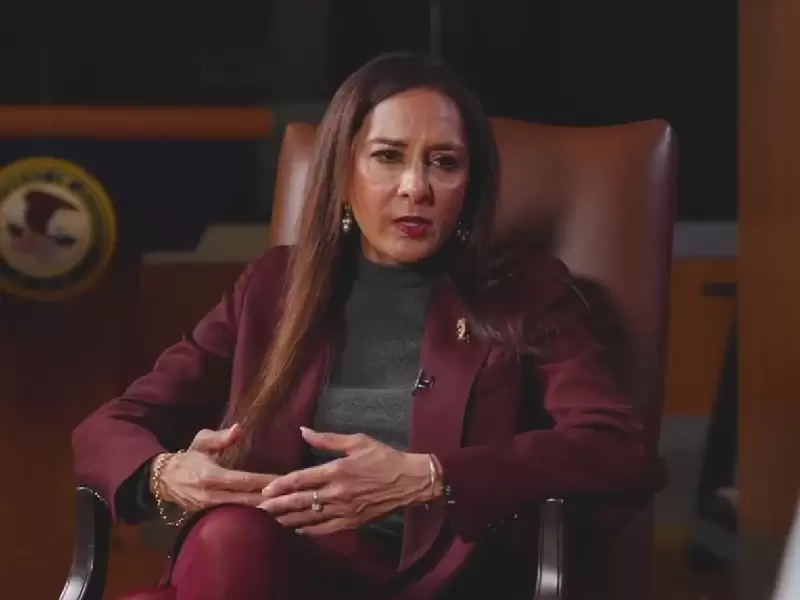 Harmeet Dhillon / X/ Harmeet Dhillon
Assistant Attorney General for Civil Rights at the U.S. Department of Justice Harmeet K. Dhillon formally challenged a program run by the city of Evanston, Illinois, alleging that it unlawfully discriminates on the basis of race.
The Justice Department on June 16 moved to join a federal lawsuit against the city, arguing that Evanston's "Local Reparations Restorative Housing Program" violates the Equal Protection Clause of the Fourteenth Amendment and the Fair Housing Act by providing benefits exclusively to Black residents and their descendants.
Also Read: AAG Dhillon to probe Washington women’s prison housing policy
"Under the pretext of paying reparations for events more than 100 years ago, the City of Evanston has chosen to distribute millions of dollars in cash and housing benefits to people because of the color of their skin or the color of the skin of their parents, grandparents, or great grandparents," Dhillon said in a statement.
"There are sound ways for a city to remedy past discrimination or direct resources to its most vulnerable citizens and neighborhoods. Simply handing out money based on race, however, is not the answer. It is race discrimination, pure and simple. And it is illegal," she added.
Evanston adopted the reparations program in 2019. Under the initiative, Black individuals who lived in the city as adults between 1919 and 1969, as well as their children, grandchildren and great-grandchildren, are eligible to receive $25,000 in cash payments or housing-related financial assistance.
According to the Justice Department, eligibility for the program is determined solely by race and ancestry. The department said the city does not require proof that recipients or their ancestors personally experienced discrimination in Evanston and has not identified specific constitutional or statutory violations that the payments are intended to remedy.
Federal officials said the city has already distributed more than $5 million through the program and plans to provide millions more as funding becomes available.
The Justice Department's action stems from a lawsuit filed in 2024 by descendants of people who lived in Evanston between 1919 and 1969 but who are not Black. The plaintiffs contend that their exclusion from the program violates the Equal Protection Clause.
A federal court denied Evanston's motion to dismiss the lawsuit in March 2026. That same month, the Justice Department opened an investigation into the program under the Fourteenth Amendment and the Fair Housing Act.
The department said Evanston declined to cooperate with the federal investigation, prompting the United States to seek formal participation in the litigation.
U.S. Attorney Andrew S. Boutros for the Northern District of Illinois said the Constitution requires governments to treat citizens as individuals rather than members of racial groups.
"The Supreme Court has repeatedly affirmed that government actions classifying citizens by race are presumptively unconstitutional," Boutros said. "The Constitution demands that the government treat citizens as individuals, not as members of a racial class. Distributing public funds based on an individual's ancestry or race divides the citizenry and establishes the very hierarchy the Equal Protection Clause was designed to dismantle."
The Justice Department also alleges that Evanston violated the Fair Housing Act by offering and providing housing-related financial assistance based on race.
Discover more at New India Abroad.
Related


.png)








ADVERTISEMENT

ADVERTISEMENT
E Paper
Video

Comments
Start the conversation
Become a member of New India Abroad to start commenting.
Sign Up Now
Already have an account? Login