ADVERTISEMENT
ADVERTISEMENT



Fleeting freedom at festival for India's transgender community
Several thousand attend the annual ceremony in Koovagam, in the southern state of Tamil Nadu.
-
 AFP
AFP - Sun, 03, May 2026
- 02:34 EDT
- 28
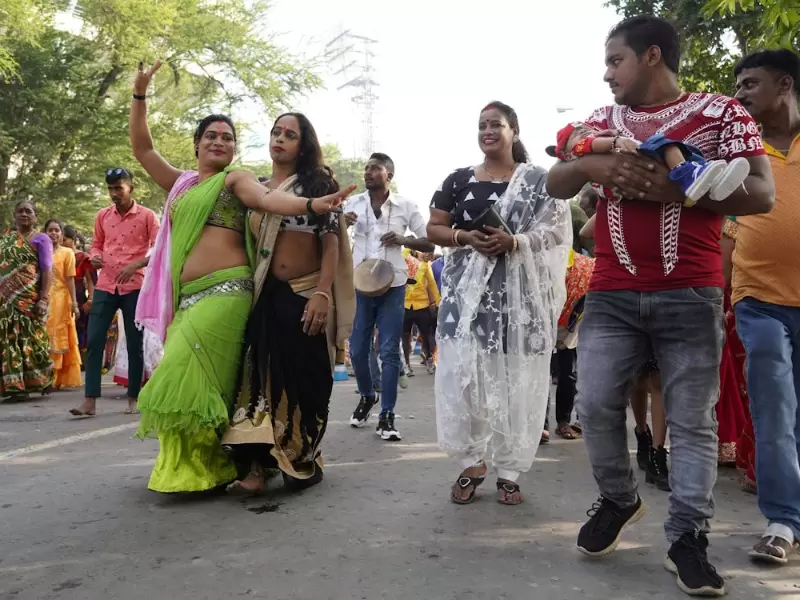 Representative image / Pexels
For a few fleeting days each year, India's often-shunned transgender community is welcomed and revered at a festival that is at once sacred ritual, celebration, and a refuge.
At the heart of it is the Koothandavar Temple where ostracised transgender community members from across India come to honour the Hindu deity Aravan -- and to enjoy a brief oasis of freedom.
Several thousand attend the annual ceremony in Koovagam, in the southern state of Tamil Nadu, a tradition rooted in millennia-old Hindu texts that has gained prominence in recent decades.
"I need a life like a bird," said Thilothama, 34, who uses only one name, her voice steady amid the hum of drums and devotional songs.
"Freedom -- to do what I want, despite being transgender."
Thilothama, who works for Thozhi, a Chennai-based charity supporting transgender people, has spent more than a decade helping others find work and counselling those navigating rejection and uncertainty.
Her own journey has been shaped by both resilience and loss.
Facing opposition from her family over her gender identity, she left home and built a life within the transgender community.
Today she earns a modest income -- but speaks with quiet pride about her independence.
'My world'
For the past 10 years Thilothama has returned to Koovagam, where a beauty pageant and singing contests are held alongside religious rituals.
"I believe the rituals here bring good things," she says, adjusting her sari.
She recalls caring for a friend's bedridden mother, only to be barred from the funeral rites after her death.
"That was the hardest time," she says.
The festival culminates in two days of ceremonies as Koovagam briefly becomes a rare space of acceptance.
On the first, priests tie a sacred thread around the necks of the transgender devotees, symbolising their marriage to the Hindu warrior god Aravan.
The next day, as devotees cry in mourning for his death, the thread and their wrist bangles are cut.
South Asia has a long history of people assigned male at birth but who identify as female.
In India's last census in 2011, more than 487,000 people were members of the third gender -- a designation the supreme court formally recognised in 2014, but whose members still face severe discrimination.
For Anuya, a member of the community, the change in how she is treated at the festival is striking.
"Here, people smile at me, speak kindly. The villagers who are participating in this festival believe that if they get blessing from transgender people, they will have prosperity in their life," she says.
"So I am getting more respect, and in this way I feel more proud of becoming transgender."
As night falls, music and laughter ripple through the village.
"Usually, I feel alone. Here, I see so many like me," says Dhanshika, another member of the community, smiling as she watched friends dressed in their finest sari dresses.
"I feel this is my world."
Discover more at New India Abroad
Related

ADVERTISEMENT

ADVERTISEMENT
E Paper
Video

Comments
Start the conversation
Become a member of New India Abroad to start commenting.
Sign Up Now
Already have an account? Login