ADVERTISEMENT
ADVERTISEMENT



American Independence: The India Connections
The American Revolution shared unexpected ties with India, from Bengal's tea crisis to Cornwallis later shaping British colonial rule there.
-
 Ram Kelkar
 - Sun, 05, Jul 2026
- 13:03 EDT
- 48
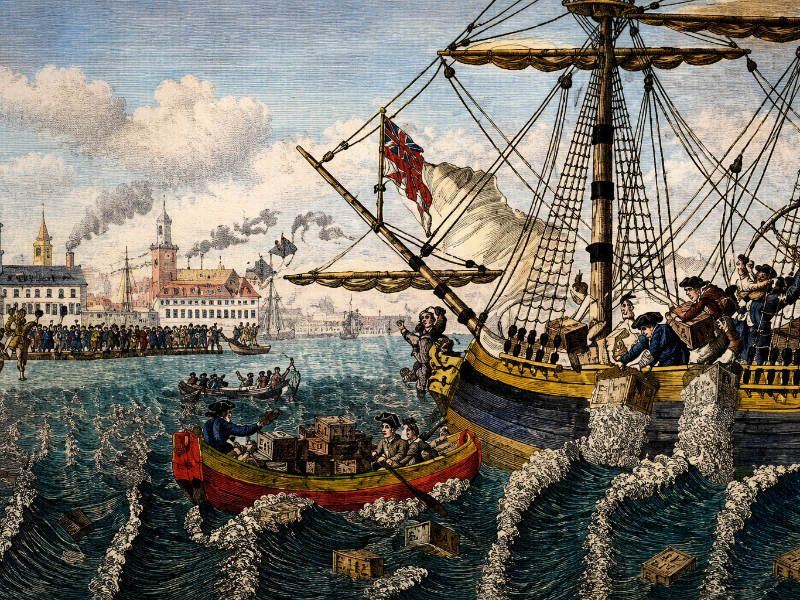 The Boston tea party / Wikipedia
A crisis in the fields of Bengal directly ignited a rebellion in the streets of Boston, and a defeat in the tidewaters of Virginia ultimately reshaped the geopolitical landscape of India.
The Boston Tea Party (1773) and the Battle of Yorktown (1781) are historical bookends of the U.S. War of Independence and both have a connection to India. The Boston Tea Party was the point of no return that provoked Britain into passing the Intolerable Acts, making armed conflict inevitable. The Battle of Yorktown was the climactic military showdown that broke Britain's political will to continue fighting, effectively ending the war on the ground.
The 92,000 pounds of tea dumped into Boston Harbor by the Sons of Liberty on December 16, 1773, belonged to the British East India Company (EIC). The catastrophic famine in Bengal between 1769 and 1770 devastated the EIC's revenue-generating territory and this combined with systemic corporate corruption pushed the East India Company to the absolute brink of bankruptcy.
To save the EIC from collapsing, the British Parliament passed the Tea Act of 1773 which allowed the EIC to bypass standard duties and ship its tea directly to the American colonies undercutting American merchants and establishing a government-sanctioned monopoly. When the colonists dumped the tea, they were protesting British Parliament's right to tax them without representation.
On October 19, 1781, Lieutenant General Cornwallis was forced to surrender his entire 8,000-man army to George Washington and French forces, effectively losing the thirteen American colonies for the British Crown. The conflict officially concluded with the signing of the Treaty of Paris on September 3, 1783, in which Great Britain formally recognized the independence of the United States. Gen.
Charles Cornwallis who surrendered to George Washington at Yorktown in 1781 is the exact same British officer who later served as the Governor-General of India.
While Americans primarily remember Cornwallis for his catastrophic defeat in Virginia, the British government viewed him as a capable administrator and military commander. His defeat at Yorktown did not ruin his career, and as the British Empire shifted its focus toward Asia, Cornwallis became a central architect of British imperial rule in India. He served as Governor-General during two distinct tenures, from 1786–1793 and again in 1805.
Appointed just five years after his surrender at Yorktown, Cornwallis arrived in Calcutta with a mandate to reform the British East India Company's administration and secure British territory, overseeing the Permanent Settlement of Bengal in 1793, when he enacted a sweeping legal and economic overhaul of the land taxation and zamindari system.
Cornwallis was reappointed as Governor-General of India in 1805 after serving as Lord Lieutenant of Ireland and negotiating peace terms with France. As Lord Lieutenant and Commander-in-Chief of Ireland from 1798 to 1801, Cornwallis suppressed the Irish Rebellion of 1798 and later championed the Act of Union 1800 which unified the parliaments of Great Britain and Ireland.
Cornwallis' second term in India was extremely brief and he passed away on October 5, 1805, at the age of 66 in Ghazipur in the Indian state of Uttar Pradesh. He is buried on a bluff overseeing the famed River Ganges.
Both the US and India were under the yoke of colonialism in 1776, but it took 171 years for India to gain her independence in a peaceful way versus the intense War of Independence that the American colonies fought.
Happy 4th of July on the occasion of the Semiquincentennial Celebration of American independence.
(The views and opinions expressed in this article are those of the author and do not necessarily reflect the official policy or position of New India Abroad.)
Discover more at New India Abroad.
Leave A Comment
Related


ADVERTISEMENT

ADVERTISEMENT
E Paper
Video

Comments
Start the conversation
Become a member of New India Abroad to start commenting.
Sign Up Now
Already have an account? Login