ADVERTISEMENT
ADVERTISEMENT



What is old age for?
What Fifty Seniors and the Bhagavad Gita Taught Me About the Second Half of Life
-
 Prasad Kaipa
 - Wed, 17, Jun 2026
- 11:09 EDT
- 54
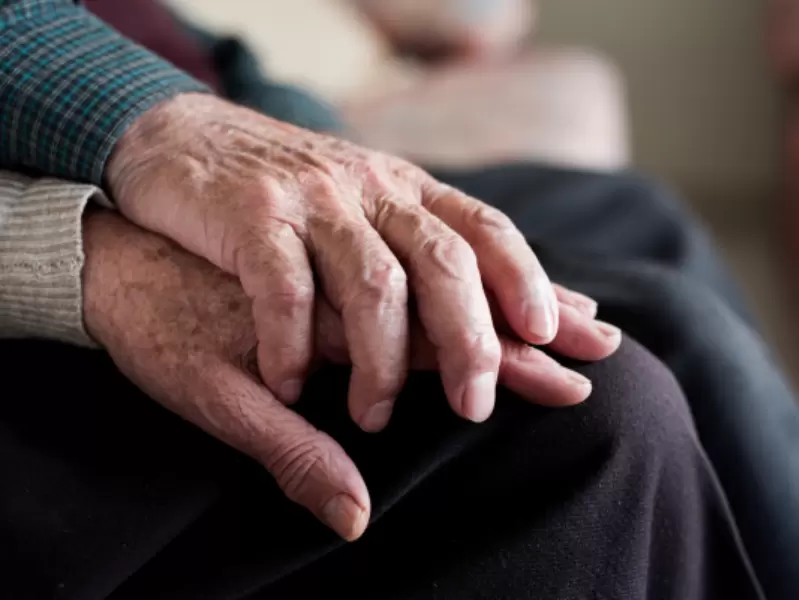 Representative Image / Handout
When Donald Trump turned eighty on June 14, newspapers once again debated whether age should disqualify someone from political leadership. Similar questions surrounded President Biden not long ago. The discussion revolved around cognition, stamina, productivity, succession, and decline. As life expectancy increases across the world, such debates are likely to become more common.
Listening to those conversations, I found myself wondering whether we are asking the wrong question.
Also Read: RANA organizes wellness and healthy aging retreat in NY
Instead of asking whether someone has become too old to lead, perhaps we should ask something more fundamental: What is old age actually for?
The question had been on my mind for another reason. We had just completed a ten-session journey called Conscious Aging through the Bhagavad Gita. Every Sunday, about fifty seniors from different parts of the world gathered on Zoom to explore loneliness, changing identities, relationships with adult children, retirement, purpose, legacy, letting go, and inner freedom.
Each week we reflected on just two verses from the Gita—not as theology to be debated or scripture to be memorized, but as wisdom to be lived. The emphasis was on practice, on what we called karma yajña: allowing ancient wisdom to become part of everyday life.
As one of the facilitators, I thought I would be helping others reflect on aging. Instead, I found myself becoming one of the students.
Modern civilization has become remarkably good at extending life. Here in Silicon Valley, billions of dollars are being invested in longevity research. We know more than ever about how to add years to life and perhaps even slow aging itself. Yet I sometimes wonder whether we are spending equal energy asking what those additional years are meant to cultivate.
The language around aging itself is revealing. We speak about successful aging, active aging, healthy aging, and productive aging. Almost every adjective points toward preserving what youth already values—speed, independence, activity, and achievement.
The Bhagavad Gita seems to invite another possibility.
Perhaps later life is not simply adulthood extended by another twenty or thirty years. Perhaps it is a distinct developmental stage with its own curriculum.
As I reflected on the conversations over those ten weeks, it struck me that every phase of life asks a different question. When we are young, we ask, Who am I? In midlife we ask, What can I accomplish? Later in life, the question changes almost without our noticing:
Who am I when my accomplishments no longer define me?
For many of us in the Indian diaspora, that question carries another dimension. We left India decades ago to build careers, raise families, and create new lives in adopted countries. Along the way we accumulated professional identities, responsibilities, possessions, and expectations. We also carried with us fragments of an older civilization—festivals, family rituals, grandparents’ stories, temple visits, and perhaps a copy of the Bhagavad Gita sitting quietly on a bookshelf.
For many years those traditions remained in the background while careers and family responsibilities occupied center stage. Retirement has a curious way of bringing them back—not as religious obligations, but as companions for questions we ourselves have begun to ask.
The Bhagavad Gita begins with Arjuna’s confusion on the battlefield. I have often wondered whether every stage of life has its own Kurukṣetra. At twenty the battlefield is identity. At forty it is ambition. At seventy or eighty it becomes subtler. The battle is with the identities we have carried for decades.
Krishna does not ask Arjuna to become someone else.
He simply asks him to see differently.
That shift in seeing may itself be wisdom.
During our final session, one participant remarked that he was still working with insights from the earlier sessions and had not yet found time to absorb the later ones. I shared an image that has stayed with me for years. The Gita is like a great mansion with many doors. None of us has to enter through every door. If one verse, one insight, or one practice opens a doorway into our own life, that is enough. Through that doorway we can explore other rooms when we are ready. Some may enter through Karma Yoga, others through devotion, meditation, relationships, suffering, or service. The important thing is not to compare doors but to enter the one that has opened for us.
The purpose is not to master the Gita.
The purpose is to allow it to illuminate our own experience.
One participant who had been reading the Gita since childhood said something that stayed with me long after the session ended. Until now, she had always thought of it as Krishna speaking to Arjuna. For the first time she found herself asking, “What is Krishna saying to me?” Then she smiled gently and added, “The biggest lesson for me is to let go.”
I have found myself returning to those words again and again.
Perhaps the second half of life is less about acquiring and more about releasing.
One of the simple practices we explored together was surprisingly powerful.
Name it. Love it. Release it. Rest.
Name the fear, the disappointment, the loneliness, or the regret instead of suppressing it. Hold it gently instead of judging it. Release it when it is ready to be released. Then rest—not in resignation, but in a deeper awareness that remains untouched by these passing movements of the mind.
It struck me that this simple practice may describe not only meditation but aging itself.
The first half of life is naturally additive. We accumulate knowledge, possessions, achievements, responsibilities, titles, expectations, and relationships. The second half may invite another kind of intelligence.
-
What expectations can I release?
-
What resentments have become too heavy to carry?
-
Can I stop trying to change my children and simply enjoy them?
-
Can I forgive myself for the life I did not live?
-
Can I become lighter without becoming indifferent?
The Bhagavad Gita, Buddhism, and Jain philosophy all seem to converge on a simple developmental insight. Freedom often comes not by adding more but by carrying less.
Teaching this course reminded me that letting go is easier to talk about than to practice. I still catch myself expecting my family to do what I think is right rather than what they choose for themselves. I still replay conversations with my children and wonder whether I should have responded differently. Even after decades of studying the Gita, I continue to discover attachments hiding in unexpected places. If I am honest with myself, my grandchildren probably sit near the top of that list.
Perhaps conscious aging is less about arriving at wisdom than about repeatedly discovering what we are still holding on to.
The older I become, the more I suspect that wisdom is not accumulated in the way knowledge is accumulated. It emerges by subtraction. What slowly falls away is the need to prove oneself, the need to control outcomes, the need to win every argument, the need to be at the center of every story, and perhaps even the need to carry hurts that have long outlived their usefulness. What remains is often quieter, lighter, and somehow more spacious.
I no longer think the most important question is how long we will live. Medicine and technology will continue to improve that answer. The deeper question is what those additional years are for.
I am beginning to suspect that old age exists not simply to extend life, but to simplify it.
The author is a researcher, former fellow at Apple University and CEO coach.
(The views and opinions expressed in this article are those of the author and do not necessarily reflect the official policy or position of New India Abroad.)
Discover more at New India Abroad
Related








ADVERTISEMENT

ADVERTISEMENT
E Paper
Video

Comments
Start the conversation
Become a member of New India Abroad to start commenting.
Sign Up Now
Already have an account? Login