ADVERTISEMENT

ADVERTISEMENT



Waiting for the Kumbh in Ujjain
Kumbh preparations are unfolding under the watch of Madhya Pradesh’s Chief Minister Mohan Yadav, a native of Ujjain.
-
 Ritu Marwah
 - Thu, 05, Mar 2026
- 03:28 EST
- 24
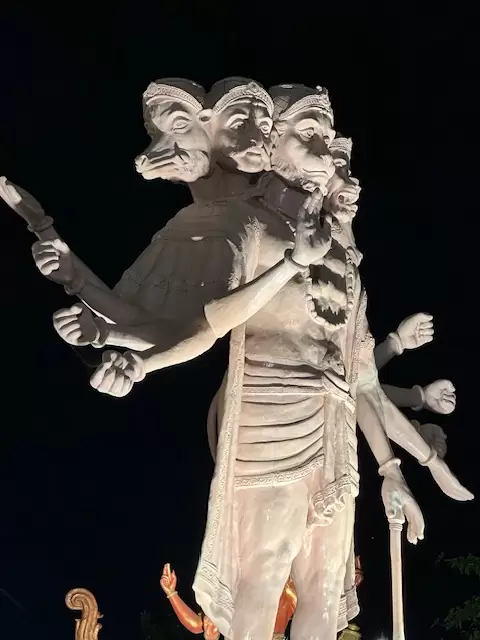
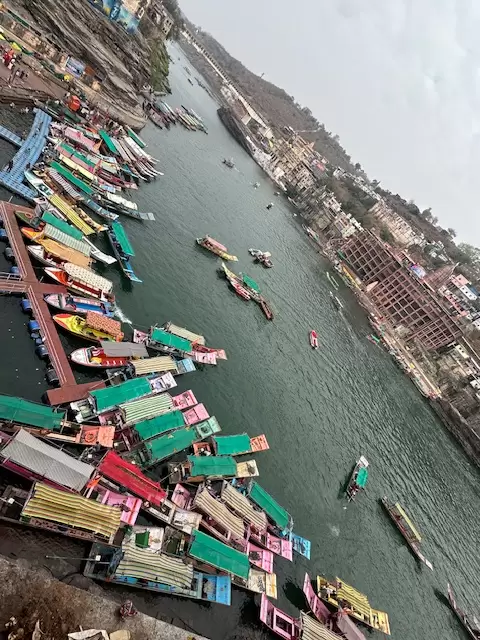
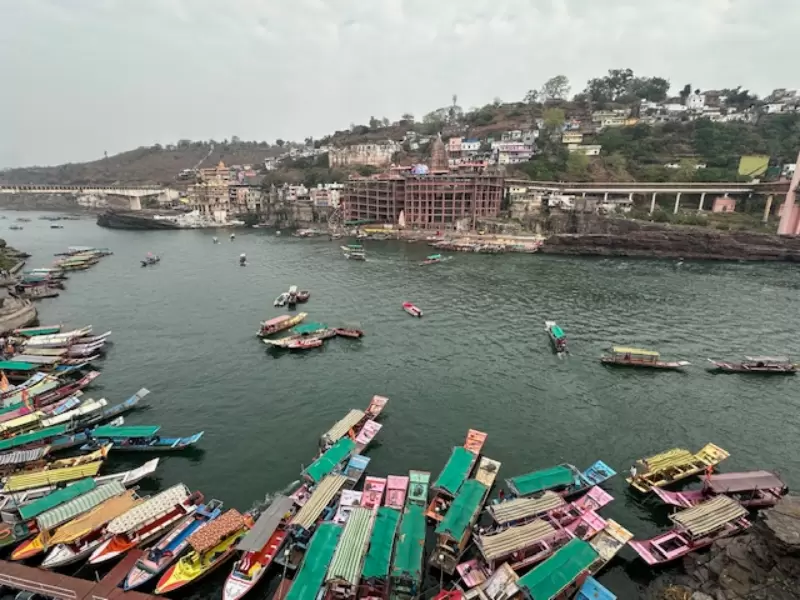 A glimpse of Omkareshwar / Ritu Marwah
In the temple city of Ujjain, preparations are already underway for one of Hinduism’s largest religious gatherings: the Simhastha Kumbh Mela, scheduled from March 27 to May 27, 2028.
New walkways have been laid, and entire traffic systems redesigned. The city is transforming itself for the millions of pilgrims who will come to bathe in the sacred waters and seek darshan at the revered Mahakaleshwar Jyotirlinga.
ALSO READ: Over 9,000 gather for Diwali-Dussehra celebration at Constellation Field
The preparations are unfolding under the watch of Madhya Pradesh’s Chief Minister Mohan Yadav, a native of Ujjain. When the Kumbh arrives, the city will host devotees for two months, an immense test of logistics and devotion.
Real transformation is still ahead.
The Simhastha Kumbh Mela will bring millions of pilgrims to Ujjain in 2028. Its success will depend on the small details: clean restrooms, smooth walkways for bare feet, seating for elderly pilgrims waiting for darshan, efficient phone-deposit counters and seamless transport to newly designated entry gates.
Ujjain’s Kumbh of 2028 is still in the making.
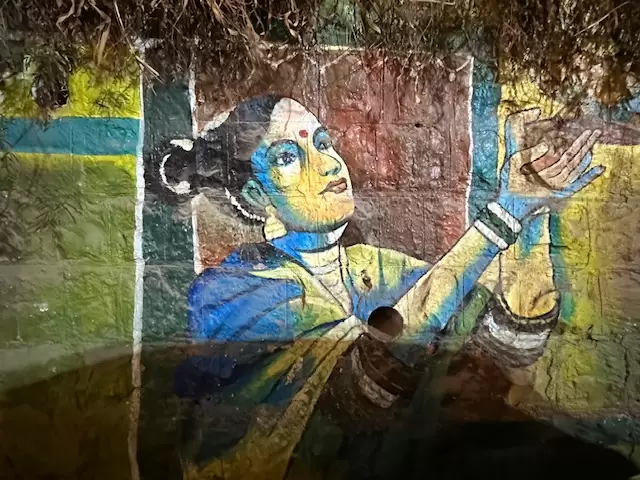
To understand Ujjain’s sacred geography, pilgrims must visit the twin jyotirlingas of Omkareshwar-Mamleshwar and the city of Maheshwar on the banks of the Narmada River. It is from Maheshwar that the woman who shaped much of this sacred landscape of the subcontinent ruled. It is her name that greets pilgrims when they land in the city of Indore at the Ahilyabai Holkar Airport.
The queen who refused the pyre
Ahilyabai was born in 1725 to a village headman. At a time when girls rarely received formal learning, her father ensured she was educated.
Widowed young, she was expected to commit sati. Instead, her father-in-law, Malhar Rao Holkar, intervened, pulling her from the funeral pyre and eventually placing her on the throne of Malwa, whose capital was then Indore.
What followed was not merely a reign but what many historians consider a civilizational revival.
Facing political challenges, Ahilyabai shifted her capital to Maheshwar, perched dramatically on the banks of the Narmada River in present-day Madhya Pradesh. She formed a women’s battalion and warned rival claimants that defeat at the hands of a woman would bring lasting humiliation. The threats quickly faded.
Her reputation traveled far beyond India. In 1849, the Scottish poet Joanna Baillie wrote of her:
“In latter days from Brahma came,
To rule our land, a noble Dame,
Kind was her heart, and bright her fame,
And Ahilya was her honoured name.”
The willful river
The Ahilya Fort in Maheshwar rises dramatically from a cliff above the Narmada. Sitting on a cane chair beneath a gently whirring pedestal fan, local guide Santosh Rathore gestures toward the river below.
In mythology, the Narmada is the daughter of Shiva, born from the sweat of his brow. “She is a kuwari,” Rathore says — a virgin river.
Unlike most major Indian rivers that flow east into the Bay of Bengal, the Narmada moves west through a rift valley to the Arabian Sea. She merges with no other river and forms no wide delta. Desired by many in legend, she remains fiercely independent.
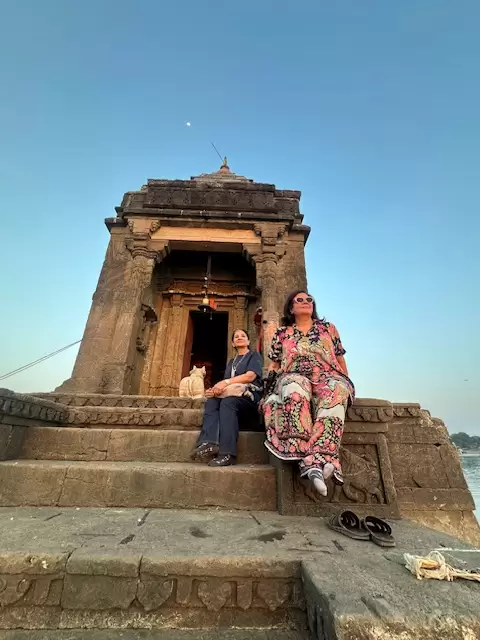
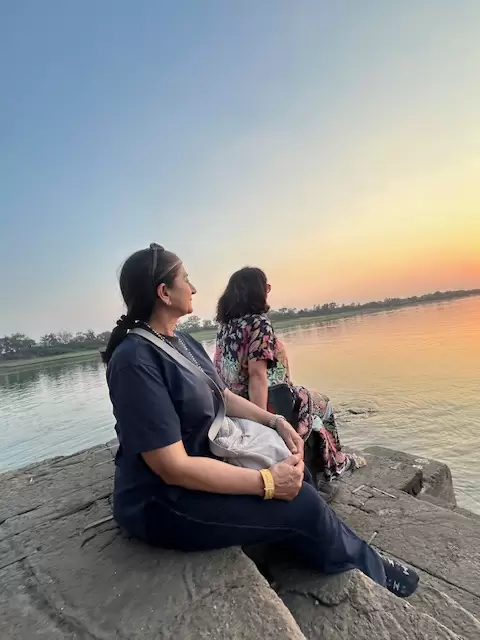
A sunset boat ride turns the ghats gold. Midstream rises the ancient Baneshwar Temple, which some believe sits on a cosmic axis linking the earth’s center to the North Pole.
Rebuilding a sacred geography
The religious landscape of Maheshwar carries Ahilyabai’s imprint. In the eighteenth century, she funded temple restorations across the subcontinent, from Somnath Temple in the west to Vishnupad Temple in the east, from Ramanathaswamy Temple in the south to the north Indian holy city of Varanasi.
After the destruction of the original Kashi Vishwanath Temple in 1669, it was Ahilyabai who rebuilt the current shrine in 1780.
A larger Shivling she had commissioned arrived late in Maheshwar. Rather than displace the consecrated one in Kashi, she built a new temple inside the fort complex in 1786 to house it.
Nearby stands her chhatri — her memorial — built of dark basalt and red Vindhyan sandstone. It rises in temple form above the river she loved.
Ahilyabai also established the looms that produced the now-famous Maheshwari sarees, weaving economic revival into spiritual renewal.
Today, Devi Ahilyabai Holkar Airport in Indore bears her name.
Omkareshwar: where the river divides India
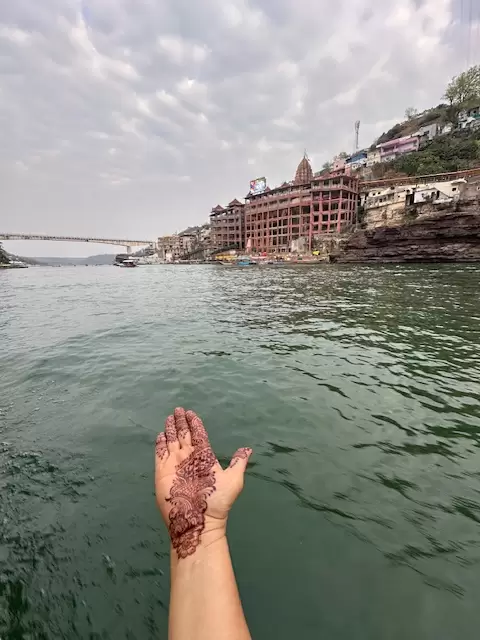
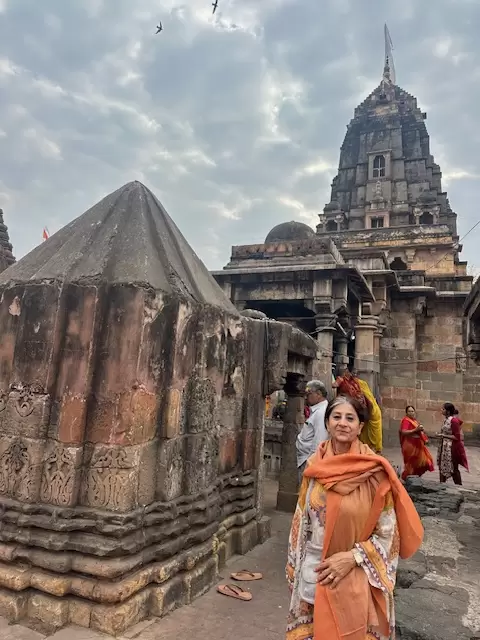
The Narmada’s sacred geography continues at Omkareshwar, home to the island temple of Omkareshwar Jyotirlinga and its twin shrine across the river, Mamleshwar Temple.
Ahilyabai commissioned the reconstruction of Mamleshwar, and to this day the Ahilyabai Khansgi Trust oversees its rituals.
The temples are linked historically to the philosopher Adi Shankaracharya, who is said to have established Jyotirlinga worship along routes that once connected north and south India.
A ₹300 ticket buys a quick VIP darshan. As we approached the sanctum, the crowd surged forward. A young temple attendant escorted us through the crush and safely out again.
Ujjain: City preparing for the Kumbh
By the time we reached Ujjain, the city was glowing in the evening light. Temple shikhars rose above new plazas and freshly laid pathways.
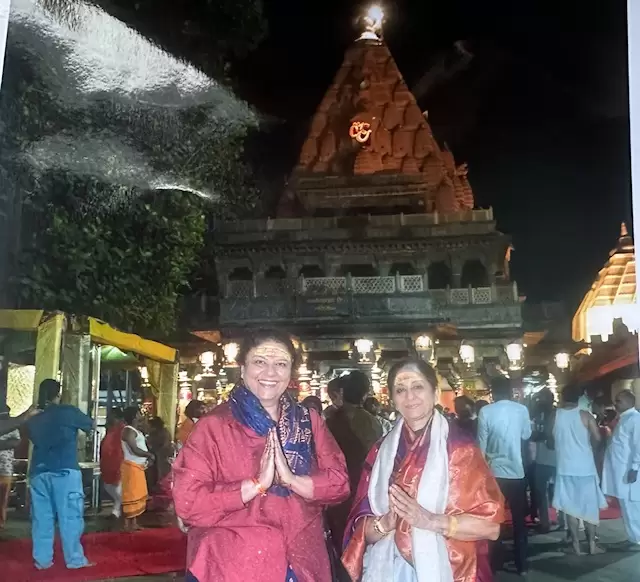
At the Mahakaleshwar Jyotirlinga, devotees lined up patiently while security staff kept the queues orderly. The experience was surprisingly calm for such a major pilgrimage site.
Where Lakshman became Labboo’z
Our journey had begun in Maheshwar.
At the entrance to the Ahilya Fort, Richard Holkar, a descendant of Ahilyabai, has transformed the old guard room into a small café named after his driver Lakshman, whom he affectionately calls Labboo.
The café is called Labboo’z.
We sat there with plates of mixed vegetable pakoras and endless cups of chai, cooling ourselves in front of large fans, listening to our guide Santosh Rathore tell the story of his erstwhile Maharani — a remarkable queen whose legacy still shapes this sacred landscape.
Planning a visit
Places to stay and transport can be arranged by MP Holidays, a leading business partner of Madhya Pradesh Tourism. They offer comprehensive travel services, including accommodation booking and transport arrangements across the state. They specialize in creating tailored itineraries for wildlife, heritage and cultural tours, providing a fleet of vehicles for guided travel.
Discover more at New India Abroad.
Related






ADVERTISEMENT

ADVERTISEMENT
E Paper
Video

Comments
Start the conversation
Become a member of New India Abroad to start commenting.
Sign Up Now
Already have an account? Login