ADVERTISEMENT

ADVERTISEMENT



The Semiquincentennial Challenge: Internal excellence and the future of the Republic
The Declaration of Independence provided the framework, but the longevity of the nation depends on the "Internal Emotional Excellence" of its people.
-
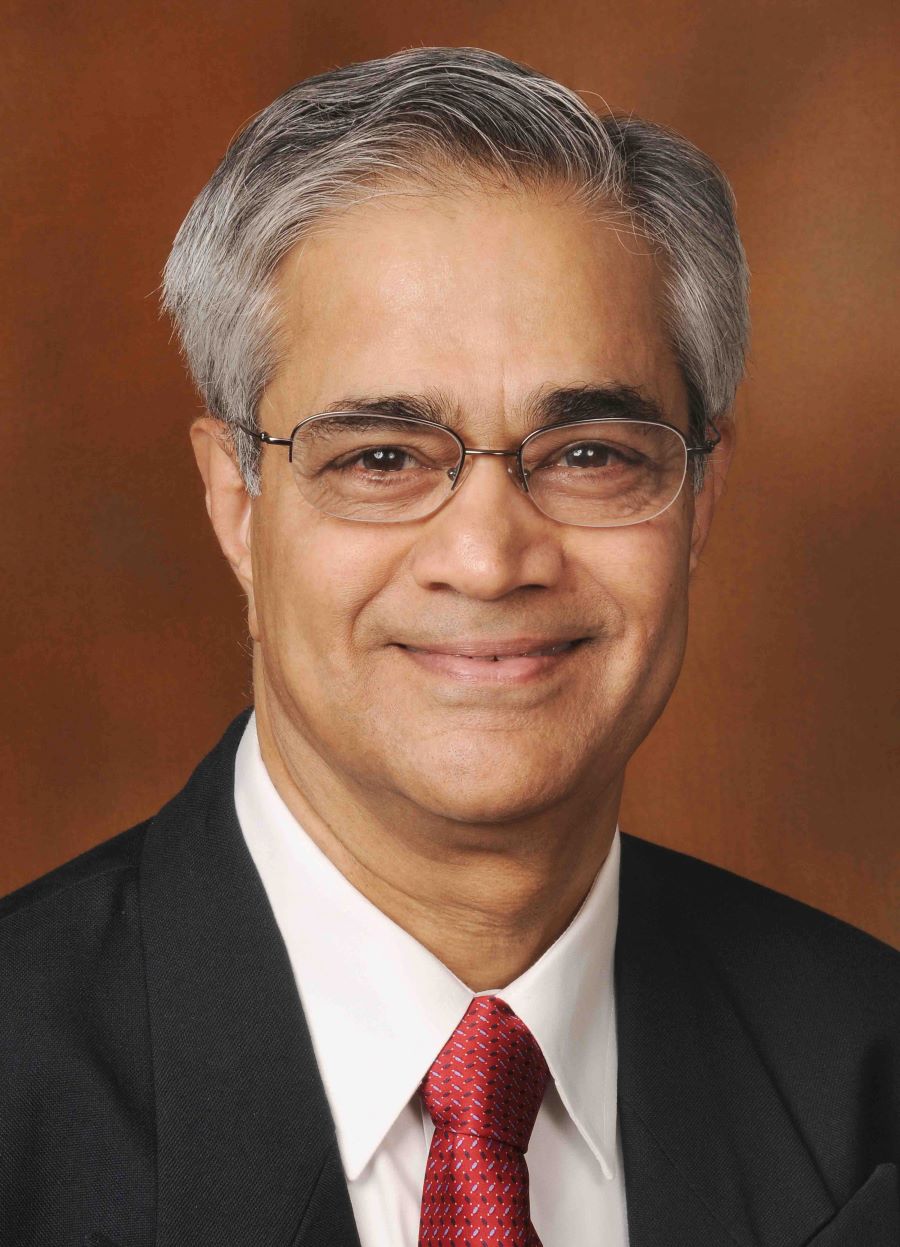 Pradeep B. Deshpande
 - Wed, 25, Feb 2026
- 11:12 EST
- 23
 Representative Image / Generated using AI
The 250th anniversary of the Declaration of Independence, to be celebrated on July 4, 2026, is a monumental milestone, marking two and a half centuries since a group of audacious radicals gathered in Philadelphia to challenge the world's most powerful empire.
More than just a formal notice of separation from the British Crown, the document served as a bold manifesto for a new philosophy of governance. By asserting that "all men are created equal" and endowed with "unalienable Rights," the Declaration shifted the source of political legitimacy from the divine right of kings to the consent of the governed.
It was a high-stakes gamble that transformed thirteen disparate colonies into a nascent nation, bound together by the revolutionary idea that freedom is a natural birthright rather than a royal grant.
Also Read: Where culture becomes commons
As we look back from the vantage point of 2026, the Declaration remains less of a static relic and more of a "living" challenge to every generation. While the 1776 declaration fell painfully short of its loftiest ideals—most notably in the preservation of slavery and the exclusion of women—the document's language provided the very tools used by future reformers to demand justice. Its legacy is found in the persistent, often turbulent pursuit of a "more perfect union".
The Founders’ Blind Spot: The Lifecycle of Civilizations
Despite their brilliance, there are certain critical concepts that the Founders apparently were not aware of. History shows that all civilizations, no matter how great, eventually decline.
This was true of the great civilizations of the ancient past like India, or more recent civilizations like Greece. While civilizations that have declined can rise again, this process typically unfolds over thousands of years.
What induces this rise and decline? It is driven by the transformations of three components of the human mindset: S, R, and T: S represents stability/serenity/Sattva; R represents restlessness/Rajoguna); and T represents inertia/Tamoguna.
As a society's S component (Stability/Serenity/Sattva) increases, that society rises. However, the S component cannot increase indefinitely. When it reaches its peak, the T component (Inertia/Tamoguna) begins to take over, and the society begins to decline.
Eventually, the T component also peaks, allowing the S component to take over once again, beginning a new cycle of rise. This cyclical transformation induces the rise and decline of civilizations over millennia. No civilization is immune to the rise and decline phenomena.
Quantitative Evidence of Rise and Decline
Evidence of rise and decline of civilizations can be found by examining historical data. By analyzing the number of influential people born in a civilization—specifically those listed in all 23 volumes of the 1993 Encyclopedia Britannica—we can track a nation's trajectory. The data for Greece (Figure 1) clearly depicts this completed cycle of rise and fall. Similar plots for Great Britain and Germany show their historical ascent (Figures 2a-b).
When we examine the data for the rise of the United States (Figure 3), the trajectory is initially one of rapid growth, but recent data shows alarming signs for the United States.
The current national divide is a visible symptom of these underlying shifts in the collective mindset. While we cannot know if a civilization's decline has begun with absolute certainty until viewed in hindsight, it is prudent to chart a plan of corrective actions in real time.
A Civic Duty: Internal Emotional Excellence
The United States can stay relevant for the next 250 years by gaining an in-depth understanding of why civilizations decline and then embracing the corrective actions which that understanding unveils to postpone decline by centuries.
These actions involve enhancing the internal emotional excellence of the citizenry. This is tantamount to shifting the collective mindset from the predominant R and T components back toward the S component.
Since today’s children are tomorrow’s leaders, it is essential to include schools and colleges in this transformation venture.
Also Read: The American political divide can be bridged, just not the way it is being attempted
This transformation is not a mere intellectual exercise; the required positive changes must come from within. Enhancing the focus of attention is the pathway to achieve this transformation, and meditation serves as the primary tool for this purpose.
To begin this journey, I propose a Thirty-Day Self-Assessment. By tracking your own daily levels of internal calm (S) versus restlessness (R) or apathy (T), you can begin to see the scientific validity of this framework in your own life.
This is not just a personal health journey; it is a civic technology. If the longevity of the republic depends on the mindset of the governed, then cultivating internal excellence is the highest form of 21st-century patriotism.
A Shared Destiny for Western Civilization
This path forward is not unique to America; it applies to Europe as well. Europe and America are bound by a common culture and faith. It is noteworthy that the historical curves for Great Britain, Germany, and the United States are shifted only by a few decades.
As the US Secretary of State noted at the recent Munich Security Conference, Western civilization is bound by deep bonds of history, heritage, and ancestry. The data appears to confirm this shared destiny.
As we stand at this 250-year crossroads, we must realize that political documents alone cannot sustain a republic. The Declaration of Independence provided the framework, but the longevity of the nation depends on the "Internal Emotional Excellence" of its people.
By cultivating the S component within us through dedicated practice and meditation at the exclusion of excessive R and T components, we can ensure that the "nascent nation" born in 1776 does not fade into history but continues to flourish as a beacon of liberty for centuries to come.
The author is Professor Emeritus in and former Chairman of the Department of Chemical Engineering at the University of Louisville.
(The views and opinions expressed in this article are those of the author and do not necessarily reflect the official policy or position of New India Abroad)
Related











ADVERTISEMENT

ADVERTISEMENT
E Paper
Video

Comments
Start the conversation
Become a member of New India Abroad to start commenting.
Sign Up Now
Already have an account? Login