ADVERTISEMENT

ADVERTISEMENT



The Rising Visibility of Anti-Indian Racism
Once fringe, now entering mainstream discourse.
-
 Manvi Pant
 - Sun, 11, Jan 2026
- 06:17 EST
- 23
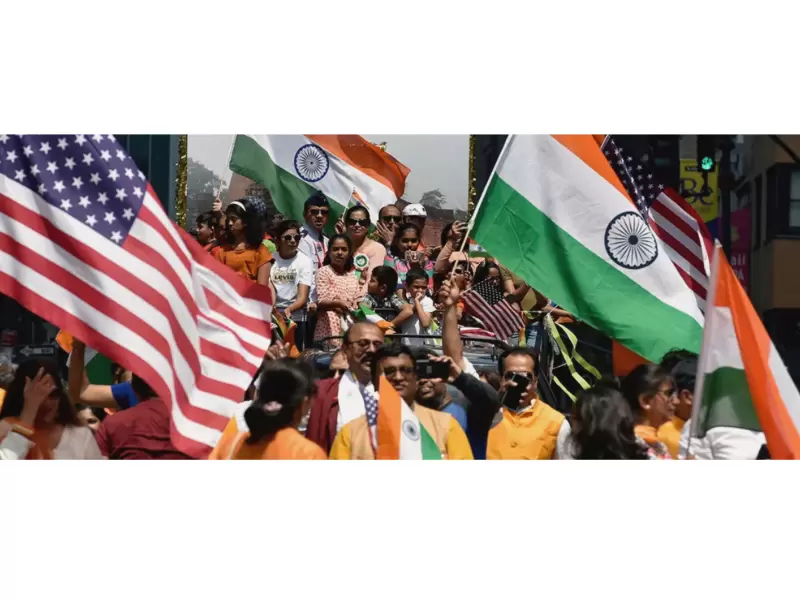 Indian-Americans / Pew Research Center (pewresearch.org/)
In early 2024, a slur targeting Indian tech workers briefly trended on X. The language wasn’t new; the messengers were. Blue-check accounts, popular podcasters, and political commentators joked about “H-1B coolies” and “curry-coded CEOs,” framing it as satire or economic critique. These remarks weren’t confined to fringe forums—they were algorithmically amplified, reshared, defended as “free speech,” and met with laughter.
We know this isn’t right—but anti-Indian racism didn’t appear overnight. Indian immigrants have faced hostility for decades, from post-9/11 hate crimes to workplace discrimination. What’s changed is its visibility and, more troublingly, its normalization. The rhetoric has moved from the margins to the mainstream feed. Which raises the question: why now—and why Indian Americans?
Three forces drive this shift:
First, algorithmic amplification. Rage travels well. Content mocking Indian accents, food, or perceived “tech takeover” generates engagement, which platforms reward with reach.
Second, meme culture. Racism dressed as irony becomes harder to call out. “It’s just a joke” or “dark humor” becomes a shield, even when the punchline is a racial group. Third, influencer politics. Figures positioning themselves as anti-elite or anti-immigration use Indian Americans as shorthand for globalization’s anxieties with cheap labor, global outsourcing, and Silicon Valley excess –The result is normalization. When slurs are framed as economic critique or comedy, racism becomes palatable.
The Political context fueling the backlash
Indian Americans are increasingly caught in America’s most heated debates, with immigration at the center. H-1B visas are framed as job theft, casting Indian workers as faceless competitors rather than people navigating a broken system. During tech layoffs, resentment sharpened: if Americans are losing jobs, who should be blamed? Add the myth of meritocracy—Indian success in tech and medicine is weaponized to argue that racism doesn’t exist. Yet that same success also fuels suspicion and backlash. Indian Americans are praised when they boost GDP or staff hospitals—and targeted the moment they become politically inconvenient. That says everything!
The Model Minority Myth as a Double-Edged Sword
The “model minority” label has long shadowed Indian Americans. On the surface, it flatters—educated, hardworking, successful. In reality, it shields institutions: if Indian Americans are “doing fine,” systemic racism can be ignored. The myth is also weaponized against other marginalized groups, pitting communities against one another. And it backfires.
Visibility breeds resentment. Indian Americans are cast as economically threatening yet culturally disposable—valued in boardrooms, mocked in public discourse. Success without solidarity becomes a liability.
Online Hate vs. Real-World Impact
It’s tempting to dismiss online racism as noise. But digital rhetoric doesn’t stay online. Indian Americans report rising anxiety, hyper-vigilance, and fear—especially those on temporary visas, whose legal status depends on employment. Students face harassment in schools; professionals encounter casual slurs at work. Sikh, Muslim, and Hindu communities are disproportionately targeted, because racism rarely pauses to get religion right.
Advocacy groups tracking hate incidents see a clear pattern: spikes in online abuse often precede real-world harassment. Words shape climates. Climates shape behavior. Online racism isn’t “just words”—it’s agenda-setting.
Pushback or Silence? How Indian Americans Are Responding to Racism?
Responses within the Indian diaspora are somewhat mixed. Some political leaders and organizations are pushing back, tracking hate incidents and demanding accountability. Grassroots groups are naming racism explicitly, refusing to accept “jokes” as harmless. Others advocate caution, align with power, stay quiet, avoid backlash. There’s a generational divide. Younger Indian Americans, often citizens, are more willing to call racism what it is and build coalitions. Older generations, shaped by precarity and gratitude narratives, hesitate. The debate isn’t just about strategy rather identity.
Indian Americans are becoming test cases. Who counts as “American enough”? How quickly can acceptance be revoked? What happens when economic usefulness no longer guarantees social safety? The moment exposes tensions between free speech and hate, assimilation and dignity, democracy and exclusion. It shows the limits of respectability politics in a racially volatile system. If it can happen to a group seen as “successful,” it can happen to anyone. The question now is simple: will we name it, challenge it, and stand together—or wait until the test reaches us?
Related






ADVERTISEMENT
ADVERTISEMENT
E Paper
Video

Comments
Start the conversation
Become a member of New India Abroad to start commenting.
Sign Up Now
Already have an account? Login